CM Bhagwant Mann caps private school fee hikes at 5%
Synopsis
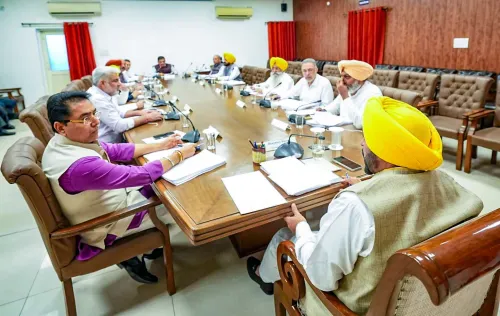
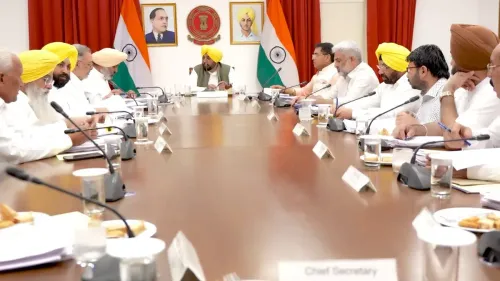
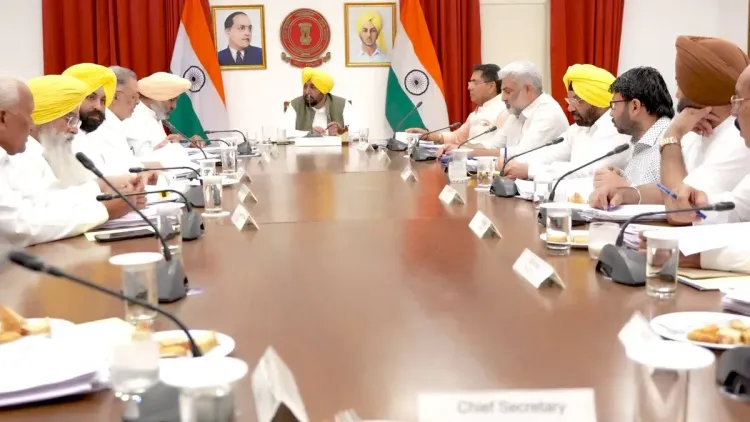
Punjab Chief Minister Bhagwant Mann on 22 June 2026 announced cabinet approval of an ordinance capping private school annual fee hikes at 5 per cent, along with capital subsidy rule amendments, rollout of the SDIP data platform, and a new ADC post in Dasuya, Hoshiarpur.
Key Takeaways
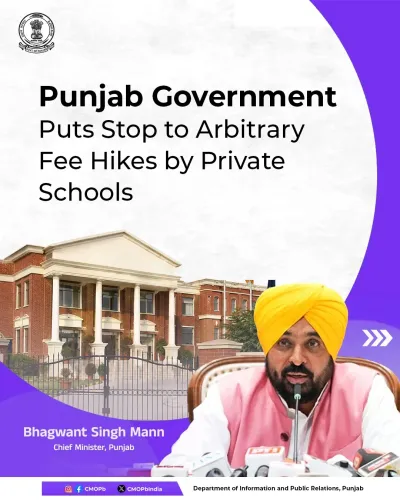
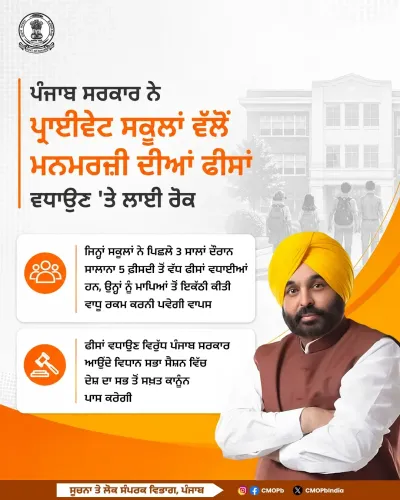
The Punjab cabinet approved an ordinance on 22 June 2026 capping annual private school fee increases at 5 per cent .
The ordinance takes immediate effect and must be ratified by the Punjab Vidhan Sabha at its next session.
Amendments to capital subsidy rules were cleared to attract industrial investment to the state.
The SDIP platform was approved to integrate data across government departments and improve service delivery.
A new Additional Deputy Commissioner (General) post was sanctioned at Dasuya, Hoshiarpur to ease administrative access for local residents.
The decisions continue the Aam Aadmi Party government's pattern of multi-sector reform through executive and legislative action since 2022 .
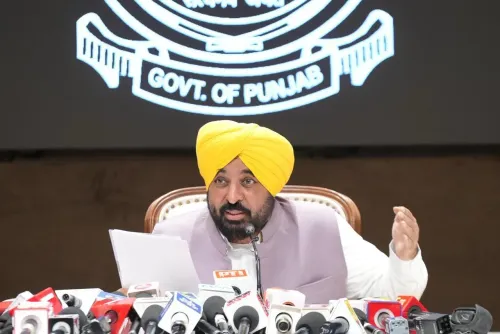
Punjab Chief Minister Bhagwant Mann on Monday, 22 June 2026, announced that the state cabinet has approved a new ordinance capping annual fee hikes by private schools at 5 per cent, providing significant relief to parents and students across the state. The same session also cleared amendments to capital subsidy rules to boost industrial growth, approved the rollout of the SDIP platform to integrate departmental data, and sanctioned a new Additional Deputy Commissioner (General) post at Dasuya in Hoshiarpur district.
Context
Posting in Punjabi on X, Chief Minister Mann wrote: 'ਪ੍ਰਾਈਵੇਟ ਸਕੂਲਾਂ ਦੀਆਂ ਮਨਮਾਨੀਆਂ ਨੂੰ ਨੱਥ ਪਾਉਂਦੇ ਹੋਏ' ['Putting a check on the arbitrary actions of private schools'], the government has approved an ordinance placing a 5% cap on annual fee increases. He described the set of decisions as 'another strong step towards Punjab's progress and public convenience.'
The ordinance route allows the state government to enforce the fee cap without waiting for the next assembly session, giving it immediate legal force. Once enacted, private schools will be legally barred from raising fees by more than 5 per cent in any given year.
Policy Backdrop
Since winning the 2022 Punjab assembly elections, the Aam Aadmi Party government under Mann has pursued a series of regulatory and administrative reforms targeting public welfare, education access, and industrial ease. The 5% fee-cap ordinance is the most direct legislative intervention on private school pricing the state has undertaken under the current administration.
Alongside the education measure, the cabinet approved amendments to capital subsidy rules aimed at making Punjab more attractive for industrial investment. The simultaneous approval of the SDIP (State Data Integration Platform) signals a push to digitise inter-departmental data sharing, reducing duplication and improving service delivery.
Stakeholders and Impact
The fee-cap ordinance directly affects the families of millions of children enrolled in private schools across Punjab, many of whom have faced steep annual fee revisions with little regulatory recourse. Private school associations are expected to examine the ordinance's provisions closely, particularly any clauses governing exceptions or appeals.
The new ADC (General) post at Dasuya, Hoshiarpur is designed to reduce administrative delays for residents of that sub-division, who currently have to travel to the district headquarters for several official functions. Industrial units across the state stand to benefit from revised capital subsidy norms, which the government says will accelerate investment decisions.
What's Next
The ordinance will need to be ratified by the Punjab Vidhan Sabha within six weeks of the next assembly session, as required under constitutional provisions. Implementation notifications detailing the exact mechanism for enforcing the 5% annual cap — including the base year for calculation and grievance-redressal procedures — are expected to follow shortly.
The rollout timeline for the SDIP platform and the formal appointment process for the new ADC post in Dasuya will be watched as indicators of how quickly these approvals translate into on-ground change. Together, these decisions signal that the Mann government intends to continue using a multi-sector reform approach as it heads deeper into its term.
Point of View
The administration is projecting a balanced governance image — welfare-focused but also business-friendly. The ordinance route, however, carries a constitutional clock: failure to get Vidhan Sabha ratification could unwind the measure and hand the opposition a ready-made narrative. How the state enforces the cap against well-resourced private school lobbies will be the real test of its durability.
NationPress
22 Jun 2026
Frequently Asked Questions
What is the new Punjab private school fee cap?
The Punjab government has approved an ordinance limiting annual private school fee increases to a maximum of 5 per cent per year, effective immediately upon the ordinance's enactment.
Who announced the Punjab school fee ordinance?
Punjab Chief Minister Bhagwant Mann announced the cabinet approval on 22 June 2026 via a post on X.
What is the SDIP platform approved by Punjab cabinet?
The SDIP (State Data Integration Platform) is a government initiative to consolidate data across Punjab's various departments onto a single platform, aimed at reducing duplication and improving service delivery to citizens.
Why was a new ADC post created in Dasuya, Hoshiarpur?
A new Additional Deputy Commissioner (General) post was approved for Dasuya in Hoshiarpur district to reduce administrative delays and the need for residents to travel to the district headquarters for official work.
Will Punjab's private school fee cap ordinance need assembly approval?
Yes. Under Indian constitutional provisions, an ordinance must be ratified by the state legislature — the Punjab Vidhan Sabha — within six weeks of the assembly's next session, or it lapses.