CM Bhajan Lal Backs PM Modi's Nasha Mukt Yuva Abhiyan
Synopsis
Rajasthan CM Bhajan Lal Sharma amplified PM Modi's Mann Ki Baat message on 27 September 2026, highlighting millions of youth pledges under the Nasha Mukt Yuva Abhiyan to stay drug-free and spread awareness — building on the national campaign launched in August 2020.
Key Takeaways
Rajasthan CM Bhajan Lal Sharma shared PM Modi's anti-drug message on 27 September 2026 , citing the Nasha Mukt Yuva Abhiyan .
The campaign asks youth to take a dual pledge: personal abstinence from drugs and actively spreading the message to others.
PM Modi highlighted the campaign in his Mann Ki Baat monthly radio address, signalling sustained central government priority.
The Nasha Mukt Bharat Abhiyan was launched on 15 August 2020 by the Ministry of Social Justice and Empowerment with a focus on youth and educational institutions.
Rajasthan's participation reflects the broader state-centre coordination designed to amplify the campaign's reach at the ground level.
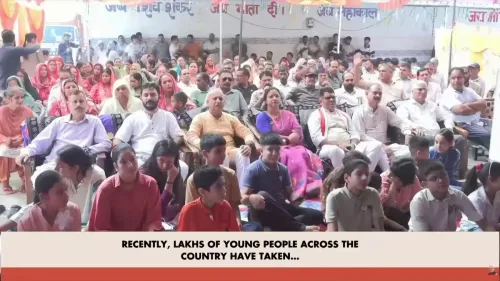
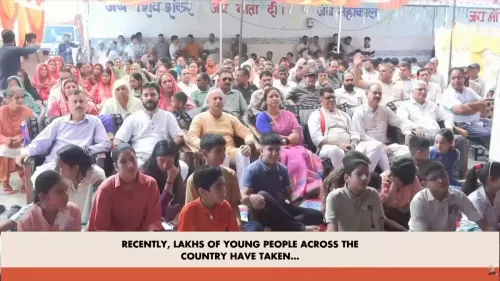
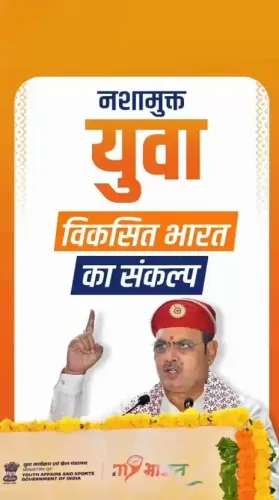
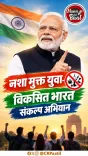
Millions of young Indians have taken a public pledge to stay drug-free and carry that message forward — and Rajasthan Chief Minister Bhajan Lal Sharma wants the country to hear about it. On Sunday, 27 September 2026, Sharma amplified a call from Prime Minister Narendra Modi, spotlighting the youth-driven momentum building under the Nasha Mukt Yuva Abhiyan — a campaign that asks young people not just to abstain, but to become advocates.
What the pledge actually asks of India's youth
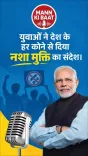
The campaign's logic is two-pronged: participants commit personally to staying away from drugs, and then accept the responsibility of spreading that commitment within their own circles. Sharma, quoting Prime Minister Modi, framed it as a self-sustaining social movement — 'nasha se door rehne ki pratigya' (a pledge to stay away from intoxicants) paired with the duty to reach others. The explicit mention of #NashaMuktAbhiyan alongside #MannKiBaat signals that Modi raised the campaign in his monthly radio address, his most direct channel to ordinary citizens.
Nasha Mukt Bharat Abhiyan: six years of building momentum
The national framework underpinning this push is the Nasha Mukt Bharat Abhiyan, launched on 15 August 2020 by the Ministry of Social Justice and Empowerment. The campaign zeroed in on youth and educational institutions as the first line of defence against substance abuse. Over successive years, Mann Ki Baat — Modi's monthly radio programme — has returned to the anti-drug theme repeatedly, treating it as a long-run social priority rather than a one-off announcement.
States like Rajasthan routinely align local outreach with the national framework to widen reach among students and young adults. Sharma's post is a visible example of that state-centre coordination — a chief minister lending his platform to reinforce a centrally-driven message.
Why Rajasthan's voice matters here
Rajasthan shares borders with Pakistan and sits along trafficking corridors that have historically made drug interdiction a live law-and-order concern for the state. A BJP chief minister actively championing the national anti-drug campaign carries both political and administrative weight — it signals that the state machinery is expected to participate, not merely observe. The coming months of enrolment figures and awareness events in Rajasthan will be the real test of whether the pledge drives translate into sustained community action.
One campaign. Two promises — personal abstinence and public advocacy. The question now is whether millions of pledges become millions of conversations.
Point of View
The Prime Minister is institutionalising anti-drug awareness as a civic expectation rather than a state directive. Chief Minister Sharma's amplification from a border state like Rajasthan adds a strategic layer, positioning the campaign at the intersection of social welfare and internal security. The real measure of impact will be whether local enrolment and community events produce observable behaviour change, or remain a numbers exercise on paper.
NationPress
27 Sept 2026
Frequently Asked Questions
What is the Nasha Mukt Yuva Abhiyan?
The Nasha Mukt Yuva Abhiyan is a youth-focused anti-drug drive under the broader Nasha Mukt Bharat Abhiyan, launched on 15 August 2020, where young people pledge to stay drug-free and spread awareness within their communities.
What did PM Modi say about drug abuse in Mann Ki Baat?
PM Modi highlighted that millions of Indian youth have taken a pledge to stay away from drugs and to carry the anti-drug message to others, as part of the ongoing Nasha Mukt Yuva Abhiyan.
What is the Nasha Mukt Bharat Abhiyan?
The Nasha Mukt Bharat Abhiyan is a national campaign launched by India's Ministry of Social Justice and Empowerment on 15 August 2020, targeting drug abuse awareness among youth and in educational institutions.
Why did Rajasthan CM Bhajan Lal Sharma post about the anti-drug campaign?
CM Bhajan Lal Sharma shared the message to amplify PM Modi's Mann Ki Baat address on the Nasha Mukt Yuva Abhiyan, aligning Rajasthan's state outreach with the central government's anti-drug initiative.
What is Mann Ki Baat?
Mann Ki Baat is a monthly radio programme hosted by Prime Minister Narendra Modi to communicate directly with Indian citizens on governance, social themes, and national campaigns.