CM Bhupendra Patel Chairs SWAGAT Grievance Hearing in Gandhinagar
Synopsis
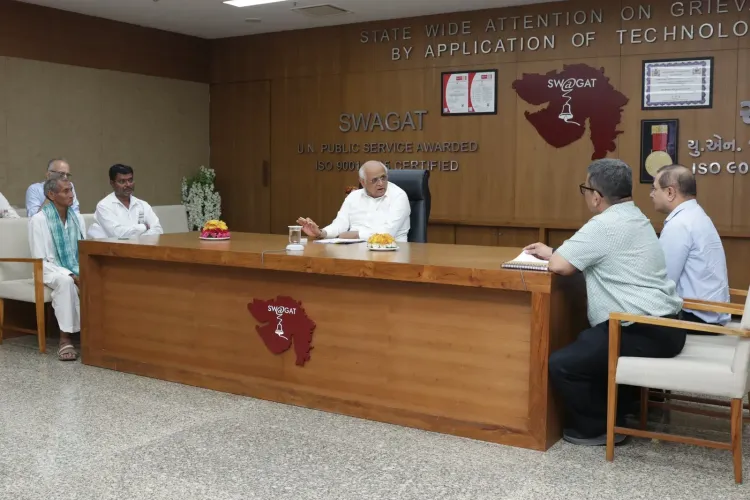
Gujarat Chief Minister Bhupendra Patel presided over the June 2026 state-level SWAGAT Online Grievance Redressal session in Gandhinagar, personally hearing citizen complaints and directing District Collectors to resolve land rehabilitation, re-survey errors, and gauchar encroachment cases within strict deadlines under his 'Pro-People Governance' mandate.
Key Takeaways
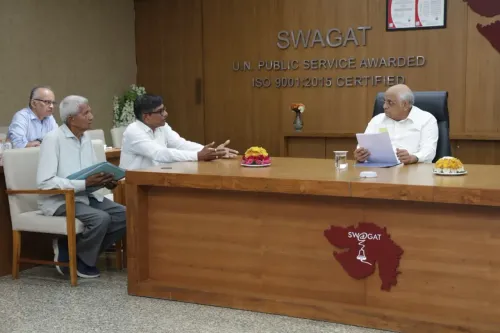
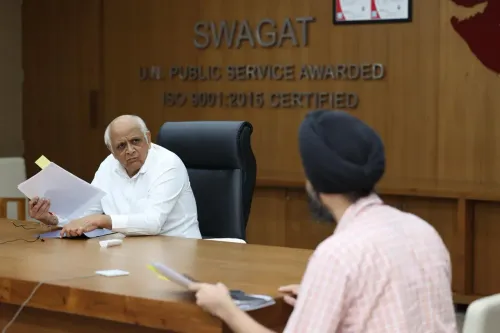
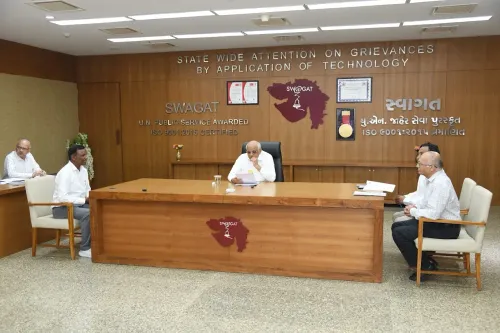
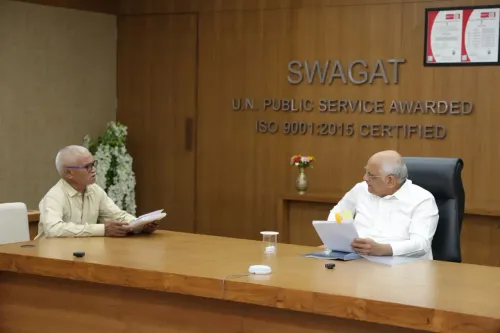
CM Bhupendra Patel personally heard citizen grievances at the June 2026 state-level SWAGAT session in Gandhinagar .
He directed departments to resolve complaints in a swift and time-bound manner, with district officers empowered to decide at the local level.
Three priority issues were flagged: rehabilitation land allocation , re-survey error corrections , and gauchar land encroachment removal .
District Collectors across Gujarat received direct instructions for strict, deadline-bound action on these cases.
The SWAGAT platform, launched in 2003 , is Gujarat's long-running flagship for citizen-centric digital and physical grievance redressal.
The CM framed the initiative under the principle of 'Pro-People Governance' — fast, transparent resolution of public-interest matters.
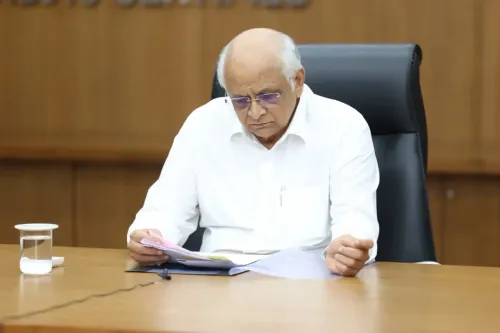
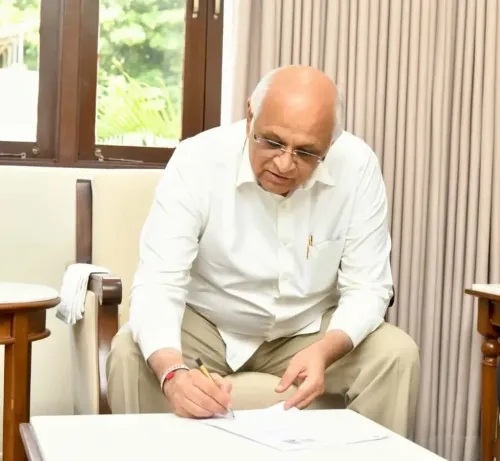
Gujarat Chief Minister Bhupendra Patel on Monday, 22 June 2026 presided over the state-level SWAGAT Online Public Grievance Redressal Programme in Gandhinagar, personally hearing citizen representations and directing concerned departments to resolve complaints within strict timelines.
Context
Posting on X in Gujarati, CM Patel stated that he 'pratyaksh sambhali' (directly heard) citizen grievances at the June 2026 state-level SWAGAT session and issued directions to relevant departments for 'tvrit ane samayabaddh niraakaran' — swift and time-bound resolution. The session is part of a monthly cycle under which the Chief Minister and senior officials sit in direct contact with ordinary citizens who have unresolved complaints.
He specifically instructed district-level officers to study applications in depth and take appropriate decisions at the district level itself, so that citizens face no unnecessary delays in getting redress.
Policy Backdrop
The SWAGAT (State-Wide Attention on Grievances by Application of Technology) platform was launched in 2003 by then Chief Minister Narendra Modi as a pioneering initiative to give citizens direct access to the government through digital and physical hearings. It has since become a flagship governance model that successive Gujarat administrations have sustained and expanded.
Revenue and land-related complaints have historically formed the bulk of SWAGAT petitions. The platform's emphasis on time-bound, transparent resolution has been cited repeatedly as a model for citizen-centric governance in India.
Key Issues Flagged
CM Patel highlighted three categories of serious grievances at the June session: allocation of rehabilitation land, correction of errors arising from re-survey processes, and removal of encroachments on gauchar (common grazing) land. He directed all District Collectors to take strict, time-bound action on these matters.
The post underscored the state government's commitment to 'Pro-People Governance' — a phrase the Chief Minister used to frame the administration's approach to fast and transparent resolution of public-interest issues.
Stakeholders and Impact
The primary beneficiaries are citizens — particularly those with pending land grievances — who have petitioned the state government. District Collectors across Gujarat are now under direct instruction from the Chief Minister's office to resolve flagged cases within defined deadlines.
Land-related disputes, including rehabilitation allotments and encroachments on gauchar land, are among the most sensitive revenue issues in rural Gujarat, often affecting farming communities and displaced persons. Timely resolution at the district level reduces the burden on state-level appellate mechanisms.
What's Next
Compliance reports from District Collectors on the resolution of land grievances flagged at the June 2026 SWAGAT session will be the immediate metric to watch. Persistent non-compliance or delayed action at the district level could draw further intervention from the Chief Minister's office in subsequent monthly sessions.
The state government's ability to demonstrate measurable outcomes from this round of hearings will shape public confidence in the 'Pro-People Governance' framework ahead of future administrative cycles.
Point of View
The Chief Minister is also addressing long-standing rural and agrarian sensitivities that carry political weight in Gujarat's hinterland. The 'Pro-People Governance' framing is consistent with the BJP's broader communication strategy of positioning administrative delivery as a direct extension of party ideology. The real test, however, lies in Collector-level compliance reports — without measurable outcomes, monthly SWAGAT sessions risk becoming performative rather than transformative.
NationPress
22 Jun 2026
Frequently Asked Questions
What is the SWAGAT programme in Gujarat?
SWAGAT (State-Wide Attention on Grievances by Application of Technology) is Gujarat's flagship online and physical grievance redressal platform, launched in 2003 by then Chief Minister Narendra Modi, which allows citizens to register complaints and have them resolved directly by government departments under time-bound mandates.
What happened at the June 2026 SWAGAT session?
Gujarat Chief Minister Bhupendra Patel personally presided over the June 2026 state-level SWAGAT session in Gandhinagar, directly heard citizen representations, and directed District Collectors to take strict, time-bound action on issues including rehabilitation land allocation, re-survey errors, and gauchar land encroachments.
What is gauchar land and why is it significant in Gujarat?
Gauchar land refers to common grazing land traditionally reserved for livestock in villages. Encroachments on gauchar land are a recurring land-revenue issue in rural Gujarat, affecting farming and pastoral communities, and the state government periodically directs collectors to clear such encroachments.
What instructions did CM Bhupendra Patel give to District Collectors?
CM Patel instructed District Collectors to study citizen applications in depth, take appropriate decisions at the district level itself to avoid delays, and complete strict, time-bound action on serious matters such as rehabilitation land allotment, re-survey error corrections, and removal of gauchar land encroachments.
How often does the SWAGAT grievance hearing take place?
The SWAGAT programme operates on a monthly cycle, with state-level sessions chaired by the Chief Minister and district-level sessions handled by senior officers, allowing citizens to escalate unresolved complaints at multiple tiers of government.