CM Conrad Sangma Chairs El Niño Preparedness Meet for Meghalaya
Synopsis
Meghalaya Chief Minister Conrad Sangma convened a cross-departmental meeting on 23 June 2026 to prepare the state for El Niño-driven climate risks across water, agriculture, forests, public health, and disaster management, coordinating with IMD Shillong and the Union environment ministry.
Key Takeaways
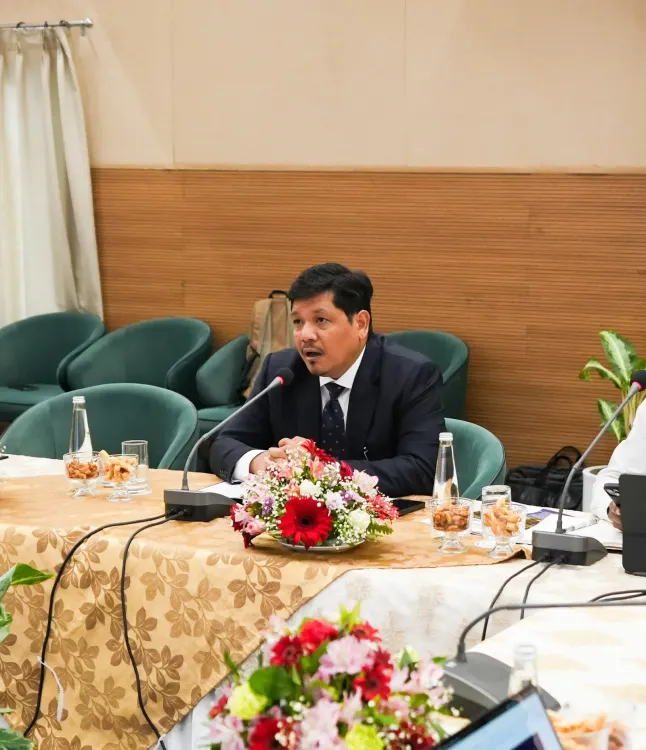
Conrad Sangma chaired a multi-department El Niño preparedness meeting on 23 June 2026 .
Sectors covered include water resources, agriculture, forests, public health, and disaster management .
IMD Shillong was among the key agencies present at the meeting.
The state government has adopted a 'whole-of-government' approach involving departments, institutions, communities, and local bodies.
The initiative is framed as an ongoing process aimed at building long-term climate resilience for Meghalaya.
The post tagged MoEFCC and Union Minister Bhupender Yadav , indicating a push for central coordination and support.
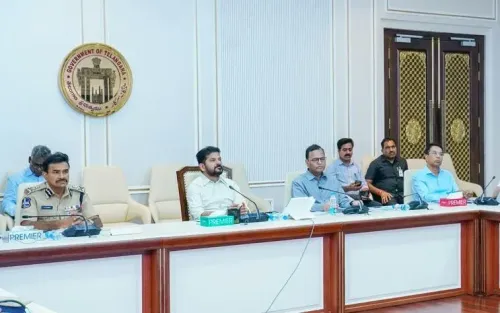
Meghalaya Chief Minister Conrad Sangma on Tuesday, 23 June 2026, chaired a multi-department preparedness meeting to assess and mitigate the potential impact of El Niño-linked climate uncertainties on the state, covering sectors from water resources and agriculture to public health and disaster management.
Context
Posting on X, CM Sangma stated that the meeting brought together key departments along with IMD Shillong — the regional arm of the India Meteorological Department — to collectively assess risks and plan responses. 'While we cannot predict the exact extent of the impact, we know that preparedness is our strongest defence,' he wrote, underscoring the government's intent to act ahead of any adverse weather event.
The post also tagged Union Minister Bhupender Yadav and the Ministry of Environment, Forest and Climate Change (MoEFCC), signalling that the state is seeking coordination with central agencies on climate adaptation funding and policy support.
Policy Backdrop
El Niño, the Pacific Ocean warming phenomenon, is widely associated with a weakening of the Indian monsoon, raising the risk of drought, erratic rainfall, and cascading impacts on agriculture and water availability. Meghalaya, with its hilly terrain, is particularly exposed to monsoon variability, landslides, and localised water scarcity.
India's National Action Plan on Climate Change (2008) mandated all states to develop sector-specific adaptation plans. The National Disaster Management Authority further issued guidelines in 2019 emphasising state-level preparedness for climate-induced disasters. IMD has maintained operational El Niño–Southern Oscillation outlooks since the early 2000s, with regional coordination strengthened significantly after the severe 2015-16 El Niño event.
Stakeholders and Impact
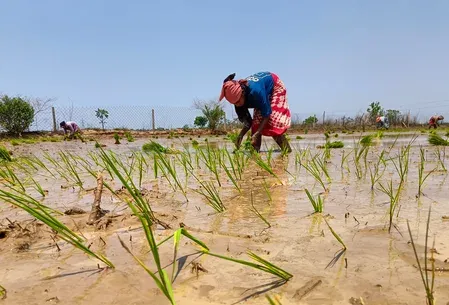
Meghalaya's hill farmers and rural communities stand to be the most directly affected if El Niño-linked disruptions materialise. Erratic rainfall can damage standing crops, deplete drinking-water sources, and trigger landslides that cut off remote villages. The government's 'whole-of-government' framing — bringing departments, institutions, communities, and local bodies together — reflects an approach increasingly adopted across northeastern states following successive weak monsoon seasons.
This inter-departmental model mirrors a broader national pattern in which state governments convene line departments alongside IMD and MoEFCC to translate seasonal forecasts into sector-specific contingency plans, particularly after the post-2015 emphasis on coordinated climate adaptation.
What's Next
CM Sangma described Tuesday's meeting as 'the beginning of a continuous process,' indicating that the government intends to sustain inter-departmental coordination rather than treat this as a one-off exercise. The stated goals include building resilience, protecting livelihoods, securing water resources, and ensuring the state is operationally ready for extreme weather events.
Observers will watch for IMD's next long-range monsoon forecast update and any revision to Meghalaya's State Action Plan on Climate Change or its disaster management manual as indicators of how this preparedness framework translates into concrete policy action.
Point of View
Sangma is simultaneously signalling alignment with the Centre's climate adaptation architecture and positioning the NPP-led government as a proactive, technocratic administration. The 'whole-of-government' language echoes the post-2015 national disaster management vocabulary, suggesting Meghalaya is consciously benchmarking itself against national best practices. If followed through with a revised State Action Plan, this could mark a meaningful step in institutionalising climate preparedness in the Northeast.
NationPress
23 Jun 2026
Frequently Asked Questions
Why is Meghalaya preparing for El Niño in 2026?
El Niño is a Pacific Ocean warming event that can weaken India's monsoon, raising risks of erratic rainfall, drought, and landslides. Meghalaya CM Conrad Sangma convened a preparedness meeting on 23 June 2026 to assess and mitigate these risks across water, agriculture, forests, health, and disaster management sectors.
What is IMD Shillong and what role does it play in Meghalaya's climate planning?
IMD Shillong is the regional centre of the India Meteorological Department responsible for weather forecasts across the Northeast. It was among the key agencies included in CM Sangma's El Niño preparedness meeting to help translate seasonal forecasts into sector-specific contingency plans.
What sectors are at risk from El Niño in Meghalaya?
According to CM Sangma's statement, the sectors most at risk include water resources, agriculture, forests, public health, and disaster management. Hill farmers and rural communities are particularly vulnerable to crop damage and disruptions to drinking-water supplies.
What is India's National Action Plan on Climate Change?
Launched in 2008, the National Action Plan on Climate Change mandated all Indian states to develop sector-specific adaptation plans covering areas such as water, agriculture, and forests. Meghalaya's current preparedness exercise aligns with this national framework.
What is the 'whole-of-government' approach mentioned by CM Sangma?
The 'whole-of-government' approach refers to coordinating multiple departments, institutions, local bodies, and communities under a unified framework to assess climate risks and plan responses. This model has been increasingly adopted by northeastern states to manage climate-induced disasters more effectively.