CM Dhami: Anti-Cheating Law Delivers 35,000 Govt Jobs in Uttarakhand
Synopsis
Uttarakhand CM Pushkar Singh Dhami says the state's strict anti-cheating law has curbed exam-mafia influence and enabled transparent recruitment of over 35,000 youth into government jobs, ending the era of bribery-driven hiring.
Key Takeaways
CM Pushkar Singh Dhami posted on 22 October 2026 highlighting Uttarakhand's anti-cheating law as a governance milestone.
The Uttarakhand Public Examination (Prevention of Unfair Means) Act was passed in 2023 to target organised exam fraud and paper leaks.
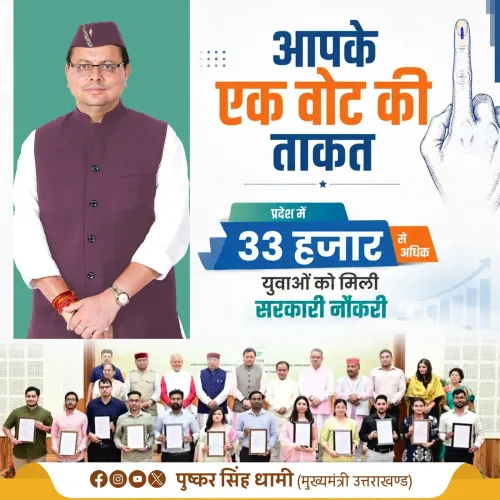
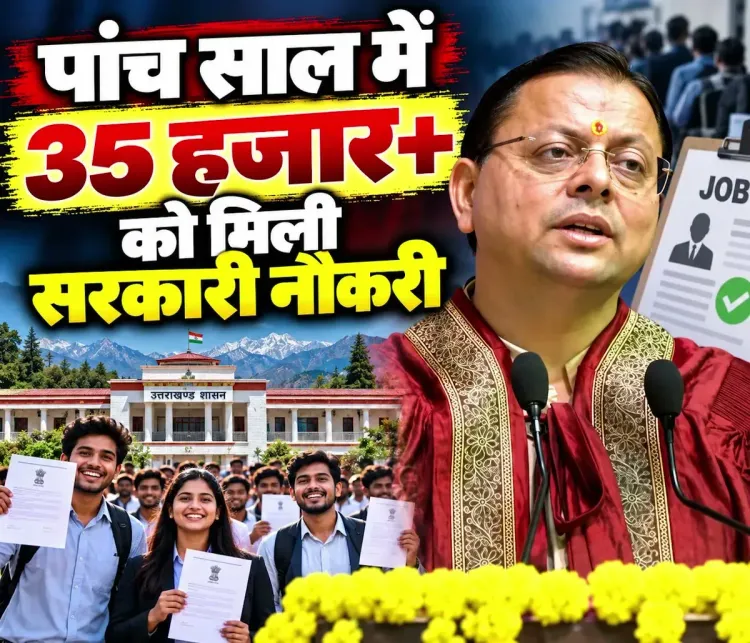
Dhami claims over 35,000 government jobs have been filled through transparent recruitment under the new framework — though this figure is unverified from independent public records.
The law aims to dismantle setting-getting and parchi-kharchi culture — influence-brokering and bribery in public-sector hiring.
Multiple Indian states including Rajasthan, Uttar Pradesh, and Bihar have introduced similar legislation amid nationwide public anger over recruitment scams.
Future prosecution records and upcoming recruitment drives will be the real test of whether the law's gains are durable.
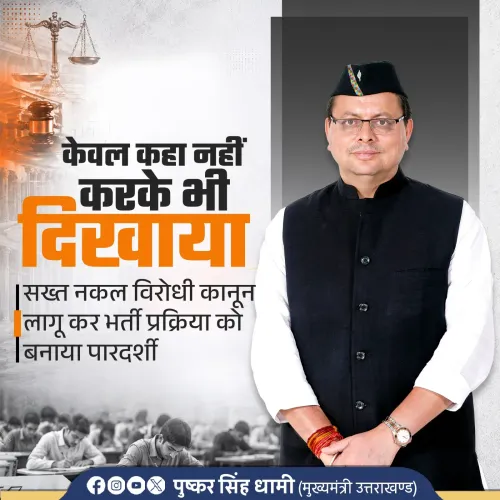
The exam mafia once treated Uttarakhand's government job market like a personal ATM — but Uttarakhand Chief Minister Pushkar Singh Dhami says those days are over. In a post on X on Thursday, 22 October 2026, Dhami cited a strict anti-cheating law as the force behind what he claims is a cleaner, fairer hiring process — one that has now placed over 35,000 young people into government jobs on merit alone.
Posting in Hindi, Dhami wrote: 'युवाओं की मेहनत और योग्यता पर नकल माफिया डाका न डाल सके' — 'So that the cheating mafia cannot rob the hard work and ability of the youth' — the state has enforced a tough anti-copying law. He added that the era of 'setting-getting' (influence-brokering) and 'parchi-kharchi' (chit-and-bribe culture) in public recruitments is now effectively under check, opening the door for deserving candidates to advance on the strength of their talent.The Law That Started It: Uttarakhand's 2023 Examination Act
The legislation Dhami references is the Uttarakhand Public Examination (Prevention of Unfair Means) Act, passed by the state assembly in 2023. The law was a direct legislative response to a pattern seen across India: organised syndicates leaking question papers, planting proxy candidates, and corrupting entire recruitment cycles — gutting the chances of lakhs of genuine aspirants who spend years preparing for a single exam.
The Act targets not just individual cheaters but the network behind them — the 'naqal mafia' — with provisions designed to enable prosecutions at the organised-crime level rather than treating paper leaks as routine exam irregularities. Its passage put Uttarakhand among a cohort of states that moved aggressively on the issue after high-profile recruitment scandals dented public trust in competitive hiring.
A National Pattern, a State-Level Bet
Uttarakhand is not alone. Several Indian states — including Rajasthan, Uttar Pradesh, and Bihar — introduced or tightened anti-paper-leak statutes in the same period, responding to similar public fury over rigged exams. What makes the political moment significant is the scoreboard: governments are now under pressure to show the laws produce measurable outcomes, not just headlines at the time of passage.
Dhami's claim of more than 35,000 government jobs filled through transparent recruitment under the new framework is the number his administration is putting on the table. That figure — offered as proof the system is working — will be the central metric critics and beneficiaries alike will test against their own experience on the ground.
What Aspirants and Watchdogs Will Be Looking For
The real credibility test lies ahead. Future recruitment cycles, the number of prosecutions under the Act, and independent assessments of selection processes will determine whether Uttarakhand's anti-cheating architecture holds under pressure — or whether the mafia simply adapts. For the hundreds of thousands of young job aspirants in the state, the stakes could not be more concrete: a single government posting can transform a family's economic trajectory for a generation.
If the numbers stand scrutiny, Dhami's administration will have turned a law-and-order intervention into a youth-employment story — a combination that plays powerfully in a state heading toward its next electoral cycle.
Point of View
000-jobs figure, if it withstands scrutiny, becomes a campaign-ready data point ahead of Uttarakhand's electoral calendar. More broadly, state governments across India are under intense pressure to demonstrate that post-scandal legislation produces real outcomes, not just optics — making Uttarakhand's implementation record a closely-watched model. The unverified nature of the headline number, however, means independent audit and continued enforcement will determine whether this story is a genuine governance win or a well-timed narrative.
NationPress
22 Oct 2026
Frequently Asked Questions
What is the Uttarakhand anti-cheating law?
The Uttarakhand Public Examination (Prevention of Unfair Means) Act, passed in 2023, is a strict law targeting organised cheating, paper leaks, and mafia influence in government recruitment and public examinations in the state.
How many government jobs have been filled under Uttarakhand's new recruitment process?
Chief Minister Pushkar Singh Dhami has claimed that over 35,000 youth have received government jobs through transparent recruitment processes following the enforcement of the anti-cheating law, though this figure has not been independently verified.
What does 'setting-getting' and 'parchi-kharchi' mean in Indian exam context?
'Setting-getting' refers to using personal connections or influence to manipulate recruitment outcomes, while 'parchi-kharchi' denotes the use of chits and cash bribes to secure government jobs — both are colloquial terms for corruption in public-sector hiring.
Which other states in India have passed anti-paper-leak laws?
States including Rajasthan, Uttar Pradesh, and Bihar have introduced or tightened anti-paper-leak and anti-cheating legislation in recent years following widespread public anger over repeated recruitment exam scandals.
Who is Pushkar Singh Dhami?
Pushkar Singh Dhami is the Chief Minister of Uttarakhand and a BJP leader who has been in office since 2021, with a focus on governance reforms including the crackdown on exam fraud and transparent public-sector recruitment.