CM Dhami Urges Uttarakhand to Pledge Blood Donation on World Blood Donor Day
Synopsis
Uttarakhand Chief Minister Pushkar Singh Dhami marked World Blood Donor Day on 14 June 2026 by calling on citizens to pledge voluntary blood donation, describing it as the greatest gift capable of saving lives and restoring happiness to families.
Key Takeaways
World Blood Donor Day is observed on 14 June every year, established by the WHO in 2004 to promote voluntary, unpaid blood donation.
CM Pushkar Singh Dhami extended greetings and urged citizens to pledge blood donation, calling it 'mahadan' — the greatest gift.
India's National Blood Policy (2002) mandates voluntary, non-remunerated donation as the backbone of the country's blood supply system.
The National Blood Transfusion Council (NBTC) and NACO run recurring national campaigns aligned with this observance.
Uttarakhand health authorities typically organise blood donation camps around 14 June as part of the annual drive.
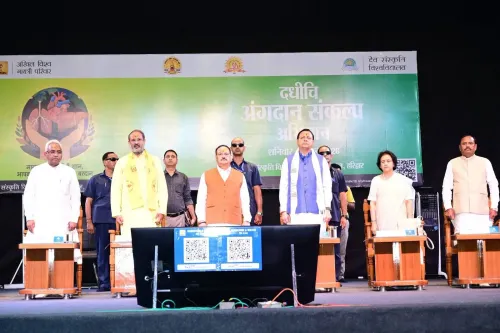
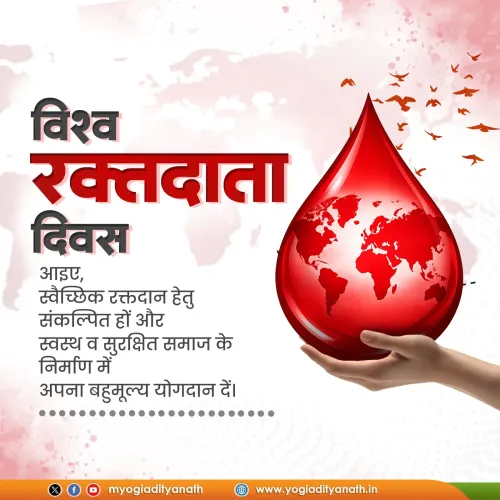
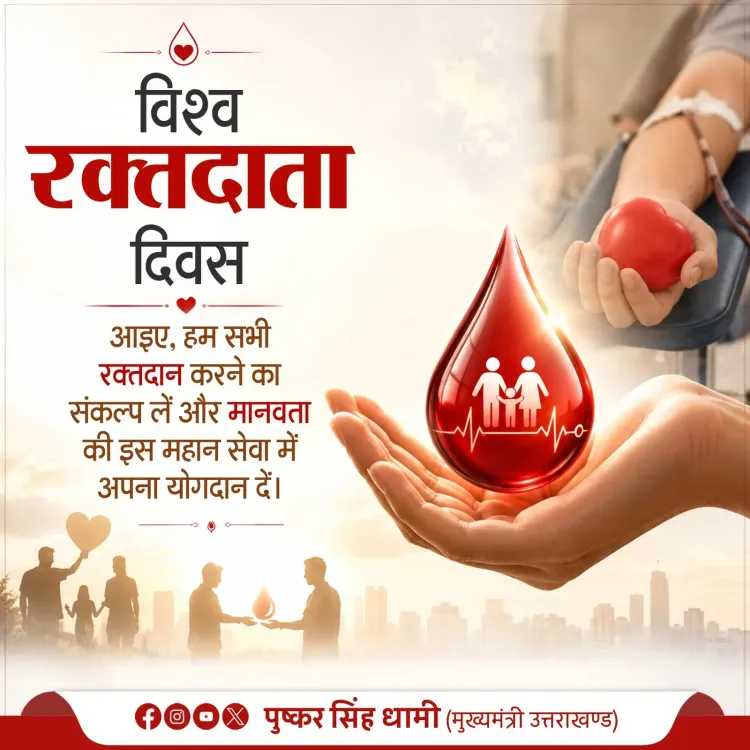
Uttarakhand Chief Minister Pushkar Singh Dhami on Sunday, 14 June 2026 extended greetings on World Blood Donor Day and called on citizens to pledge voluntary blood donation, describing the act as 'mahadan' — the greatest gift one can give.
Posting in Hindi on the occasion, Chief Minister Dhami wrote: 'Rakt daan mahadan hai, jo kisi ko naya jeevan de sakta hai aur unke parivaron mein khushiyan lauta sakta hai' ('Blood donation is the greatest gift, which can give someone a new life and bring happiness back to their families'). He urged all citizens to take a pledge on this day to donate blood and contribute to this 'great service to humanity.'
Context
World Blood Donor Day is observed every year on 14 June — the birth anniversary of Karl Landsteiner, the scientist who discovered the ABO blood group system. The day was established by the World Health Organization (WHO) in 2004 to raise awareness about the need for safe blood and blood products and to thank voluntary, unpaid blood donors worldwide.
Indian state governments, including Uttarakhand, routinely align their public health messaging with WHO-designated global health days, using the occasion to mobilise citizen participation in donation drives and screening programmes under the National Health Mission.
Policy Backdrop
India adopted its National Blood Policy in 2002, with the primary objective of ensuring an adequate and safe supply of blood through voluntary, non-remunerated donation. The policy also sought to strengthen transfusion services and eliminate paid donation practices across the country.
Institutional oversight rests with the National Blood Transfusion Council (NBTC) and NACO (National AIDS Control Organisation), which run recurring national campaigns to improve voluntary donation rates. Uttarakhand's health department participates in these drives, typically organising blood donation camps around 14 June each year.
Stakeholders and Impact
Voluntary blood donors and patients requiring transfusions — including those undergoing surgery, cancer treatment, or managing conditions such as thalassaemia — are the primary stakeholders in any awareness push of this kind. A steady voluntary donor base is critical to maintaining safe blood stocks, particularly in hilly states like Uttarakhand where geographic remoteness can complicate emergency supply chains.
Chief Minister Dhami's appeal, amplified through social media, is aimed at encouraging first-time donors and reinforcing a culture of regular voluntary donation among residents of the state.
What's Next
The Uttarakhand health department is expected to coordinate blood donation camps and collection drives across districts around this observance, in line with annual practice. Broader integration with the Ayushman Bharat health infrastructure — which seeks to strengthen primary and secondary healthcare access — could further embed voluntary donation into the state's health ecosystem in the coming years.
As India continues to work toward the WHO's goal of meeting all national blood requirements through voluntary donation, state-level leadership messaging on occasions like World Blood Donor Day plays a supporting role in sustaining public awareness and participation.
Point of View
Particularly when backed by on-ground donation camps, can meaningfully shift donor behaviour over time.
NationPress
14 Sept 2026
Frequently Asked Questions
Why is World Blood Donor Day celebrated on 14 June?
World Blood Donor Day is observed on 14 June because it marks the birth anniversary of Karl Landsteiner , who discovered the ABO blood group system. The WHO established the annual observance in 2004 to thank voluntary donors and raise awareness about safe blood supply.
What did Uttarakhand CM Dhami say on World Blood Donor Day 2026?
CM Pushkar Singh Dhami extended greetings and urged all citizens to pledge voluntary blood donation, describing it as 'mahadan' — the greatest gift — that can give someone a new life and restore happiness to their families.
What is India's National Blood Policy?
India adopted its National Blood Policy in 2002 to ensure an adequate and safe supply of blood through voluntary, non-remunerated donation. It also aims to strengthen transfusion services and eliminate paid blood donation across the country.
Which body oversees blood donation campaigns in India?
The National Blood Transfusion Council (NBTC) and NACO (National AIDS Control Organisation) are the primary bodies that oversee and run national voluntary blood donation awareness campaigns in India.
Does Uttarakhand organise blood donation camps on World Blood Donor Day?
Yes, the Uttarakhand health department typically organises blood donation camps and collection drives across districts around 14 June each year as part of the national observance.