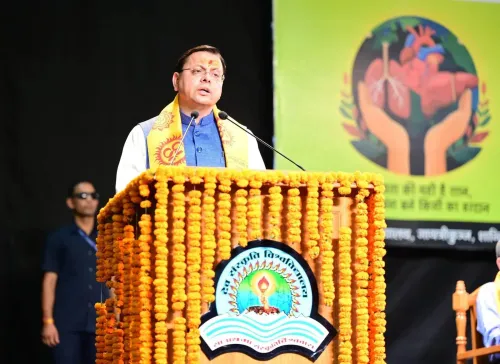
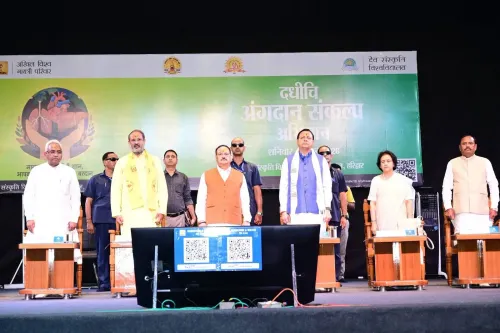
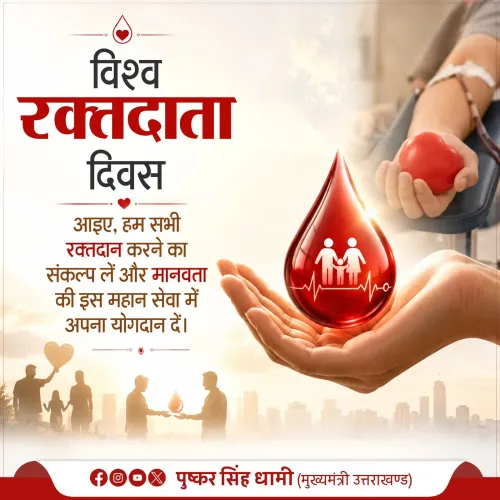
CM Dhami calls on Uttarakhand residents to donate blood voluntarily
Synopsis
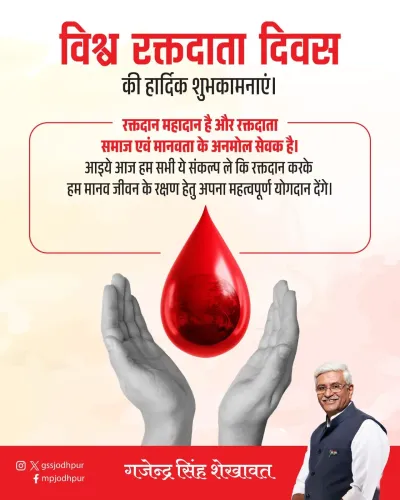
On the eve of National Voluntary Blood Donation Day (1 October 2026), Uttarakhand CM Pushkar Singh Dhami called voluntary blood donation the greatest gift one can give, urging all healthy residents to donate regularly and dispelling fears about health risks.
Key Takeaways
CM Pushkar Singh Dhami issued a public appeal on 30 September 2026 ahead of National Voluntary Blood Donation Day.
He described blood donation as mahadan (the greatest gift) and said it can give a person 'a new gift of life.' National Voluntary Blood Donation Day is observed on 1 October annually under the National Blood Transfusion Council framework.
Dhami assured citizens that donating blood at prescribed intervals causes no adverse health effects and the body replenishes blood naturally.
The appeal aims to shift Uttarakhand's blood supply from replacement donation toward voluntary, non-remunerated donation — the global safety standard.
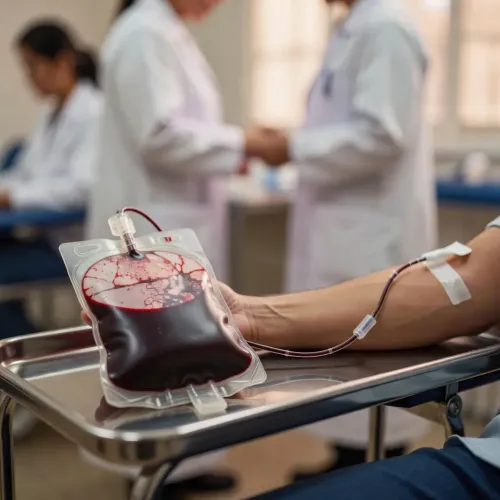
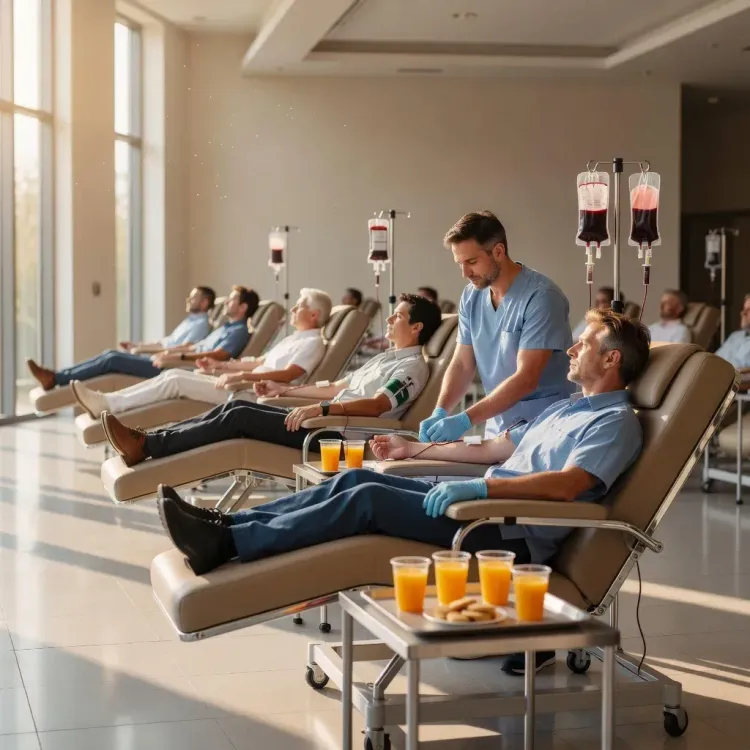
One unit of blood can save up to three lives — and on the eve of National Voluntary Blood Donation Day, 1 October 2026, Uttarakhand Chief Minister Pushkar Singh Dhami is asking every healthy citizen of the state to step forward and give that gift. In a message issued by the Chief Minister's Office, Dhami described voluntary blood donation as mahadan — the greatest of gifts — and urged residents to make it a regular, fearless habit.
What Dhami's message says — and why it matters
In his appeal, CM Dhami stated that the day's purpose is twofold: to build public awareness about blood donation and to ensure that patients in need receive blood on time. He directly addressed a common fear, noting that a healthy person who donates blood at prescribed intervals faces no adverse health effects, and that the body replenishes donated blood naturally. The message is calibrated to dismantle hesitation, not just celebrate a calendar date.
National Voluntary Blood Donation Day and India's blood supply challenge
National Voluntary Blood Donation Day has been observed on 1 October every year under the framework of the National Blood Transfusion Council since the early 2000s. The day exists because India's blood supply system has historically leaned heavily on replacement donation — where a patient's family arranges a donor — rather than voluntary, non-remunerated donation, which is considered the gold standard for blood safety. State-level appeals like Dhami's form a critical part of the national push to shift that balance.
Uttarakhand, a hilly state with dispersed populations and hospitals that can face acute supply crunches, has particular reason to build a robust voluntary donor base. A steady pool of registered voluntary donors reduces the pressure on patients' families during emergencies and improves outcomes across trauma, surgery, and maternal care.
The science behind 'no harm' — and why leaders keep saying it
Dhami's reassurance that donation at 'determined intervals' causes no harm is medically grounded: standard guidelines recommend a minimum gap of 56 days between whole-blood donations, during which the body fully restores red blood cell levels. The fact that a sitting Chief Minister felt the need to state this publicly reflects how deeply rooted hesitation remains in large parts of the population — making the communication as important as any policy intervention.
With blood donation camps expected across Uttarakhand on 1 October, the real measure of this appeal will come in the volumes registered by the state health department in the days that follow. Every name on that donor list is a life held in reserve.
Point of View
High-reach communication strategy. For Uttarakhand specifically, building voluntary donor rolls addresses a structural vulnerability: a mountainous geography that makes emergency resupply difficult. The framing of donation as 'mahadan' taps into a deep cultural register around selfless giving, which research suggests is more persuasive in rural and semi-urban contexts than clinical messaging alone. Whether the appeal translates into measurable uptake will depend on how aggressively the state health department follows through with organised camps and donor registration drives on 1 October.
NationPress
30 Sept 2026
Frequently Asked Questions
When is National Voluntary Blood Donation Day in India?
National Voluntary Blood Donation Day is observed every year on 1 October across India under the National Blood Transfusion Council framework.
What did CM Dhami say about blood donation on 1 October 2026?
CM Pushkar Singh Dhami called voluntary blood donation mahadan (the greatest gift) and urged all healthy Uttarakhand residents to donate regularly, assuring them it causes no harm to their health.
Is it safe to donate blood regularly?
Yes. A healthy person can donate whole blood every 56 days (roughly every two months) with no adverse health effects, as the body naturally replenishes donated blood — a point CM Dhami specifically highlighted in his appeal.
Why does Uttarakhand need voluntary blood donors?
Uttarakhand's hilly terrain and dispersed population make emergency blood resupply logistically difficult. A strong voluntary donor base reduces dependence on last-minute replacement donors and improves outcomes in trauma, surgery, and maternal care.
What is the difference between voluntary and replacement blood donation?
Voluntary donation means a healthy individual donates blood without being asked by a specific patient's family, building a safe communal reserve. Replacement donation requires a patient's relatives to arrange a donor on demand — a system considered less safe and more stressful for families.