CM Dhami Leads Char Dham Yatra Toward Record Pilgrims
Synopsis
The Chief Minister's Office of Uttarakhand announced on 22 July 2026 that the Char Dham Yatra is heading toward a new record this season under CM Pushkar Singh Dhami, reflecting the impact of improved road connectivity and digital pilgrim management systems.
Key Takeaways
The Chief Minister's Office of Uttarakhand declared on 22 July 2026 that the Char Dham Yatra is on track to set a new seasonal record.
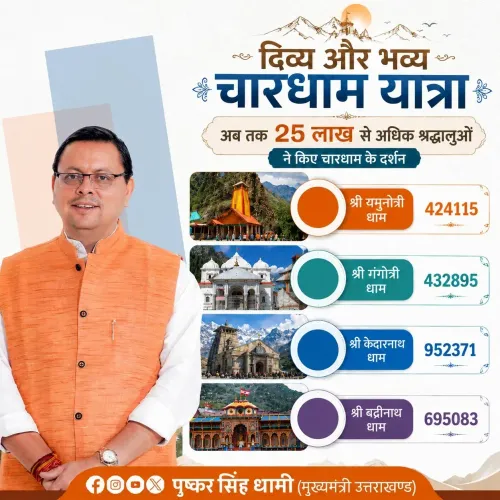
The yatra covers four shrines — Yamunotri, Gangotri, Kedarnath , and Badrinath — and is a major driver of Uttarakhand's economy.
The Char Dham All Weather Road project , approved in 2016 , has progressively improved access to the shrines.
Mandatory pilgrim registration and digital traffic management, introduced around 2019–2020 , have improved safety and crowd regulation.
CM Pushkar Singh Dhami has been credited by the state government for the yatra's strong performance this season.
Official end-of-season statistics will confirm whether a formal record has been broken.
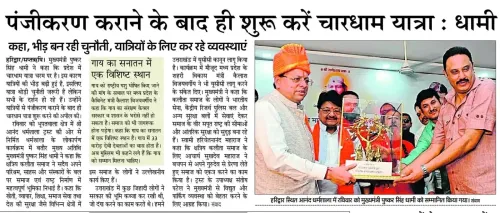
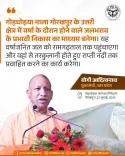
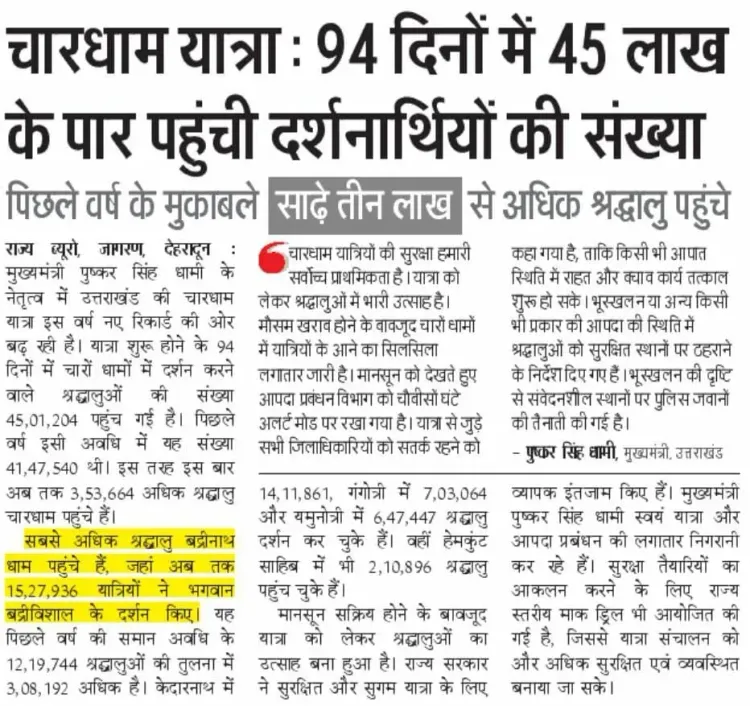
The Chief Minister's Office of Uttarakhand announced on Wednesday, 22 July 2026, that the Char Dham Yatra is on course to set a new record this season under the leadership of Chief Minister Pushkar Singh Dhami, marking a significant milestone for the state's religious tourism sector.
The post stated, 'मुख्यमंत्री श्री पुष्कर सिंह धामी के नेतृत्व में चारधाम यात्रा इस बार नए रिकॉर्ड की ओर बढ़ रही है' — ('Under the leadership of Chief Minister Shri Pushkar Singh Dhami, the Char Dham Yatra is moving towards a new record this time') — signalling strong momentum in pilgrim footfall at the four sacred shrines.
Context
The Char Dham Yatra is an annual Hindu pilgrimage circuit encompassing four high-altitude temples — Yamunotri, Gangotri, Kedarnath, and Badrinath — nestled in the Uttarakhand Himalayas. The yatra is among the most significant religious events in India, drawing pilgrims from across the country and abroad each season, typically running from late April or May through November before winter snowfall closes the shrine portals.
Uttarakhand's economy is substantially dependent on religious tourism, making strong pilgrim numbers a key indicator of both economic health and administrative effectiveness for the state government.
Policy Backdrop
The current momentum builds on years of infrastructure investment. The central government approved the Char Dham All Weather Road project in 2016, aimed at providing year-round, all-weather road connectivity to the four shrines — a project that has progressively improved access and reduced travel time for pilgrims.
The Uttarakhand government also introduced mandatory pilgrim registration and digital traffic management systems around 2019–2020, following crowd-related incidents in earlier seasons. These systems have since helped regulate pilgrim flow, improve safety, and generate reliable footfall data — factors that collectively contribute to the conditions for record-breaking numbers.
Stakeholders and Impact
A record pilgrimage season benefits a wide range of stakeholders. Local residents in shrine towns — including hoteliers, transporters, shopkeepers, and priests — see direct economic gains from higher footfall. Tourism operators across Uttarakhand and feeder cities stand to gain from increased package bookings and travel demand.
For pilgrims themselves, improved road connectivity and digital registration systems mean a safer and more organised experience compared to earlier seasons. The state government's emphasis on record numbers also reflects a broader administrative push to position Uttarakhand as India's premier religious tourism destination.
What's Next
The key markers to watch will be the official end-of-season pilgrim count, which will confirm whether the yatra has indeed surpassed previous records, and any related infrastructure completion announcements before the current financial year closes. The Dhami government is expected to use strong yatra statistics to underline its governance credentials ahead of future electoral cycles.
Broader patterns across Indian states show that sustained investment in road access, digital systems, and pilgrim facilities consistently translates into higher annual counts — suggesting that Uttarakhand's trajectory is likely to continue upward if infrastructure commitments are maintained.
Point of View
Framing administrative continuity under CM Dhami as the driver of success. This fits a well-established pattern across Indian states where ruling governments tie religious tourism milestones to incumbent leadership — converting footfall data into electoral narrative. The underlying infrastructure, including the all-weather road project and digital registration systems, predates the current administration, which means the record, if confirmed, reflects cumulative policy investment rather than any single government's effort. Analysts will watch whether the season-end figures are accompanied by fresh infrastructure announcements, which would signal the government is looking to extend this narrative into the next electoral cycle.
NationPress
22 Jul 2026
Frequently Asked Questions
What is the Char Dham Yatra and where does it take place?
The Char Dham Yatra is an annual Hindu pilgrimage circuit in Uttarakhand , covering four sacred shrines — Yamunotri, Gangotri, Kedarnath , and Badrinath . It typically runs from late April or May until November each year.
Is Char Dham Yatra 2026 breaking a record?
The Chief Minister's Office of Uttarakhand stated on 22 July 2026 that the yatra is moving toward a new record this season. Official confirmation will come with end-of-season pilgrim count data.
Who is Pushkar Singh Dhami?
Pushkar Singh Dhami is the Chief Minister of Uttarakhand , serving since March 2021 . He has been associated with the state's development and religious tourism initiatives.
How has the government improved Char Dham Yatra infrastructure?
The central government approved the Char Dham All Weather Road project in 2016 to provide year-round connectivity to the four shrines. The state government also introduced mandatory pilgrim registration and digital traffic management systems around 2019–2020 .
How do I register for Char Dham Yatra?
The Uttarakhand government operates a mandatory online pilgrim registration system for the Char Dham Yatra, introduced to manage crowd flow and improve safety at the four shrines. Pilgrims are required to register before undertaking the journey.