CM Dhami Reaffirms 30% Horizontal Job Quota for Uttarakhand Women
Synopsis
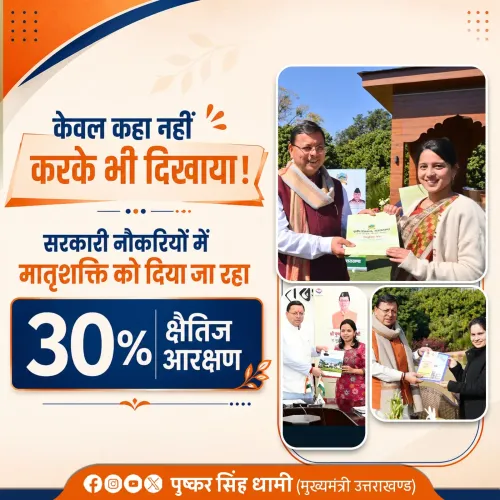
Uttarakhand Chief Minister Pushkar Singh Dhami has reaffirmed a 30% horizontal reservation for women across state government jobs, positioning it as a structural guarantee of equal participation in public employment and a pillar of women's self-reliance in the hill state.
Key Takeaways
Pushkar Singh Dhami , Chief Minister of Uttarakhand, reaffirmed on 6 August 2026 that women will receive 30% horizontal reservation in state government jobs.
A horizontal reservation cuts across all vertical categories (General, OBC, SC, ST), providing a structural guarantee rather than a standalone quota.
The policy is framed under the government's commitment to making the women of Uttarakhand self-reliant ( aatmanirbhar ) and equal partners in development.
Uttarakhand's chronic male out-migration makes expanding women's presence in government employment a pressing economic and social priority.
Specific implementation timelines, departmental coverage, and recruitment notifications have not yet been publicly confirmed.
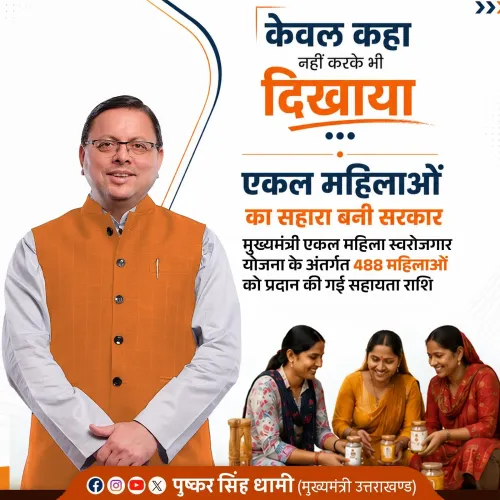
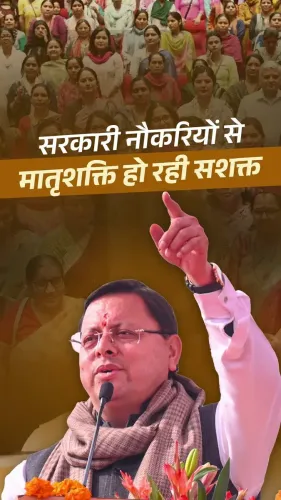
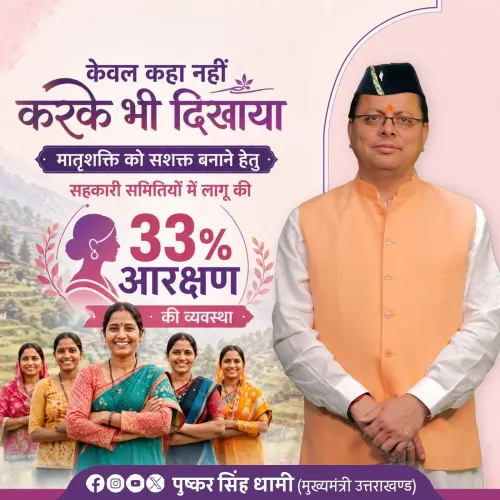
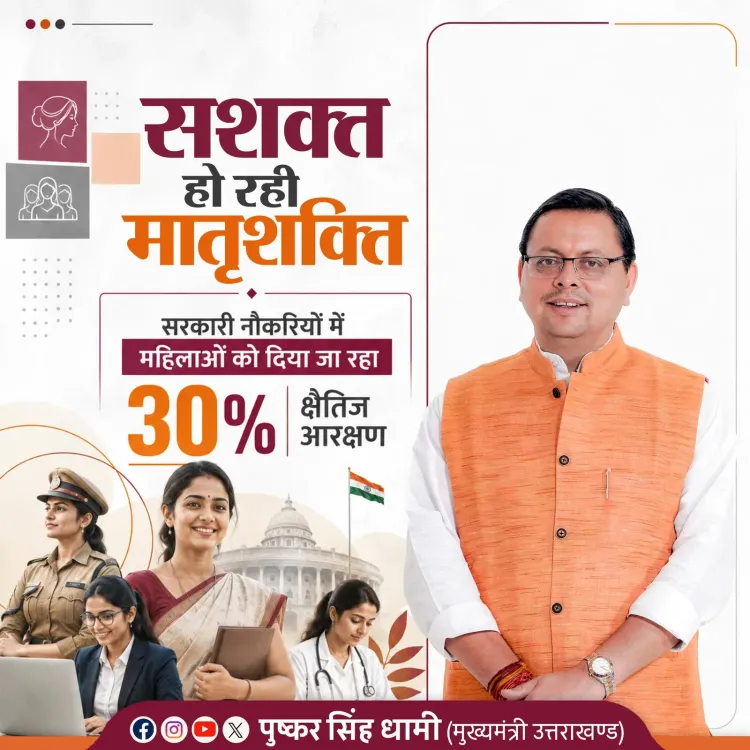
A single policy commitment is reshaping the hiring landscape for thousands of women across Uttarakhand. Chief Minister Pushkar Singh Dhami on Thursday, 6 August 2026 reaffirmed his government's decision to provide 30% horizontal reservation for women in state government jobs — framing it as a cornerstone of his administration's pledge to make the women of Uttarakhand self-reliant and equal partners in the state's development.
Posting in Hindi, CM Dhami wrote: 'प्रदेश की मातृशक्ति को आत्मनिर्भर बनाने और विकास में उनकी समान भागीदारी सुनिश्चित करने के लिए हमारी सरकार निरंतर प्रतिबद्धता के साथ कार्य कर रही है' — ('Our government is working with unwavering commitment to make the women of the state self-reliant and to ensure their equal participation in development.')
What 'Horizontal' Means — and Why It Matters
A horizontal reservation cuts across existing vertical categories — general, OBC, SC, ST — ensuring that the 30% share for women is carved out within each vertical slab, not just from an open pool. This is a structurally stronger guarantee than a simple quota bolted on top: a woman from the OBC category, for instance, competes within the OBC vertical while still benefiting from the horizontal protection. The architecture matters as much as the number.
Indian states have periodically introduced such horizontal reservations to lift female workforce participation in public employment — a metric that has historically lagged well behind male participation in the hill state. For Uttarakhand, where migration of working-age men to the plains is a chronic demographic pressure, expanding women's footprint in government jobs carries both economic and social weight.
Dhami Government's Broader Push on Women's Self-Reliance
The Chief Minister's post invokes 'mātṛśakti' — literally 'the power of mothers', a term the BJP has consistently deployed to frame its women-centric welfare agenda. The 30% job quota sits alongside a wider pattern of state-level initiatives aimed at economic empowerment of women in Uttarakhand, though the specific rollout mechanism, departmental coverage, and recruitment notification timelines for this quota have not yet been publicly confirmed.
What to watch: how the reservation is operationalised across different recruitment boards and whether it applies uniformly to all state services or is limited to select cadres. Those details will determine whether the policy's ambition translates into measurable hiring outcomes for women aspirants across the state.
For now, Dhami has drawn the line clearly — the doors are open. Whether the pipeline fills depends on what comes next.
Point of View
But their real test lies in implementation: which recruitment boards adopt them, how disputes are adjudicated, and whether the hill state's relatively small government-job pipeline can absorb the change without friction. The move fits a broader BJP pattern of using targeted welfare commitments to consolidate women voters, a demographic that has increasingly swung elections across north India.
NationPress
6 Aug 2026
Frequently Asked Questions
What is the 30% horizontal reservation for women in Uttarakhand government jobs?
It is a policy that reserves 30% of seats for women across all vertical reservation categories — General, OBC, SC, ST — in Uttarakhand state government recruitment, ensuring women in each category benefit from the quota rather than competing from a single open pool.
What is the difference between horizontal and vertical reservation?
Vertical reservations are category-based quotas (SC, ST, OBC, General). Horizontal reservations, like the 30% women's quota, cut across all vertical categories simultaneously, so a woman from the OBC category, for example, is counted within the OBC vertical while still protected by the horizontal quota.
When will the 30% women's reservation in Uttarakhand government jobs be implemented?
The specific implementation timeline and recruitment notifications have not yet been officially confirmed. Chief Minister Dhami's post reaffirmed the policy commitment, but departmental rollout details are still awaited.
Which departments in Uttarakhand will the women's job reservation apply to?
The exact coverage of departments and cadres under the 30% horizontal quota has not been publicly confirmed yet. The announcement covers state government jobs broadly, but specifics are pending official notification.
Why is women's employment reservation significant for Uttarakhand?
Uttarakhand faces significant male out-migration to the plains, making women's economic participation in government employment critical for household incomes and community stability in the hill state. A structured job quota directly addresses this demographic and economic gap.