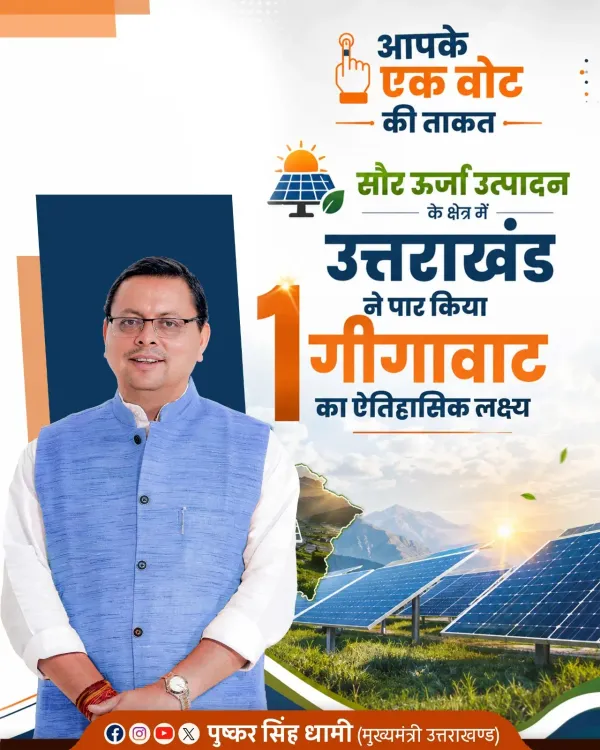
CM Dhami: Uttarakhand crosses 1 GW solar capacity
Synopsis
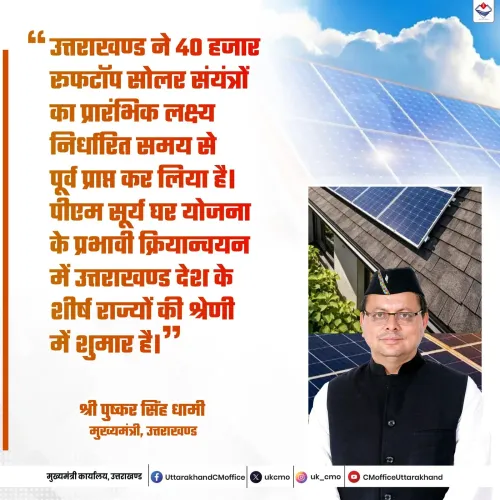
Uttarakhand Chief Minister Pushkar Singh Dhami announced on 23 July 2026 that the state has crossed 1 gigawatt of solar power capacity, framing the milestone as proof that electoral choices translate into tangible development and a cleaner energy future for the Himalayan state.
Key Takeaways
Uttarakhand has crossed 1 gigawatt (GW) of installed solar energy capacity, according to CM Pushkar Singh Dhami's announcement on 23 July 2026 .
The milestone is positioned as a landmark in the state's drive for energy self-reliance, environmental conservation, and sustainable development.
CM Dhami explicitly linked the achievement to electoral choices, stating that a vote lays the foundation for 'development, innovation, and a bright future.' The achievement builds on Uttarakhand's Solar Energy Policy (2013) and aligns with India's national target of 500 GW non-fossil capacity by 2030 .
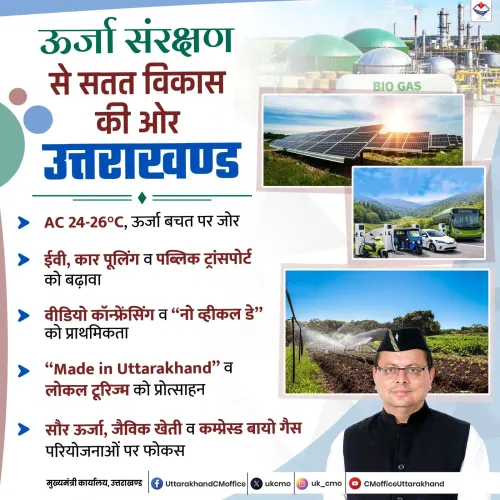
Uttarakhand combines solar with existing hydropower resources, positioning it as a model for energy security among ecologically sensitive Himalayan states.
Further announcements on solar parks and integration with central schemes such as PM-KUSUM are expected as the state builds beyond the 1 GW mark.
Uttarakhand Chief Minister Pushkar Singh Dhami announced on Thursday, 23 July 2026 that the state has crossed a 1 gigawatt (GW) milestone in solar energy production, calling it a historic achievement in clean and green energy. The announcement underscores the state government's push for energy self-reliance and sustainable development in one of India's most ecologically sensitive Himalayan regions.
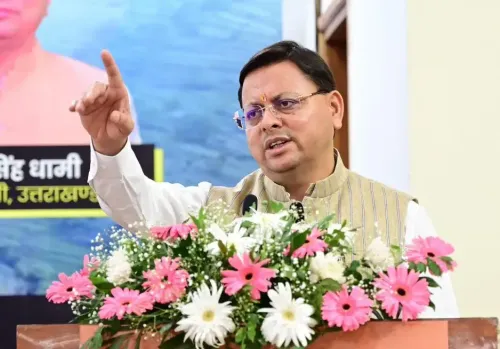
Posting in Hindi on X, CM Dhami wrote: 'Uttarakhand ne swachh aur harit urja ke kshetra mein ek naya itihas rachte hue saur urja utpadan mein 1 gigawatt ki aitihasik kshamata ka aankda paar kar liya hai' — 'Uttarakhand has created new history in the field of clean and green energy by crossing the historic milestone of 1 gigawatt in solar power production.' He added that the achievement reinforces the state's resolve toward energy self-reliance, environmental conservation, and sustainable development.
Context
Uttarakhand has long relied on its substantial hydropower resources, given its Himalayan geography and river systems. The state's pivot toward solar energy represents a diversification of its energy mix, reducing dependence on a single renewable source and building resilience against seasonal hydro variability. Crossing the 1 GW threshold in solar capacity marks a significant scale-up from the relatively modest targets the state set when it first framed its Solar Energy Policy in 2013.
The milestone also carries a pointed political message. CM Dhami explicitly linked the achievement to electoral choices, stating that 'your one vote does not just elect a government, but also lays a strong foundation for development, innovation, and a bright future.' This framing is consistent with how state governments across India present infrastructure and energy milestones in the run-up to or aftermath of electoral cycles.
Policy Backdrop
India's Jawaharlal Nehru National Solar Mission, launched in 2010, set the country on a trajectory of rapid solar expansion — initially targeting 20 GW by 2022 before being revised upward as part of a broader 175 GW renewable energy goal. The national ambition has since been scaled further to 500 GW of non-fossil capacity by 2030, aligned with India's commitments under the Paris Agreement.
At the state level, schemes such as PM-KUSUM — aimed at solarising agricultural pump sets and adding distributed solar capacity — have provided additional impetus. Uttarakhand's combination of solar and hydro resources positions it as a model for Himalayan states seeking energy security while managing ecologically sensitive terrain. The 1 GW solar milestone fits squarely within this national and sub-national policy architecture.
Stakeholders and Impact
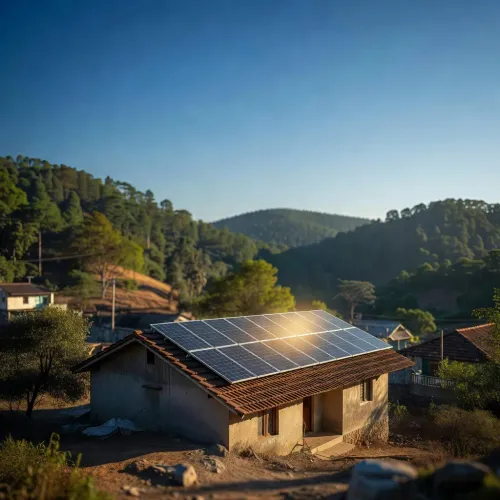
The direct beneficiaries of expanded solar capacity include Uttarakhand's residential and commercial consumers, who stand to gain from a more stable and diversified grid. Renewable energy developers and investors operating in the state also receive a confidence signal that the policy environment supports scale. For the state's hill communities, clean energy access can reduce dependence on diesel generators and firewood, with positive environmental co-benefits in a region of high ecological value.
Environmental groups and conservationists will watch closely to ensure that solar installations — particularly larger ground-mounted parks — do not encroach on forest land or disrupt local biodiversity. Balancing capacity addition with ecological safeguards remains a live tension in Himalayan solar deployment.
What's Next
The announcement is likely to be followed by further state-level disclosures on planned solar parks, integration with central schemes, and updates to Uttarakhand's renewable purchase obligations. The government may also outline targets beyond the 1 GW mark as the national 2030 deadline approaches. As CM Dhami frames energy milestones as a dividend of electoral trust, the state's renewable energy trajectory will remain a visible plank of the BJP government's development narrative in Uttarakhand.
Point of View
And it signals that Uttarakhand is successfully diversifying its renewable portfolio. What stands out, however, is CM Dhami's deliberate electoral framing — tying a technical infrastructure achievement to the act of voting is a well-worn but effective political communication strategy that the BJP has deployed across multiple state governments. The announcement fits a broader national pattern where state-level renewable energy milestones are increasingly presented as governance dividends rather than purely technical accomplishments. Analysts will watch whether the milestone is backed by detailed capacity data and whether future targets are codified in updated state energy plans.
NationPress
23 Jul 2026
Frequently Asked Questions
Has Uttarakhand crossed 1 GW of solar power capacity?
Yes. Chief Minister Pushkar Singh Dhami announced on 23 July 2026 that Uttarakhand has crossed 1 gigawatt of installed solar energy capacity, describing it as a historic milestone in clean and green energy.
What is Uttarakhand's solar energy policy?
Uttarakhand framed its Solar Energy Policy in 2013 to attract investment and promote grid-connected solar projects. The policy has since been reinforced by central schemes such as PM-KUSUM and aligns with India's national target of 500 GW non-fossil capacity by 2030 .
Why is 1 GW solar capacity significant for Uttarakhand?
The 1 GW milestone represents a major scale-up in Uttarakhand's energy mix, reducing its dependence on hydropower alone. It also demonstrates that a Himalayan state can expand solar capacity while managing ecologically sensitive terrain.
What did CM Dhami say about the solar energy milestone?
CM Dhami said the achievement reinforces the state's resolve toward 'energy self-reliance, environmental conservation, and sustainable development.' He also linked it to electoral choices, saying that a vote 'lays a strong foundation for development, innovation, and a bright future.'
What is India's national solar energy target?
India aims to achieve 500 GW of non-fossil energy capacity by 2030 as part of its Paris Agreement commitments. The Jawaharlal Nehru National Solar Mission , launched in 2010 , was the foundational policy that set the country on its solar expansion path.