CM Dhami Vows No Demographic Change in Uttarakhand
Synopsis
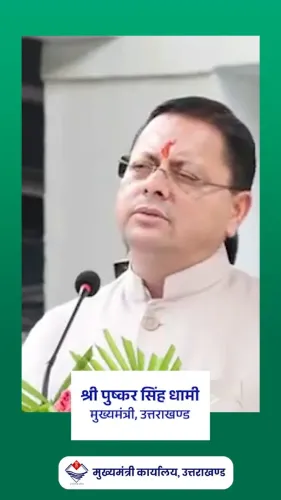
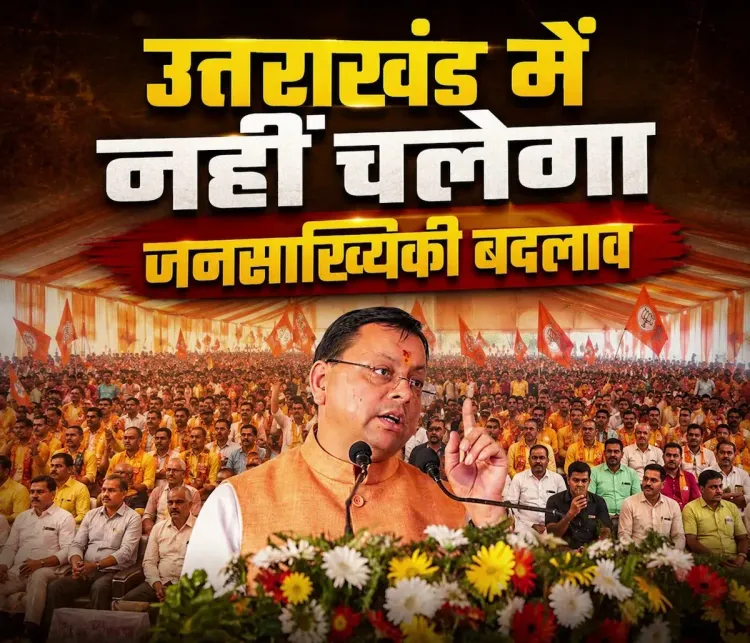
Uttarakhand Chief Minister Pushkar Singh Dhami on 21 July 2026 declared that no demographic change will be permitted in the state at any cost, reaffirming his government's commitment to protecting the cultural identity and heritage of Devbhoomi.
Key Takeaways
CM Pushkar Singh Dhami pledged on 21 July 2026 that his government will allow no demographic change in Uttarakhand at any cost.
He vowed to protect the state's rich traditions, cultural heritage, and the distinct identity of Devbhoomi (Land of Gods).
Uttarakhand became the first Indian state to pass a Uniform Civil Code law in February 2024 , a key plank of the Dhami government's social-cohesion agenda.
The statement reflects the BJP's broader emphasis on protecting majority cultural demographics in Himalayan border states.
Next steps to watch include UCC rule enforcement and any new migration-monitoring mechanisms from the state government.
Uttarakhand Chief Minister Pushkar Singh Dhami on Tuesday, 21 July 2026, declared that his government is fully committed to protecting the culture and original character of Uttarakhand, pledging that no demographic change will be allowed in the state at any cost.
Context
In a post on X, CM Dhami wrote in Hindi: 'उत्तराखंड की संस्कृति और मूल स्वरूप की रक्षा के लिए हमारी सरकार पूर्णतः प्रतिबद्ध है' ['Our government is fully committed to protecting the culture and original character of Uttarakhand']. He added that the rich traditions, cultural heritage, and distinct identity of Devbhoomi — the 'Land of Gods', as Uttarakhand is widely known — will be safeguarded, and demographic change will not be permitted 'at any cost'.
The statement is one of the most direct articulations yet by the BJP-led state government of its intent to preserve what it describes as the demographic and cultural fabric of the Himalayan state.
Policy Backdrop
The pledge sits within a broader legislative and administrative push by the Dhami government to assert state identity. In February 2024, Uttarakhand became the first state in India to pass a Uniform Civil Code (UCC) law, intended to standardise personal laws across communities — a move the government framed as advancing social cohesion.
The Bharatiya Janata Party has consistently emphasised the protection of majority cultural demographics in Himalayan border states through legal and administrative mechanisms, including scrutiny of migration patterns and religious conversion. Uttarakhand, which shares borders with Nepal and Tibet, has long been a focus of such concerns within the party's governance framework.
Stakeholders and Impact
The statement directly concerns Uttarakhand's permanent residents, local cultural organisations, and religious bodies that have long advocated for the preservation of the state's Garhwali and Kumaoni traditions. Minority communities and civil society groups, however, have previously raised concerns that such framing can translate into administrative pressure on migrant workers and religious minorities.
The reference to 'demographic change' is a phrase that carries significant political weight in Uttarakhand, where debates over in-migration — particularly from neighbouring states — have influenced local elections and land-use policy for over a decade.
What's Next
Observers will watch closely for concrete follow-up measures, including the enforcement of UCC rules, any new migration-monitoring mechanisms, or legislative proposals that give administrative form to CM Dhami's pledge. The statement is likely to set the tone for the BJP's cultural-governance messaging in Uttarakhand in the months ahead, with state assembly dynamics and local body elections serving as a political backdrop.
Whether the declaration translates into specific policy action — or remains a statement of political intent — will determine its long-term significance for the state's diverse communities.
Point of View
The statement suggests the government is moving from legislative achievement to rhetorical consolidation — reinforcing its base ahead of future electoral cycles. The explicit use of the phrase 'demographic change' is significant: it frames migration and cultural dilution as existential threats, a framing that resonates strongly with the party's core voters in the hill state. How the administration converts this pledge into policy will be the real test of its commitment.
NationPress
21 Jul 2026
Frequently Asked Questions
What did CM Dhami say about demographic change in Uttarakhand?
CM Pushkar Singh Dhami stated on 21 July 2026 that his government will not allow demographic change in Uttarakhand at any cost, pledging to protect the state's cultural heritage and the distinct identity of Devbhoomi.
What is Devbhoomi and why is it significant?
Devbhoomi, meaning 'Land of Gods', is the popular name for Uttarakhand, reflecting its status as home to major Hindu pilgrimage sites and a deeply rooted spiritual and cultural identity that the state government has pledged to protect.
What is the Uniform Civil Code in Uttarakhand?
In February 2024, Uttarakhand became the first Indian state to pass a Uniform Civil Code law, which aims to standardise personal laws across communities and was presented by the Dhami government as a measure to promote social cohesion.
Why is demographic change a sensitive issue in Uttarakhand?
Uttarakhand shares borders with Nepal and Tibet, and debates over in-migration — particularly from other Indian states — have influenced local politics, land-use policy, and electoral outcomes in the state for over a decade.
What policy actions could follow CM Dhami's statement?
Observers are watching for enforcement of UCC rules, new migration-monitoring mechanisms, and possible legislative proposals that give concrete administrative form to CM Dhami's pledge to prevent demographic change.