CM DK Shivakumar Launches 'Namma Shale' CSR School Drive

Synopsis
Chief Minister D.K. Shivakumar inaugurated 'Namma Shale - Namma Javabdari' at Vidhana Soudha on 6 November 2026, mobilising institutional CSR funds to upgrade Karnataka's government school network under the Companies Act framework.
Key Takeaways
Shivakumar launched the 'Namma Shale - Namma Javabdari' ('Our School - Our Responsibility') programme on 6 November 2026 .
The launch took place at the Banquet Hall, Vidhana Soudha , Bengaluru, before assembled Institutional CSR representatives.
The programme channels corporate CSR spending — mandated under India's Companies Act, 2013 — directly into Karnataka's government school ecosystem.
Target areas include school infrastructure, learning materials, and teacher support across Karnataka's districts.
Key watch-points: names of participating companies, funding commitments, and official rollout timeline.
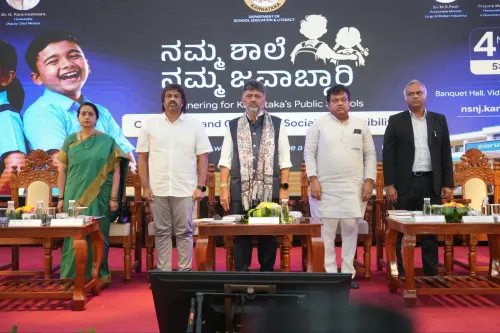
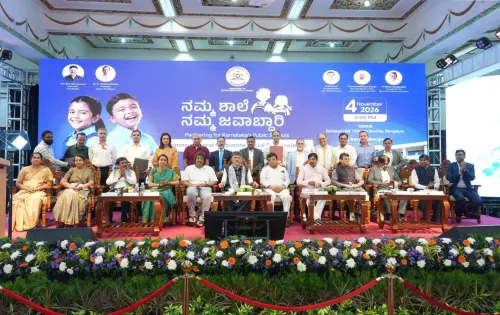
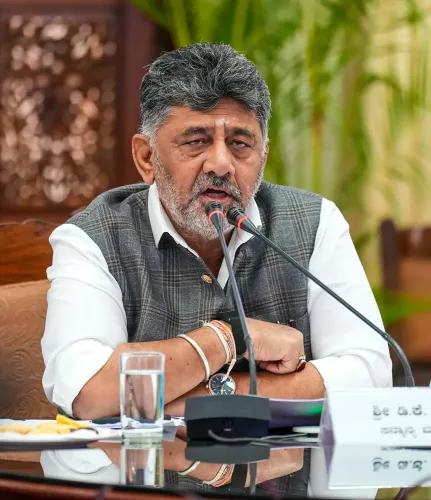
Karnataka's classrooms just got a new set of corporate guardians. Chief Minister D.K. Shivakumar on Friday, 6 November 2026, inaugurated the 'Namma Shale - Namma Javabdari' ('Our School - Our Responsibility') programme at a meeting of Institutional CSR representatives held inside the iconic Banquet Hall of Vidhana Soudha, Bengaluru — channelling private capital into the state's public school network.
'Namma Shale - Namma Javabdari': What the Programme Proposes
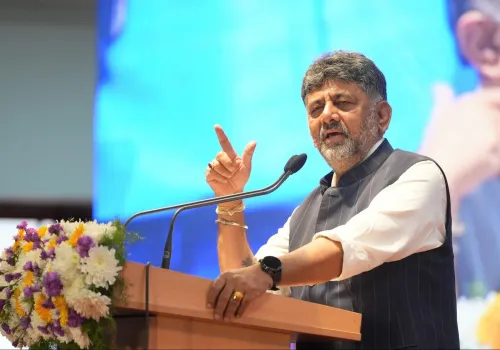
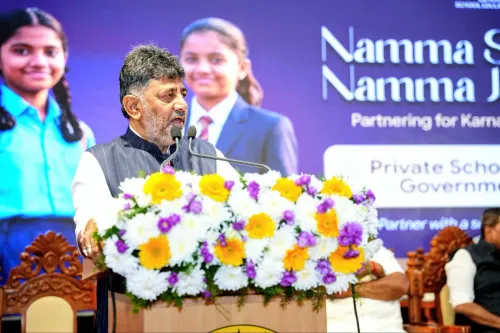
The initiative is designed to rope in the corporate social responsibility (CSR) arms of qualifying companies and direct their mandated spending toward government school infrastructure, learning materials, and teacher support. The Chief Minister's Office posted moments from the launch on X, sharing visuals of Shivakumar addressing institutional CSR representatives gathered under the high ceilings of Vidhana Soudha's Banquet Hall — the symbolic weight of that venue deliberate.
India's Companies Act, 2013 already compels eligible firms to earmark a portion of profits for CSR activities, with education listed among the qualifying purposes. Karnataka's new programme creates a structured pipeline to ensure a share of that spending lands directly on school benches — not in generic donation registers.
Why Vidhana Soudha, Why Now
Karnataka and several other Indian states have periodically leaned on corporate CSR funds to supplement stretched state education budgets. The choice to host the institutional representatives inside Vidhana Soudha — the seat of Karnataka's legislature and executive — signals that the government views this not as a charity ask but as a formal partnership with accountability at its centre. Convening CSR heads in the state's most authoritative room raises the stakes for follow-through.
The audience of sansthagata samajika honegaarike (institutional social responsibility) delegates represents companies whose combined CSR budgets could meaningfully supplement per-pupil spending in government schools across Karnataka's 31 districts.
What Comes Next for Karnataka's Government Schools
The immediate watch-points are the names of participating companies, the scale of funding commitments they made in the room, and the rollout timeline the Chief Minister's Office will publish. A programme is only as strong as the district-level machinery that implements it — and Karnataka's track record on CSR-linked school upgrades will be tested by how quickly physical improvements reach rural campuses. School students across the state are the ultimate stakeholders; the corporate boardroom is just the starting point.
If the commitments made in that Banquet Hall translate to blackboards, libraries, and sanitation blocks in the months ahead, 'Namma Shale - Namma Javabdari' could become a replicable model for state-corporate education partnerships across India.
Point of View
Low-impact spending — into a focused, state-guided school-improvement pipeline. By convening corporate representatives at Vidhana Soudha, the Chief Minister's Office is adding reputational and political weight to what might otherwise be voluntary gestures. If successful, it positions Karnataka as a template for state-corporate education partnerships at a time when public school infrastructure remains a persistent electoral flashpoint. The real test will come at the district level, where implementation capacity — not inauguration optics — determines outcomes.
NationPress
6 Nov 2026
Frequently Asked Questions
What is 'Namma Shale - Namma Javabdari'?
'Namma Shale - Namma Javabdari' — meaning 'Our School - Our Responsibility' in Kannada — is a Karnataka government programme launched on 6 November 2026 to mobilise corporate CSR funds for improving government school infrastructure, learning materials, and teacher support across the state.
Who launched the Namma Shale programme?
Chief Minister D.K. Shivakumar inaugurated the programme at the Banquet Hall of Vidhana Soudha, Bengaluru, at a meeting of Institutional CSR representatives.
What is Institutional CSR and why is it involved in Karnataka schools?
India's Companies Act, 2013 requires qualifying companies to spend a portion of profits on CSR activities, with education as an eligible category. Karnataka's programme creates a formal channel to direct some of this mandated spending specifically into government school improvements.
Where is Vidhana Soudha?
Vidhana Soudha is the seat of Karnataka's state legislature and government offices, located in Bengaluru . It is one of India's most recognisable state government buildings.
What will the 'Namma Shale' CSR funds be used for?
The programme targets government school infrastructure upgrades, provision of learning materials, and teacher support. Specific participating companies, funding amounts, and district-wise rollout timelines are yet to be announced by the Karnataka government.