CM Fadnavis launches Charan Seva for Ashadhi Wari pilgrims

Synopsis
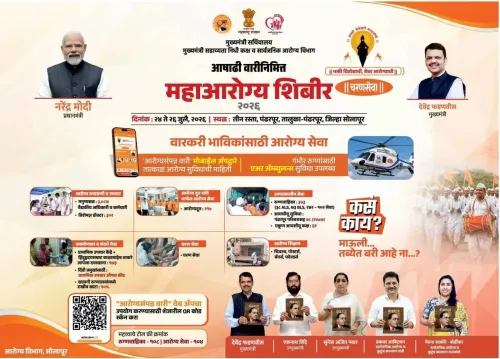
The Chief Minister's Office of Maharashtra has announced the 'Shrikkshetra Pandharpur Ashadhi Wari Charan Seva' programme, providing foot care and welfare services to exhausted Warkari pilgrims at Pandharpur. The initiative is funded through the Chief Minister's Assistance Fund and the Charitable Hospital Aid Cell.
Key Takeaways
The Chief Minister's Office of Maharashtra announced the Ashadhi Wari Charan Seva initiative on 24 July 2026 .
The programme is organised under the Chief Minister's Assistance Fund and the Charitable Hospital Aid Cell .
It targets Warkari pilgrims who travel on foot to Pandharpur for the annual Ashadhi Wari .
The initiative aims to relieve the physical fatigue of pilgrims through foot care and welfare camps at the pilgrimage site.
The post tags Chief Minister Devendra Fadnavis , signalling direct state-level ownership of the programme.
The Warkari tradition emphasises equality and mutual service — values the Charan Seva initiative is designed to reflect in its delivery.
The Chief Minister's Office of Maharashtra announced on Friday, 24 July 2026 the details of the 'Shrikkshetra Pandharpur Ashadhi Wari Charan Seva' initiative, a foot-care and welfare programme organised for Warkari pilgrims arriving at Pandharpur for the annual Ashadhi Wari. The initiative is being run under the Chief Minister's Assistance Fund and the Charitable Hospital Aid Cell, with the aim of easing the physical fatigue of pilgrims who travel hundreds of kilometres on foot.
Context
The post opens with a devotional verse: 'gheīn mī janma yājasāṭhīṃ devā, tujhī caraṇasevā sādhāvayā' ('I shall take birth for this alone, O Lord — to attain the service of Thy feet'), setting the spiritual tone of the announcement. Every year, hundreds of thousands of Warkaris from across Maharashtra converge on Pandharpur — the seat of the Vitthal-Rukmini temple in Solapur district — to seek the blessings of Lord Vitthal. The pilgrimage reaches its peak during the lunar month of Ashadh, typically falling in June–July.
The CMO's post notes that Warkaris travel entirely on foot, arriving physically exhausted. The Charan Seva (literally 'service of the feet') programme is designed to address that physical toll through organised medical and welfare camps at the pilgrimage site.
Policy Backdrop
Maharashtra governments have for several decades provided medical camps, water supply, and rest facilities to pilgrims during the Wari. The Chief Minister's Assistance Fund — a state relief mechanism — has been channelled into public welfare programmes including health support at large religious gatherings. The Charitable Hospital Aid Cell works alongside the fund to extend organised medical outreach.
The Warkari tradition, rooted in the Bhakti movement and associated with saints such as Dnyaneshwar and Tukaram, is a living cultural institution in Maharashtra. The state's involvement in logistical and health support is framed as facilitation rather than interference, preserving the voluntary, egalitarian character of the pilgrimage.
Stakeholders and Impact
The primary beneficiaries are Warkari pilgrims — drawn from all districts of Maharashtra and cutting across caste and class lines — who undertake the foot journey as an act of devotion. The CMO's post underscores the tradition of mutual reverence among pilgrims: 'vārkarī sampradāyāt pratyek jan ekmekaṃmadhe māūlīce darśan ghetat asato' ('In the Warkari tradition, every person sees the divine mother in one another'), reflecting the movement's message of equality and service.
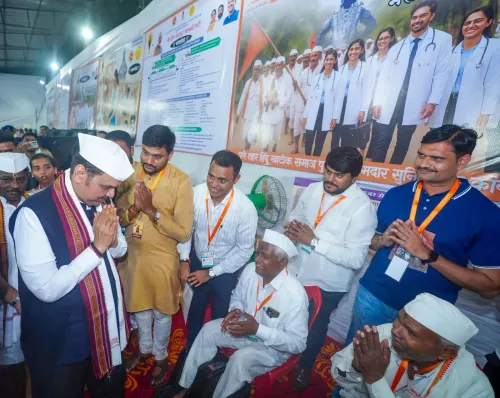
The Charan Seva camps provide foot care, first aid, and rest to pilgrims who may have walked for days. District administrations, health workers, and volunteers typically coordinate on the ground to run such facilities during the peak pilgrimage days.
What's Next
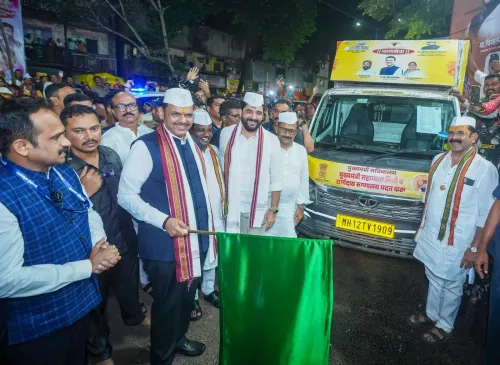
The CMO's post, tagging Chief Minister Devendra Fadnavis (@Dev_Fadnavis), signals active state-level attention to the 2026 Ashadhi Wari and its welfare arrangements. Operational details of the camps — including locations, timings, and the range of services offered — are expected to be communicated through the programme's detailed information rollout flagged in the announcement. The smooth conduct of the Charan Seva initiative will be a measure of the state's capacity to blend cultural sensitivity with public health delivery at one of Maharashtra's largest annual gatherings.
Point of View
Cross-region reverence. By routing the initiative through the Chief Minister's Assistance Fund and tagging CM Fadnavis directly, the government signals both fiscal commitment and political ownership ahead of the pilgrimage peak. The move fits a broader pattern of successive Maharashtra administrations using the Ashadhi Wari as a high-visibility platform to demonstrate responsiveness to a constituency that spans millions of ordinary Maharashtrians. The real test will be the on-ground execution: whether camp infrastructure, medical personnel, and coordination with Solapur district administration match the scale of the annual influx.
NationPress
24 Jul 2026
Frequently Asked Questions
What is the Charan Seva initiative for Ashadhi Wari 2026?
'Charan Seva' is a welfare programme organised by the Maharashtra government under the Chief Minister's Assistance Fund and the Charitable Hospital Aid Cell to provide foot care, first aid, and rest facilities to Warkari pilgrims arriving at Pandharpur on foot for the Ashadhi Wari.
What is Ashadhi Wari and why is it significant?
Ashadhi Wari is an annual foot pilgrimage to the Vitthal-Rukmini temple in Pandharpur, Solapur district, held during the lunar month of Ashadh. It is one of Maharashtra's largest religious gatherings, rooted in the Bhakti movement and associated with saints Dnyaneshwar and Tukaram, drawing hundreds of thousands of Warkaris from across the state.
Who funds the Charan Seva programme at Pandharpur?
The programme is funded and organised through the Chief Minister's Assistance Fund and the Charitable Hospital Aid Cell of the Maharashtra government.
What does Charan Seva mean and what services does it offer?
'Charan Seva' literally means 'service of the feet.' The initiative provides foot care, medical first aid, and rest support to pilgrims who have walked long distances to reach Pandharpur, aiming to relieve their physical exhaustion.
Which CM is overseeing the Ashadhi Wari welfare arrangements in 2026?
Chief Minister Devendra Fadnavis is overseeing the state's welfare arrangements for the 2026 Ashadhi Wari, as indicated by the Chief Minister's Office tagging his official account in the announcement.