CM Himanta invokes Constitution in Assam UCC address

Synopsis
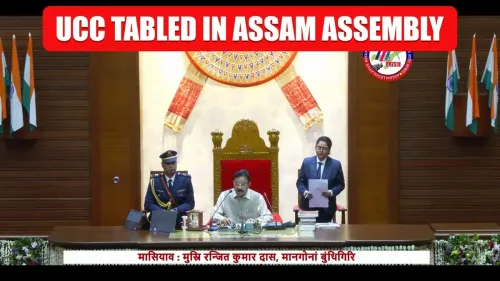
Chief Minister Himanta Biswa Sarma told the Assam Legislative Assembly on 27 May 2026 that the state's Uniform Civil Code is grounded in the Indian Constitution, invoking Article 44's directive on equality and unity as the government builds its legislative case.
Key Takeaways
CM Himanta Biswa Sarma stated in the Assam Legislative Assembly on 27 May 2026 that the Assam UCC is rooted in the Indian Constitution.
He cited the ideals of equality, justice, and unity as the constitutional basis for the proposed code.
Article 44 of the Indian Constitution, a Directive Principle since 1950 , directs the State to work towards a Uniform Civil Code.
Uttarakhand enacted India's first state-level UCC in February 2024 ; Assam is pursuing a similar path.
Assam's Sixth Schedule tribal customary law protections present a key constitutional complexity for any UCC bill.
The next step is the introduction of a formal UCC bill in the Assam Assembly, likely followed by committee review or public consultation.
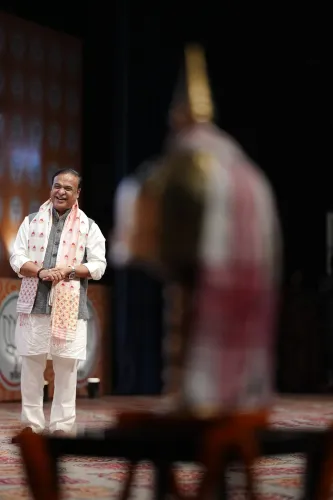
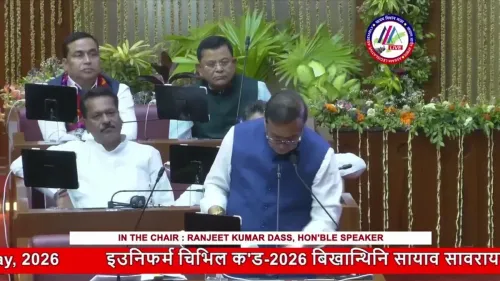
Chief Minister Himanta Biswa Sarma told the Assam Legislative Assembly on Wednesday, 27 May 2026 that the proposed Uniform Civil Code for Assam is rooted in the spirit of the Indian Constitution, reflecting the ideals of equality, justice, and unity.
Context
Speaking on the floor of the state legislature, Dr. Himanta Biswa Sarma framed the Uniform Civil Code not as a departure from constitutional norms but as a fulfilment of them. His remarks came as the Assam government has been building a legislative case for a state-level UCC, mirroring the path taken by Uttarakhand, which enacted India's first state UCC legislation in February 2024.
The Chief Minister's invocation of the Constitution is significant: Article 44 of the Indian Constitution — a Directive Principle of State Policy since 1950 — explicitly directs the State to endeavour to secure a Uniform Civil Code for citizens across India.
Policy Backdrop
The UCC debate in India stretches back to the Constituent Assembly, where Article 44 was included as an aspirational directive rather than an enforceable right. BJP national manifestos in 2014 and 2019 committed the party to enacting a UCC, giving the issue sustained political salience.
Assam signalled its intent in 2023–2024, when the state government indicated the formation of an expert committee to draft a UCC bill. A state-level UCC would replace religion-based personal laws governing marriage, divorce, inheritance, and adoption with a common civil framework applicable to all residents — with the notable complexity that Assam's Sixth Schedule areas protect tribal customary laws, carving out a significant constitutional question the legislature will need to address.
The Chief Minister has previously championed a range of social-reform measures in Assam, including a population policy and amendments to land laws, positioning the UCC as part of a broader governance agenda.
Stakeholders and Impact
Women in Assam are among the most directly affected stakeholders: proponents argue a UCC would equalise rights on divorce, maintenance, and inheritance that currently vary across personal law systems. Religious communities — including Muslim, Hindu, and Christian populations — have divergent views on whether a common code respects or overrides faith-based traditions.
Tribal communities in Sixth Schedule areas present a distinct constitutional dimension, as their customary laws enjoy specific protections that any UCC framework would need to navigate carefully. Civil society groups and legal scholars have flagged this as a key test of how Assam's eventual bill is drafted.
What's Next
The immediate focus shifts to whether the Assam government introduces a formal UCC bill in the current or an upcoming session of the Assam Legislative Assembly. A bill, once tabled, would typically be referred to a select committee or opened for public consultation before a floor vote.
If Assam passes its own UCC, it would become the second BJP-governed state after Uttarakhand to do so, potentially accelerating pressure on the central government to move on a national UCC. The Chief Minister's constitutional framing on 27 May 2026 suggests the government is preparing the political and legal ground for that next legislative step.
Point of View
The government is building a jurisprudential record ahead of likely court challenges. Assam would be only the second state to enact a UCC, and its passage would add significant momentum to the national debate. The unresolved question of Sixth Schedule tribal exemptions, however, will be the real test of whether the eventual bill is constitutionally durable or politically symbolic.
NationPress
10 Oct 2026
Frequently Asked Questions
What did CM Himanta Biswa Sarma say about UCC in the Assam Assembly?
On 27 May 2026, CM Himanta Biswa Sarma stated in the Assam Legislative Assembly that the Uniform Civil Code for Assam is rooted in the spirit of the Indian Constitution, reflecting the ideals of equality, justice, and unity.
What is the Uniform Civil Code and why does it matter for Assam?
The Uniform Civil Code (UCC) is a proposed common legal framework for civil matters such as marriage, divorce, inheritance, and adoption that would replace religion-based personal laws. For Assam, it would apply to all residents and is positioned as a fulfilment of Article 44 of the Indian Constitution.
Which Indian state first passed a Uniform Civil Code?
Uttarakhand became the first Indian state to pass a UCC, enacting the legislation in February 2024. Assam is now pursuing a similar state-level UCC.
Does the Indian Constitution support a Uniform Civil Code?
Yes. Article 44 of the Indian Constitution, included as a Directive Principle of State Policy since 1950, directs the State to endeavour to secure a Uniform Civil Code for all citizens.
Will the Assam UCC apply to tribal communities in Sixth Schedule areas?
This remains a key constitutional question. Assam's Sixth Schedule areas have protected tribal customary laws, and any UCC bill will need to address how these protections interact with a common civil code — a point legal experts and civil society groups are closely watching.