CM Himanta Flags Assam Floods, Centre to Send Assessment Team
Synopsis
Assam CM Himanta Biswa Sarma announced on 23 July 2026 that Home Minister Amit Shah has promised to send an Inter-Ministerial Central Team to assess cloudburst-triggered flood damage in the state and determine the central assistance needed for rebuilding livelihoods.
Key Takeaways
CM Himanta Biswa Sarma received a direct call from Union Home Minister Amit Shah regarding the Assam flood crisis on 23 July 2026 .
An Inter-Ministerial Central Team (IMCT) will be dispatched to Assam to assess the extent of flood damage.
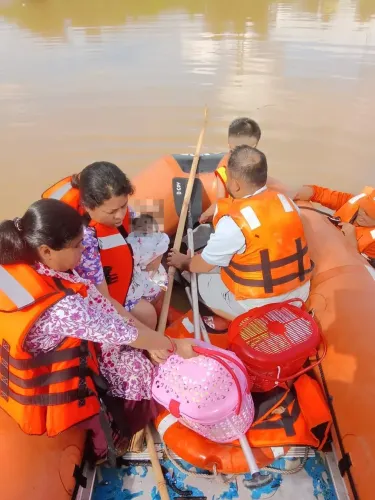
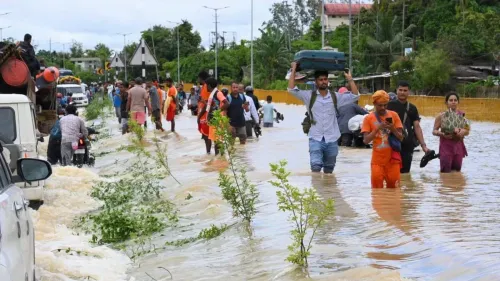
The floods were described as being triggered by a cloudburst upstream , causing widespread devastation.
The IMCT's assessment will determine the quantum of central financial assistance for rebuilding livelihoods.
The move follows established protocol under the Disaster Management Act, 2005 , which governs central disaster relief coordination.
Assam is among India's most flood-prone states, lying in the Brahmaputra river floodplain, with a long history of central flood relief packages.
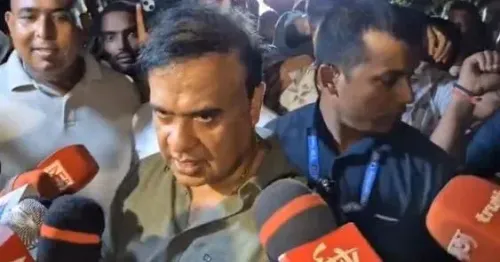
Assam Chief Minister Himanta Biswa Sarma on Thursday, 23 July 2026, announced that Union Home Minister Amit Shah has assured the state of central support, with an Inter-Ministerial Central Team (IMCT) set to visit Assam to assess flood damage and recommend the quantum of financial assistance required for rebuilding livelihoods.
Context
CM Sarma disclosed that he received a call from Home Minister Amit Shah, during which Shah informed him that the central government would dispatch an Inter-Ministerial Central Team to the state 'soon'. The Chief Minister described the floods as having been triggered by a cloudburst upstream, stating they have 'wreaked havoc on the lives of our people'. He expressed gratitude to the Home Minister for 'standing firmly with the people of Assam during this difficult time.'
The announcement signals that the centre has formally acknowledged the scale of the crisis and has initiated the standard protocol for post-disaster damage assessment in the northeastern state.
Policy Backdrop
The dispatch of an Inter-Ministerial Central Team is a well-established mechanism under the Disaster Management Act, 2005, which governs how the central government evaluates state disaster losses and determines supplementary assistance beyond the State Disaster Response Fund (SDRF). The IMCT's report forms the basis for any additional grant from the National Disaster Response Fund (NDRF).
Assam, lying in the floodplains of the Brahmaputra river system, is among the most flood-prone states in India. The state has historically received repeated central flood relief packages following annual inundations, with successive governments deploying inter-ministerial teams to quantify losses across agriculture, infrastructure, and housing sectors.
Stakeholders and Impact
The primary stakeholders are the flood-affected residents of Assam, whose livelihoods, homes, and agricultural holdings bear the immediate brunt of seasonal inundations compounded by cloudburst events. The IMCT visit will be critical in determining the scale of central funds directed toward relief and reconstruction.
State agencies, district administrations, and central ministries covering agriculture, rural development, and road transport are all typically represented in an IMCT, ensuring a multi-sectoral assessment of damage. The team's findings will directly influence the size of any supplementary central assistance package announced for the state.
What's Next
The immediate watch point is the arrival date of the Inter-Ministerial Central Team in Assam and the timeline for submission of its damage assessment report. Once the report is filed, the Union Home Ministry convenes a High Level Committee to approve additional central assistance, a process that can move quickly when political attention is high.
Any announcement of a supplementary central grant or NDRF release following the IMCT's visit will be the concrete measure of the centre's response to this flood emergency in the northeast.
Point of View
Where the BJP has worked to consolidate its foothold through NEDA. Publicly announcing the call — rather than letting the process unfold quietly — serves a dual purpose: it reassures flood-hit constituents that the state has direct access to the highest levels of the Union government, and it positions both leaders as responsive in the face of a recurring annual crisis. The IMCT mechanism itself is routine, but the speed and visibility of its invocation signal that the centre views the 2026 Assam flood situation as politically and humanitarily significant. The real test will be the size and speed of any financial package that follows the team's report.
NationPress
23 Jul 2026
Frequently Asked Questions
What is an Inter-Ministerial Central Team and why is it being sent to Assam?
An Inter-Ministerial Central Team (IMCT) is a central government body comprising officials from multiple ministries that visits disaster-hit states to assess damage across sectors such as agriculture, housing, and infrastructure. It is being sent to Assam following severe floods to quantify losses and recommend the amount of central financial assistance the state should receive.
What caused the floods in Assam in July 2026?
According to CM Himanta Biswa Sarma's post, the flash floods were triggered by a cloudburst upstream, which caused sudden and severe inundation across parts of Assam.
What did Home Minister Amit Shah promise to Assam CM Himanta Biswa Sarma?
Home Minister Amit Shah called CM Sarma and informed him that an Inter-Ministerial Central Team would soon visit Assam to assess flood damage and help determine the central assistance required for rebuilding livelihoods.
What central funds can Assam receive for flood relief?
Under the Disaster Management Act 2005, states can access the State Disaster Response Fund (SDRF) for immediate relief. If losses exceed SDRF capacity, the central government can release additional funds from the National Disaster Response Fund (NDRF) based on the IMCT's damage assessment report.
Is Assam frequently affected by floods?
Yes. Assam, situated in the Brahmaputra river floodplain, is one of India's most flood-prone states and experiences severe inundation almost every monsoon season. The state has received central flood relief packages repeatedly over the decades.