CM Himanta flags Assam heritage lodges as new tourism model
Synopsis
Assam Chief Minister Himanta Biswa Sarma has highlighted the revival of Kaziranga's oldest tourist lodge as a model for transforming heritage properties into modern tourist spaces while preserving their original character — a template he says opens an 'unseen side' of Assam for visitors.
Key Takeaways
CM Himanta Biswa Sarma on 26 June 2026 publicly endorsed the adaptive reuse of heritage properties across Assam for tourism.
He described it as 'a new model of preservation of our rich heritage which opens an unseen side for tourists.' Kaziranga National Park , a UNESCO World Heritage Site , is at the centre of this revival with its oldest tourist lodge relaunched in a restored form.
The model draws on the Swadesh Darshan scheme (2014-15) and Assam's Tourism Policy of 2017 , which encourage public-private partnerships for heritage properties.
Improved connectivity under the Act East Policy has increased domestic tourist arrivals to Assam , creating commercial incentives for heritage conservation.
Districts such as Jorhat , Dibrugarh , and Tezpur are potential candidates for replication of the heritage lodge model.
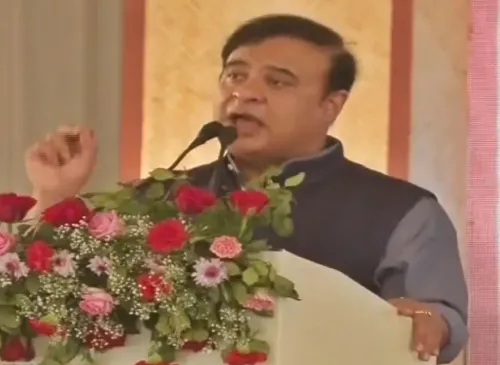
Assam Chief Minister Himanta Biswa Sarma on Friday, 26 June 2026, highlighted the transformation of old heritage properties across Assam into modern tourist spaces as a replicable model for conservation and tourism development, sharing an article that spotlights the revival of Kaziranga's oldest tourist lodge.
Context
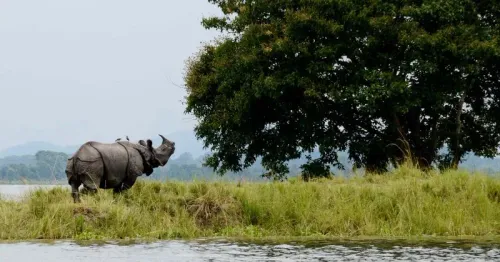
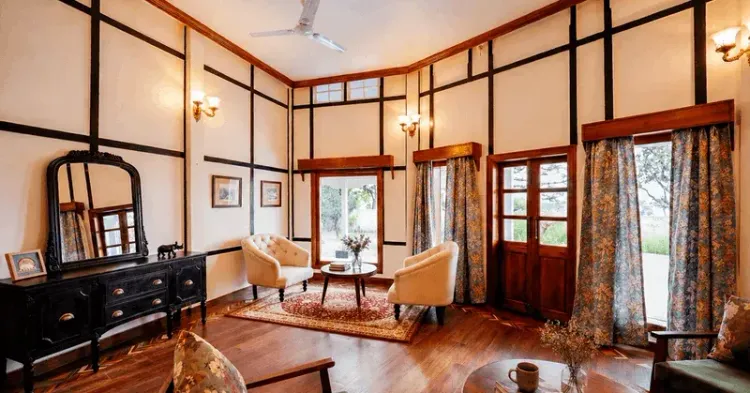
Sharing the feature article, CM Sarma described the development as 'a new model of preservation of our rich heritage which opens an unseen side for tourists.' The article in question details how Kaziranga National Park's oldest tourist lodge has been restored and relaunched in a 'shiny new avatar' while retaining its original character. Kaziranga, a UNESCO World Heritage Site in Assam, is the state's most prominent eco-tourism destination and home to the world's largest population of the one-horned rhinoceros.
Policy Backdrop
The push to revive heritage properties for tourism has roots in the Swadesh Darshan scheme, launched by the Government of India in 2014-15, which funds theme-based tourism circuits including heritage corridors in the Northeast. Assam's Tourism Policy of 2017 further institutionalised public-private partnerships for upgrading and operating historic properties as tourist facilities. Together, these frameworks have provided the regulatory and financial scaffolding for lodge revival projects of the kind CM Sarma is now amplifying.
The adaptive reuse model — rehabilitating colonial-era bungalows, tea-estate guesthouses, and forest lodges for contemporary hospitality — has already been scaled extensively in Rajasthan and parts of South India. Assam and the broader Northeast are now emerging as the next frontier for this approach, aided by improved road and air connectivity under the Act East Policy, which has steadily increased domestic tourist arrivals to the region.
Stakeholders and Impact
Heritage property owners, tour operators, and local communities near Kaziranga stand to benefit most directly from this model. Restored lodges expand the state's tourism inventory without the cost and environmental footprint of greenfield construction, while conservation norms are met by retaining original structures. For communities adjacent to protected areas like Kaziranga, heritage tourism creates ancillary livelihoods in hospitality, guiding, and handicrafts.
The model also carries significance for Assam's broader economic positioning. By presenting heritage conservation as a tourism asset rather than a fiscal burden, the state government signals to private investors that historic properties carry commercial viability — an argument that could accelerate similar projects across other districts rich in colonial-era architecture and tea-estate infrastructure.
What's Next
The immediate question is whether Assam's state tourism department will formalise new guidelines or incentives for public-private partnerships covering heritage lodges beyond Kaziranga. Districts with concentrations of colonial bungalows and tea estates — including Jorhat, Dibrugarh, and Tezpur — are natural candidates for replication. CM Sarma's public endorsement of the model suggests political will exists; the next step will be whether that translates into a structured state-level heritage hospitality programme.
Point of View
CM Sarma is doing more than endorsing a single property — he is signalling a state-level tourism strategy built on low-capital, high-character conservation projects. This fits a broader BJP governance narrative of 'development with cultural roots,' positioning the Northeast as a heritage destination rather than merely a wildlife corridor. The move also carries an implicit pitch to private investors: that Assam's colonial and pre-independence built stock is an untapped hospitality asset. Whether the political endorsement translates into a formal programme will determine if this remains a one-off story or becomes a scalable Northeast model.
NationPress
26 Jun 2026
Frequently Asked Questions
Which lodge at Kaziranga has been restored and relaunched?
Kaziranga National Park's oldest tourist lodge has been restored and relaunched in a renovated form while retaining its original heritage character, as highlighted by CM Himanta Biswa Sarma on 26 June 2026.
What is Assam's policy on heritage tourism?
Assam's Tourism Policy of 2017 encourages public-private partnerships for upgrading and operating heritage properties as tourist facilities, complementing the central government's Swadesh Darshan scheme launched in 2014-15.
What is the Swadesh Darshan scheme and how does it relate to Assam?
Swadesh Darshan is a Government of India scheme launched in 2014-15 to develop theme-based tourism circuits, including heritage corridors in Assam and the Northeast, providing funding and policy support for projects like heritage lodge revivals.
Why is Kaziranga important for Assam tourism?
Kaziranga National Park is a UNESCO World Heritage Site and Assam's foremost eco-tourism destination, famous for hosting the world's largest population of one-horned rhinoceros, making it a natural anchor for heritage hospitality projects.
Can other districts in Assam replicate the Kaziranga heritage lodge model?
Districts such as Jorhat, Dibrugarh, and Tezpur, which have concentrations of colonial-era bungalows and tea-estate guesthouses, are considered natural candidates for replication of the adaptive reuse heritage tourism model.