CM Himanta flags Guwahati-Tezpur corridor as Assam's gateway leap
Synopsis
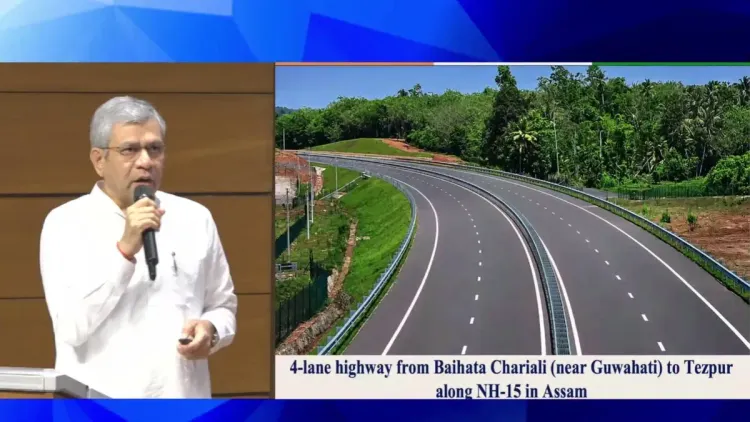
Assam CM Himanta Biswa Sarma has highlighted the Guwahati-Tezpur access-controlled corridor as a landmark infrastructure investment under PM Modi, framing it as a strategic move to cement Assam's role as India's gateway to Southeast Asia.
Key Takeaways
Assam CM Himanta Biswa Sarma on 6 August 2026 highlighted the Guwahati-Tezpur access-controlled corridor as a major infrastructure milestone.
The corridor is positioned to improve logistics, cut travel times, and deepen Assam's connectivity with the broader Northeast and international borders.
The project aligns with the Act East Policy (2014) and Bharatmala Pariyojana (2015) , both aimed at integrating Northeast India with Southeast Asian trade routes.
Assam borders Bhutan, Bangladesh and Myanmar , giving it a pivotal geographic role in India's eastward connectivity strategy.
Exact project scope, funding, and completion timelines remain to be detailed in official announcements.
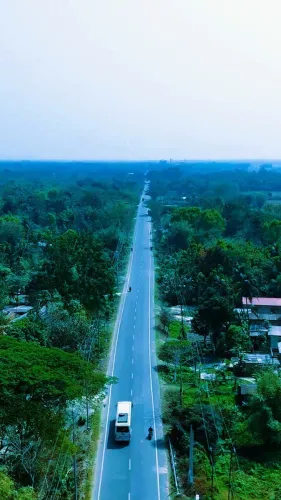
A new access-controlled corridor linking Guwahati and Tezpur is the latest headline in Assam's fast-expanding infrastructure story — and Assam Chief Minister Himanta Biswa Sarma wants the country to notice what it signals.
Posting on 6 August 2026, CM Sarma described the Guwahati-Tezpur access-controlled corridor as 'a strategic investment that will enhance connectivity, improve logistics and strengthen Assam's role as the gateway to South East Asia,' crediting Prime Minister Narendra Modi's leadership for the pace of change.
Guwahati to Tezpur: why this corridor matters
Guwahati, Assam's commercial capital, and Tezpur, the strategic town on the Brahmaputra in Sonitpur district, are separated by roughly 180 kilometres of terrain that has historically slowed freight and passenger movement. An access-controlled corridor — a format that limits entry and exit points to keep traffic flowing at highway speeds — would cut journey times sharply and reduce wear on local roads that currently absorb the same traffic. For logistics firms moving goods deeper into the Northeast, or toward international borders with Bhutan, Bangladesh, and Myanmar, that is a material change.Act East and Bharatmala: the policy spine behind the project
The corridor does not exist in isolation. It sits within two overlapping national frameworks. The Act East Policy, announced in 2014, set the strategic goal of tightening physical and economic links between Northeast India and ASEAN nations. Bharatmala Pariyojana, launched in 2015, provided the funding architecture — prioritising access-controlled highways and economic corridors, with the Northeast explicitly included. Successive central budgets have allocated funds for multi-lane projects across Assam, and the state has positioned itself as the hinge on which India's eastward connectivity turns.Assam's infrastructure moment — and what comes next
CM Sarma's framing — 'one after another, landmark infrastructure projects' — reflects a deliberate political narrative: that central investment is visibly reshaping a state that once felt peripheral. Assam's geography makes the claim credible. It is the only large state connecting the rest of India to seven Northeastern states, and its road and rail networks carry traffic that ultimately reaches Arunachal Pradesh, Nagaland, and cross-border trade corridors. The exact funding envelope, scope, and completion timeline for the Guwahati-Tezpur corridor have not been officially detailed in public domain documents, and those specifics will determine whether the project delivers at the scale being signalled. If it does, Assam's pitch as Southeast Asia's land gateway stops being a tagline — and starts being a timetable.Point of View
If delivered at scale, would materially advance India's Act East connectivity agenda, which has been long on ambition and uneven on execution. Sarma's emphasis on Assam as a 'gateway to Southeast Asia' is also a bid to elevate the state's strategic profile in central resource allocation conversations. The real test will be in project timelines and land acquisition — the traditional chokepoints for Northeast highway projects.
NationPress
6 Aug 2026
Frequently Asked Questions
What is the Guwahati-Tezpur access-controlled corridor?
It is a proposed highway-grade corridor linking Guwahati , Assam's commercial capital, with Tezpur in Sonitpur district, designed to improve travel speeds, reduce freight times, and strengthen connectivity in the Northeast. Exact project details have not been fully disclosed publicly.
Why is Assam called a gateway to Southeast Asia?
Assam borders Bhutan, Bangladesh and Myanmar and serves as the only large state connecting mainland India to seven Northeastern states. Its road and rail networks are critical for trade routes that extend toward ASEAN countries under India's Act East Policy.
What is the Act East Policy and how does it relate to this corridor?
The Act East Policy , announced in 2014 , aims to strengthen physical and economic ties between Northeast India and ASEAN nations. Infrastructure projects like the Guwahati-Tezpur corridor directly support this goal by improving logistics and border connectivity.
What is Bharatmala Pariyojana?
Bharatmala Pariyojana , launched in 2015 , is a central government programme to build access-controlled highways and economic corridors across India, with significant allocations for the Northeast to reduce travel times and boost trade.
Who is Himanta Biswa Sarma?
Himanta Biswa Sarma is the Chief Minister of Assam since 2021 , a senior BJP leader, and the convenor of the North-East Democratic Alliance (NEDA). He frequently champions central infrastructure investments in the region.