CM Himanta Flags Serious Assam Floods, Cites Central Support

Synopsis
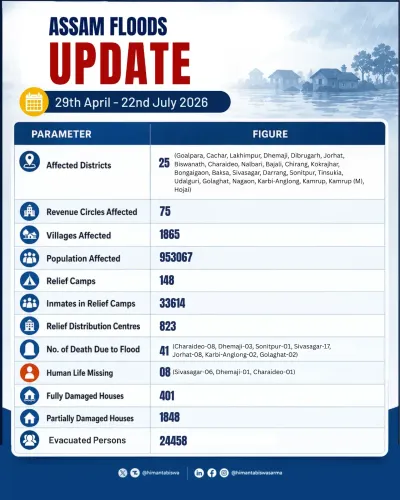
Assam Chief Minister Himanta Biswa Sarma on 23 July 2026 confirmed that flooding triggered by a Nagaland cloudburst has turned serious, with multiple fatalities. He said the central government is providing full support and the state stands firmly with those affected.
Key Takeaways
CM Himanta Biswa Sarma confirmed on 23 July 2026 that the flood situation in Assam is 'serious' and that lives have been lost.
The flooding was attributed to a cloudburst in neighbouring Nagaland , which sent floodwaters into Assam 's river systems.
The Government of India is extending 'full support' to help offset losses, invoking the federal disaster response mechanism.
The Disaster Management Act of 2005 and the State Disaster Response Fund (SDRF) form the legal and financial backbone of the central-state relief effort.
Assam 's Brahmaputra valley faces recurrent monsoon flooding linked to upstream rainfall and cloudbursts in Nagaland and Arunachal Pradesh .
Damage assessment and further relief deployment are ongoing through the 2026 monsoon season.
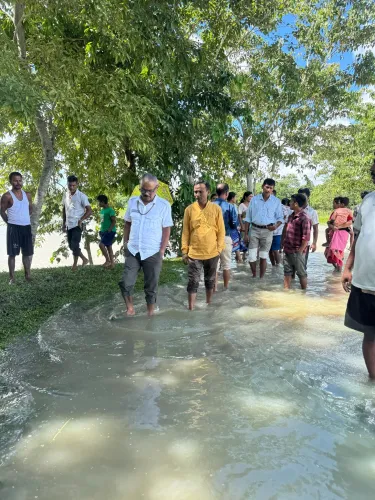
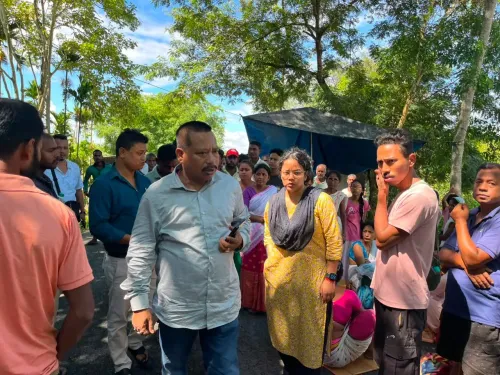
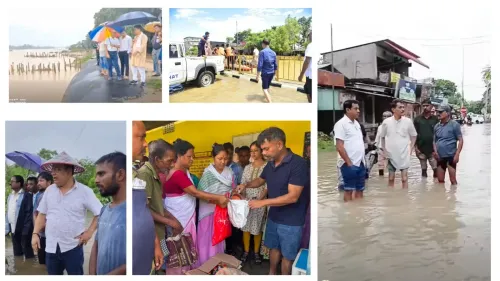
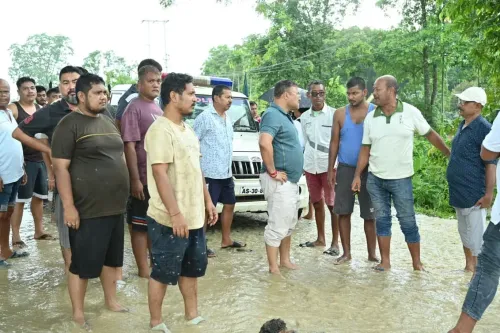
Assam Chief Minister Himanta Biswa Sarma on Thursday, 23 July 2026, declared that the flood situation in Assam is severe, with multiple fatalities reported, and confirmed that the Government of India is extending full cooperation to help the state manage losses triggered by a cloudburst in neighbouring Nagaland.
Context
Posting on X with the hashtag #AssamFloods, CM Sarma wrote in Hindi: 'असम में बाढ़ की स्थिति गंभीर है और कई लोगों की जान भी जा चुकी है' ('The flood situation in Assam is serious and several lives have been lost'). He attributed the flooding to an 'unfortunate cloudburst' that struck Nagaland, with the resulting deluge cascading into Assam's river systems. He added that the state is 'standing firmly with its people in this difficult time.'
The Brahmaputra valley, which forms the heartland of Assam, is acutely vulnerable to flash floods originating from heavy rainfall and cloudbursts in upstream states such as Nagaland and Arunachal Pradesh. This geographic reality makes cross-border weather events a recurring trigger for humanitarian crises within Assam.
Policy Backdrop
India's federal disaster response architecture, established under the Disaster Management Act of 2005, creates a structured mechanism for central-state coordination during such emergencies. The State Disaster Response Fund (SDRF) serves as the primary financial instrument through which the Government of India channels relief assistance to affected states, and Assam has drawn on this fund in multiple prior monsoon seasons.
The National Disaster Response Force (NDRF) is typically deployed alongside SDRF releases to assist in rescue, evacuation, and damage assessment. CM Sarma's confirmation that 'full support' from the central government is being received suggests this established federal mechanism has been activated for the current crisis.
Stakeholders and Impact
Flood-affected families and residents across the Brahmaputra valley are the most immediate stakeholders. Loss of life, displacement of communities, and damage to agricultural land and infrastructure are the principal humanitarian concerns at this stage. The scale of the current event remains under assessment.
CM Sarma, who also serves as convenor of the North-East Democratic Alliance (NEDA), has a political and administrative stake in coordinating the response not just within Assam but in signalling solidarity across the northeastern region. His post underscores the cross-state dimension of the disaster, with Nagaland identified as the upstream source of the cloudburst.
What's Next
Authorities will be focused on completing damage assessments, expediting the release of central funds, and deploying additional relief resources through the remainder of the 2026 monsoon period. The identification of Nagaland's cloudburst as the proximate cause may also prompt inter-state coordination on early warning systems for upstream weather events.
With fatalities already confirmed and the situation described as 'serious,' pressure will mount on both the state and central administrations to accelerate compensation disbursement and rehabilitation for affected households in the Brahmaputra valley.
Point of View
He frames the crisis as a cross-state natural event rather than a governance failure, deflecting any narrative around inadequate flood preparedness. This fits a broader pattern in which northeastern chief ministers use social media to demonstrate proactive crisis communication and federal solidarity. The emphasis on central support also aligns with the BJP's political interest in showcasing cooperative federalism in the region it governs through NEDA.
NationPress
23 Jul 2026
Frequently Asked Questions
What caused the Assam floods in July 2026?
A cloudburst in Nagaland triggered the flooding that has severely affected Assam , according to Chief Minister Himanta Biswa Sarma 's post on 23 July 2026 . Upstream cloudbursts in neighbouring states are a recurring cause of flash floods in Assam 's Brahmaputra valley .
How many people have died in the Assam floods 2026?
CM Sarma confirmed that 'several lives have been lost' in the Assam floods , but specific casualty figures were not stated in his post and have not been verified from established public records at this time.
Is the central government helping Assam with flood relief?
Yes. CM Sarma confirmed that the Government of India is extending 'full support' to help offset the damage. Central assistance typically flows through the State Disaster Response Fund (SDRF) and includes deployment of NDRF teams under the Disaster Management Act of 2005 .
What is the State Disaster Response Fund and how does it help Assam?
The State Disaster Response Fund (SDRF) is a central government mechanism created under the Disaster Management Act of 2005 to provide financial assistance to states during natural disasters. Assam has received SDRF assistance in multiple previous monsoon seasons to manage flood damage.
Why does Assam flood so frequently during monsoon season?
Assam 's Brahmaputra valley is geographically vulnerable to flooding because heavy rainfall and cloudbursts in upstream states like Nagaland and Arunachal Pradesh funnel large volumes of water into the river system, causing recurrent annual inundation.