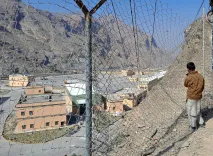
CM Himanta hails Bengal result, cites Assam Accord on border fencing
Synopsis
Assam Chief Minister Himanta Biswa Sarma, speaking at Republic Summit 2026, called the BJP's West Bengal result a national victory and linked it to the decades-old unfulfilled mandate of the 1985 Assam Accord to fully fence the India-Bangladesh border, saying India will now be more secure.
Key Takeaways
Assam CM Himanta Biswa Sarma described the West Bengal electoral outcome as a victory for all of India, not just the BJP .
He invoked the 1985 Assam Accord , which mandated complete fencing of the India-Bangladesh border — a 4,096-km frontier — to check illegal immigration.
Sarma stated that border fencing work remained incomplete for 'decades' under successive governments.
The remarks were made at the Republic Summit 2026 on 22 June 2026 .
He asserted that India would now become 'more secure' following the political change in West Bengal .
Attention now turns to the Ministry of Home Affairs for official timelines on completing remaining unfenced border stretches.
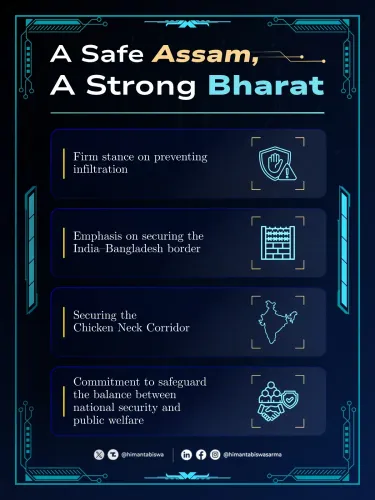
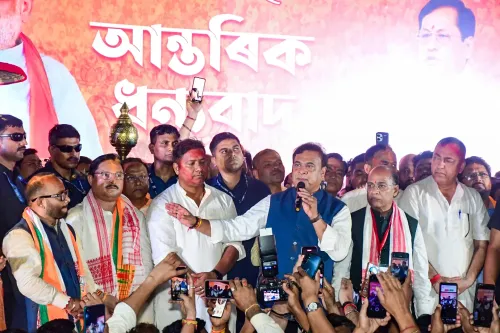
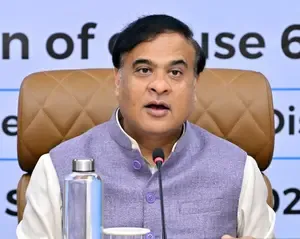
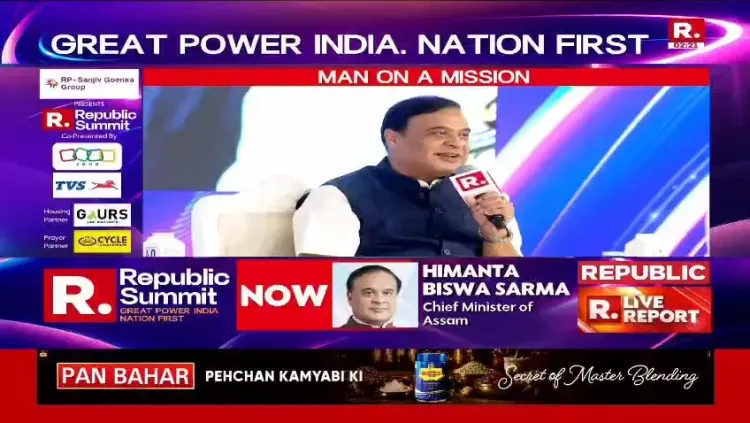
Assam Chief Minister Himanta Biswa Sarma on Monday, 22 June 2026, declared that the outcome in West Bengal represents a victory not just for the BJP but for the entire nation, linking it directly to the long-pending commitment under the 1985 Assam Accord to complete fencing along the full length of the India-Bangladesh border. Speaking at the #RepublicSummit2026, he asserted that the country would now become more secure.
Context
Sarma posted in Hindi: 'बंगाल में सिर्फ़ भाजपा की नहीं, बल्कि भारत की जीत हुई है' ('This is not just a BJP victory in Bengal, but a victory for India'). He framed the political development in West Bengal as an opportunity to finally act on border security commitments that successive governments had left incomplete for decades. The remarks were made in the context of the Republic Summit 2026, a high-profile national policy conclave.
The Assam Accord, signed in 1985 to end the Assam Agitation, explicitly mandated the sealing of the entire India-Bangladesh border — a 4,096-km frontier — to prevent illegal immigration. Sarma pointed out that this work remained unfinished for 'decades', making it a persistent gap in national security architecture.
Policy Backdrop
Border fencing along the India-Bangladesh frontier has been pursued in phases since the 1980s, with renewed momentum after 2014 when the BJP-led central government prioritised completing remaining stretches. The fencing project covers multiple states including Assam, West Bengal, Meghalaya, Mizoram, and Tripura, with terrain and riverine geography making several segments particularly difficult to fence.
The Assam Accord's clause on border sealing has historically been cited alongside the National Register of Citizens (NRC) as a twin instrument for immigration management in the Northeast. Sarma, a consistent advocate for full implementation of the Accord, has repeatedly raised the fencing gap as both a security and a humanitarian concern for border communities.
Stakeholders and Impact
Residents living along the India-Bangladesh border — spanning hundreds of villages across West Bengal and the Northeast — stand to be most directly affected by any acceleration of fencing work. Border Security Force (BSF) personnel who currently patrol unfenced or partially fenced stretches also have a direct operational stake in the project's completion.
For BJP, the framing ties an electoral outcome to a tangible national-security deliverable, reinforcing the party's positioning on immigration control ahead of potential policy announcements. Civil society groups and opposition parties in Bengal and the Northeast are likely to scrutinise the specific timelines and funding commitments that follow such political declarations.
What's Next
Attention will now shift to the Ministry of Home Affairs for official updates on the remaining unfenced segments of the India-Bangladesh border and concrete project timelines. Any follow-up announcements on funding allocation or engineering contracts for difficult riverine stretches will be closely watched by security analysts and border-state administrations alike. Sarma's remarks set a clear political expectation: that a changed political landscape in West Bengal will translate into accelerated, on-the-ground border infrastructure work.
Point of View
Anchoring a political victory to the unfinished business of the 1985 Assam Accord — a treaty with deep emotional resonance in the Northeast. By invoking the Accord rather than just party achievement, he broadens the BJP's claim beyond partisanship and frames border fencing as a national obligation long betrayed by previous governments. This also signals that West Bengal's changed political alignment could be leveraged to remove administrative or land-acquisition hurdles that have historically stalled fencing in that state. The remarks effectively set a public benchmark against which the central government's border infrastructure performance will now be measured.
NationPress
22 Jun 2026
Frequently Asked Questions
What did Himanta Biswa Sarma say about West Bengal at Republic Summit 2026?
Assam CM Himanta Biswa Sarma said the outcome in West Bengal is a victory for all of India, not just the BJP, and linked it to the need to complete fencing along the India-Bangladesh border as required by the 1985 Assam Accord.
What does the Assam Accord say about the India-Bangladesh border?
The 1985 Assam Accord, which ended the Assam Agitation, included a clause mandating the sealing of the entire India-Bangladesh border — spanning approximately 4,096 km — to prevent illegal immigration into Assam and other Northeastern states.
How much of the India-Bangladesh border is still unfenced?
While the Indian government has pursued border fencing in phases since the 1980s, significant stretches — particularly in riverine and difficult terrain areas — remain incomplete. Specific figures on remaining unfenced segments are subject to official Ministry of Home Affairs updates.
Why is border fencing a political issue in West Bengal?
West Bengal shares a long stretch of the India-Bangladesh border, and the BJP has consistently raised illegal immigration and border security as key electoral and governance issues in the state, linking them to the unfulfilled clauses of the Assam Accord.
What is the Republic Summit 2026?
Republic Summit 2026 is a high-profile national policy and current-affairs conclave where senior political leaders, policymakers, and public figures discuss governance and national security issues.