CM Himanta hails Modi's North-East connectivity revolution
Synopsis
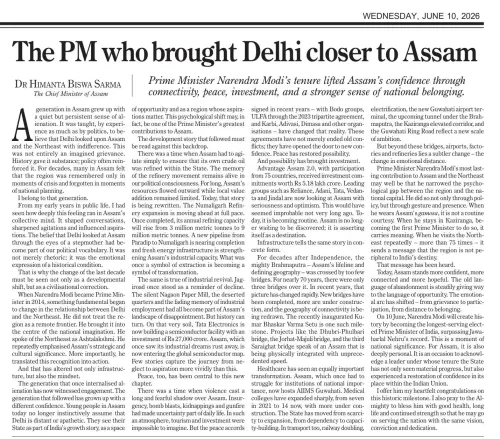
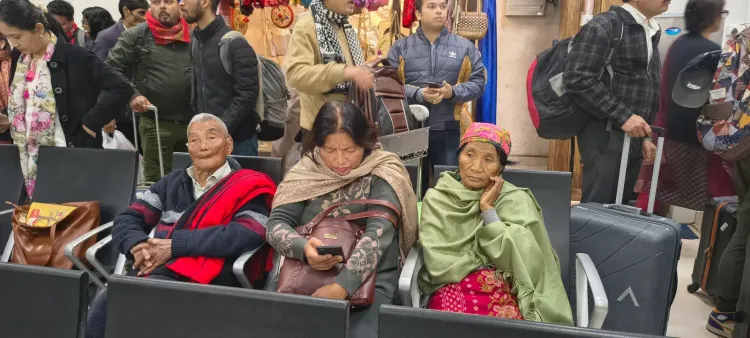
Assam Chief Minister Himanta Biswa Sarma on 4 July 2026 credited Prime Minister Narendra Modi with revolutionising North-East connectivity, citing same-day travel from Nagaland's Ungma village to Delhi via Jorhat — a journey he said was impossible just a few years ago.
Key Takeaways
Assam CM Himanta Biswa Sarma on 4 July 2026 publicly endorsed remarks praising PM Narendra Modi 's North-East infrastructure record.
Sarma cited same-day travel from Ungma (Nagaland) to Delhi via Jorhat as a concrete example of connectivity gains.
Key central schemes behind the shift include the Act East Policy , UDAN regional aviation scheme, and Bharatmala Pariyojana highway programme.
Jorhat airport was upgraded under regional aviation initiatives, making it a critical transit node for upper Assam and Nagaland.
Remaining milestones include rail links to state capitals and progress on the India-Myanmar-Thailand Trilateral Highway .
Sarma, as NEDA convenor , is positioned to keep North-East connectivity at the centre of regional political discourse.
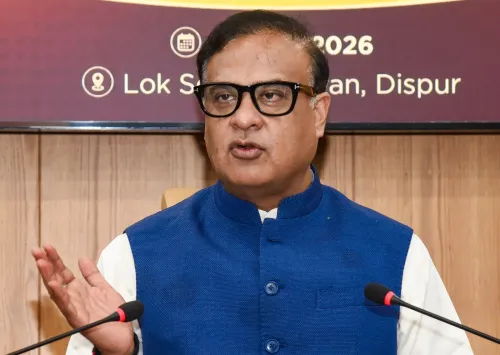
Assam Chief Minister Himanta Biswa Sarma on Saturday, 4 July 2026, publicly praised Prime Minister Narendra Modi's infrastructure push in the North Eastern Region, calling it a transformation that has made same-day travel from remote Nagaland to Delhi possible for the first time. The Chief Minister was responding to a post by another user, endorsing her remarks about connectivity gains felt across the region.
Context
Sarma's post states: 'Travelling from Ungma to Delhi through Jorhat in a day was impossible even a few years ago.' Ungma is a village in Nagaland's Mokokchung district, historically accessible only via long, winding mountain roads. Jorhat, an Assam city, serves as the nearest major transit hub with an upgraded airport, enabling onward flights to Delhi.
The Chief Minister added that 'many still under-appreciate' how Prime Minister Modi has 'revolutionised connectivity' in the region — framing the infrastructure gains as broadly felt but insufficiently acknowledged.
Policy Backdrop
The transformation Sarma describes is rooted in several overlapping central government programmes launched after 2014. The Act East Policy set the strategic frame for integrating the North East with mainland India and ASEAN nations, while the UDAN regional aviation scheme (launched 2016) operationalised new air routes and upgraded airports in Assam, Nagaland, and neighbouring states.
Simultaneously, the Bharatmala Pariyojana earmarked multiple four-lane highway corridors through Assam and adjoining states, and accelerated metre-to-broad-gauge railway conversions cut surface travel times significantly. Together, these schemes have reduced the North East's historical physical isolation from the rest of India.
Stakeholders and Impact
The direct beneficiaries include everyday residents of the eight North Eastern states, air and road travellers, and regional businesses that depend on supply-chain links to mainland India. For communities in hill districts such as Mokokchung, improved connectivity has practical consequences: access to specialised healthcare, education, and commerce that once required overnight journeys or multi-day trips.
The broader impact extends to border-area development and geopolitical considerations along India's eastern frontier, where infrastructure density has historically lagged behind strategic need. Central ministries coordinating road, rail, and air projects under the Act East framework have explicitly cited both economic integration and national security as dual objectives.
What's Next
Attention in the region now turns to the completion of remaining rail links to state capitals still without broad-gauge connections, and the progress of the India-Myanmar-Thailand Trilateral Highway, which would extend the connectivity arc beyond India's borders. Upcoming coordination meetings of the North-East Democratic Alliance (NEDA), convened by Sarma himself, are expected to keep multimodal connectivity on the political agenda.
As the North East's infrastructure baseline rises, the political dividend from these projects — and the contest over credit for them — is likely to intensify ahead of future state assembly cycles across the region.
Point of View
Lived improvements in travel time to a specific national leadership rather than to bureaucratic or state-level execution. By invoking the Ungma-to-Delhi journey, he grounds an abstract policy narrative in a hyper-local, relatable image that resonates across the North East's hill communities. This fits a broader BJP pattern of converting infrastructure delivery into electoral storytelling in a region where the party has invested heavily in NEDA coalition management. The timing, mid-term between assembly elections in most NE states, suggests the connectivity dividend is being kept warm as a standing political asset.
NationPress
4 Jul 2026
Frequently Asked Questions
How has travel from Nagaland to Delhi improved in recent years?
Upgraded airports under the UDAN scheme — including Jorhat in Assam — combined with new highway corridors and faster rail links have made same-day travel from remote Nagaland districts to Delhi feasible, a journey that previously required multiple days.
What is the UDAN scheme and how does it help the North East?
UDAN (Ude Desh ka Aam Nagrik) is a regional connectivity scheme launched in 2016 that subsidises flights on underserved routes and funds airport upgrades; it has operationalised several new routes across Assam, Nagaland, and other North Eastern states.
What is the Act East Policy and its role in North-East development?
The Act East Policy, announced in 2014, is India's strategic framework to improve physical and economic linkages between the North Eastern Region and Southeast Asian nations, driving road, rail, and air infrastructure investments across the eight NE states.
Why did Himanta Biswa Sarma mention Ungma and Jorhat specifically?
Ungma is a village in Nagaland's Mokokchung district representing a remote hill community, while Jorhat is the nearest major city with an upgraded airport in Assam; together they illustrate how last-mile connectivity to a transit hub has transformed long-distance travel for ordinary North Easterners.
What infrastructure projects are still pending in North East India?
Key pending projects include broad-gauge rail links to several state capitals not yet connected, and the India-Myanmar-Thailand Trilateral Highway, which would extend regional connectivity beyond India's borders into Southeast Asia.