CM Himanta Highlights 'Lakhimi Mistri' as Symbol of Women's Self-Reliance in Assam
Synopsis
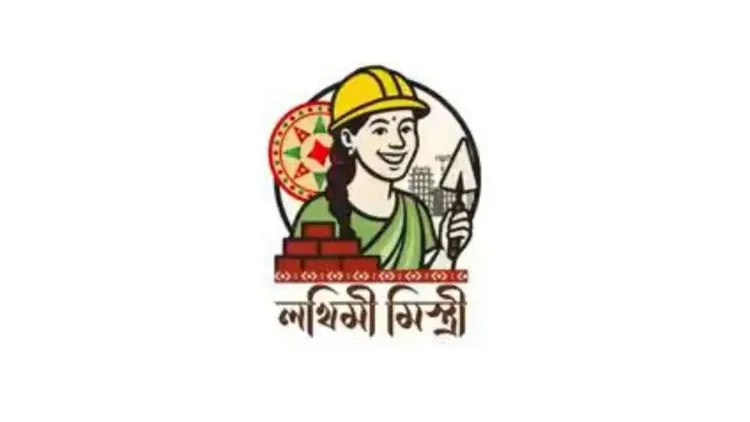
Assam Chief Minister Himanta Biswa Sarma has spotlighted a woman tradesperson called 'Lakhimi Mistri' as a symbol of self-reliance, linking her story to skill development initiatives and the BJP's double engine government model to argue that women are now actively driving Assam's economy.
Key Takeaways
CM Himanta Biswa Sarma posted on June 7, 2026 highlighting a woman named 'Lakhimi Mistri' as a new example of self-reliance in Assam .
He credited the 'double engine' government — aligned BJP governments at the state and Centre — and skill development programmes for enabling the achievement.
The post frames women's vocational training as a key driver of Assam's economic growth under the Atmanirbhar Bharat agenda.
The national Skill India Mission , launched in July 2015 , and the Assam Skill Development Mission form the policy backbone behind such outcomes.
The 'Mistri' title signals entry of women into technical and trade-based professions historically dominated by men.
State budget allocations and women's enrolment figures in technical trades remain the key metrics to watch going forward.
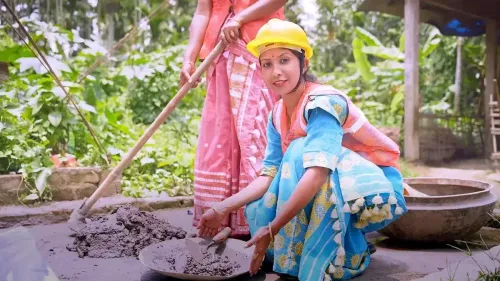
Assam Chief Minister Himanta Biswa Sarma on Sunday, June 7, 2026, spotlighted a woman identified as 'Lakhimi Mistri' as a new symbol of self-reliance, crediting skill development initiatives and the 'double engine' government for enabling women in the state to forge new economic opportunities.
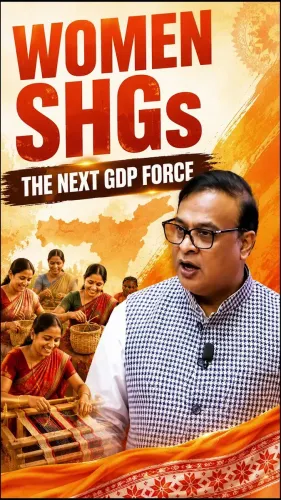
Posting in Hindi on X, CM Sarma wrote: 'Aatmanirbharta ki ek nayi misal — Lakhimi Mistri' ['A new example of self-reliance — Lakhimi Mistri'], adding that women are 'giving shape to new opportunities and wings to their dreams' through their skill, determination, and the support of the double engine government. He concluded: 'Now the women power of Assam is driving the economy forward.'
Context
The term 'double engine government' refers to the BJP's political messaging that a state government and the central government both led by the same party work in tandem for faster development. CM Sarma, who has led Assam since May 2021, frequently invokes this framework when highlighting welfare and development outcomes in the state.
The figure of 'Lakhimi Mistri' — a woman trained in a technical trade — is presented as a grassroots illustration of the Atmanirbhar Bharat agenda, which calls for building self-sufficient individuals and communities through vocational empowerment.
Policy Backdrop
The post connects to a longer arc of skill development policy. The national Skill India Mission, launched in July 2015, expanded vocational training infrastructure across states, including Assam, with a focus on non-traditional trades for women. The Assam Skill Development Mission has since channelled these efforts at the state level, targeting women in both urban and rural settings.
Encouraging women to enter technical trades such as electrical work, plumbing, and repair services — historically male-dominated — has been a stated goal of these programmes. A woman identified by the title 'Mistri' (a colloquial term for a skilled tradesperson or mechanic) represents precisely the kind of outcome these schemes are designed to showcase.
Stakeholders and Impact
The primary beneficiaries highlighted in this messaging are women vocational trainees in Assam, particularly those entering technical fields. By framing individual success stories within the broader economic narrative, the state government signals to prospective trainees, employers, and policymakers that skill programmes are yielding tangible results.
For Assam's workforce, greater participation of women in technical trades has implications for household income, local enterprise, and the state's overall labour productivity. The 'nari shakti' — women power — framing also carries political resonance ahead of ongoing state-level welfare programme rollouts.
What's Next
Attention will now turn to state budget allocations and enrolment figures for women in technical trades under Assam's ongoing skill schemes. Whether the government follows this spotlight with expanded programme announcements, fresh funding commitments, or broader enrolment drives will determine how far the 'Lakhimi Mistri' model is institutionalised beyond a single success story.
As CM Sarma continues to position Assam as a model for women's economic empowerment in the North-East, the scale and reach of these skill initiatives will be the real measure of progress.
Point of View
The state government makes an abstract programme feel tangible and replicable. The 'double engine' framing is doing dual work here: it reinforces BJP's governance narrative while attributing credit jointly to the state and central governments ahead of continued welfare rollouts. Positioning women as economic drivers rather than merely welfare recipients is a subtle but significant rhetorical shift that aligns with the Atmanirbhar Bharat brand. The durability of this messaging will depend on whether the government can back it with verifiable enrolment and income data at scale.
NationPress
24 Oct 2026
Frequently Asked Questions
Who is Lakhimi Mistri from Assam?
'Lakhimi Mistri' is a woman from Assam highlighted by Chief Minister Himanta Biswa Sarma as a symbol of self-reliance, having gained a technical trade skill through government-supported vocational training. The title 'Mistri' refers to a skilled tradesperson or mechanic.
What is the Assam Skill Development Mission?
The Assam Skill Development Mission is a state-level programme that channels vocational training initiatives — including those under the national Skill India Mission launched in July 2015 — to equip residents, especially women, with marketable technical skills and promote self-employment.
What does 'double engine government' mean?
'Double engine government' is a BJP political phrase describing a situation where the same party governs both a state and the Centre, arguing that aligned leadership accelerates development and welfare delivery.
How is Assam promoting women's economic empowerment?
Assam is promoting women's economic empowerment through skill development programmes that train women in technical and vocational trades, supported by the national Skill India Mission and state-level schemes, with the government regularly spotlighting individual success stories to encourage wider participation.
What is Atmanirbhar Bharat and how does it relate to Assam?
Atmanirbhar Bharat, meaning 'self-reliant India,' is a central government initiative encouraging self-sufficiency at individual, community, and national levels. In Assam, it is reflected through skill development and livelihood programmes that aim to make women and youth economically independent.