CM Himanta Targets Muga Silk Waste in Assam Budget 2026
Synopsis
Assam CM Himanta Biswa Sarma announced that Assam Budget 2026 will fund infrastructure to convert Muga silk cocoon waste — estimated at nearly 40 per cent of output — into high-value spun yarn, extending Mission Senehjori to create rural jobs and strengthen the GI-tagged silk sector.
Key Takeaways
Assam CM Himanta Biswa Sarma announced the initiative on 19 July 2026 via a post on X.
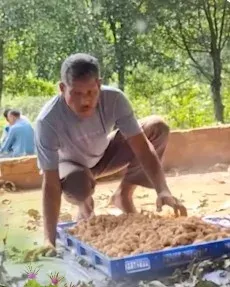
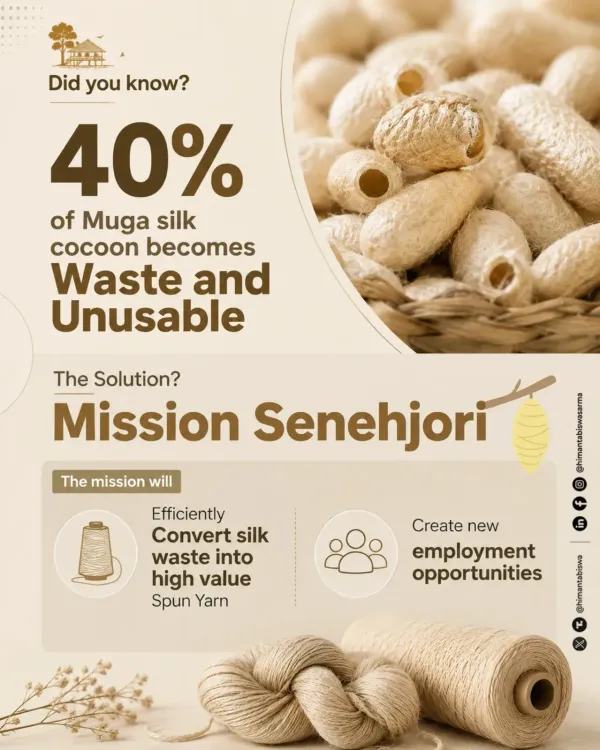
Nearly 40 per cent of Muga silk cocoons in Assam currently go to waste, according to the post.
The Assam Budget 2026 will invest in processing infrastructure to convert cocoon waste into high-value spun yarn.
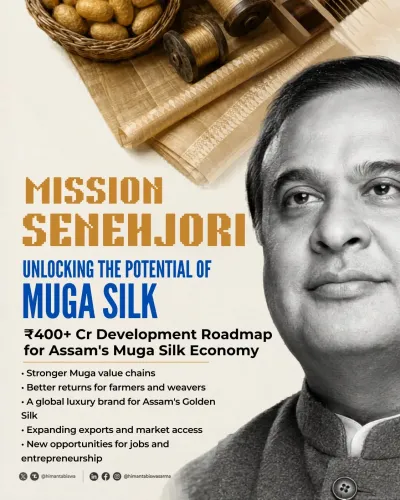
The move builds on Mission Senehjori , the state's existing sericulture and Muga silk support scheme.
The stated goals include job creation and strengthening Assam's overall Muga silk ecosystem.
Muga silk is GI-tagged and unique to Assam, making it a culturally and economically significant product.
Assam Chief Minister Himanta Biswa Sarma on Sunday, 19 July 2026, announced that the Assam Budget 2026 will invest in infrastructure to convert Muga silk cocoon waste into high-value spun yarn, citing that nearly 40 per cent of Muga cocoons currently go to waste. The initiative builds on the state's existing Mission Senehjori sericulture programme and is aimed at generating rural employment while strengthening Assam's Muga silk ecosystem.
Context
Muga silk, unique to Assam and protected by a Geographical Indication (GI) tag, is one of the state's most prized cultural and economic assets. Despite its prestige, a significant share of raw cocoon output has historically been lost before it can be processed into usable fibre. Chief Minister Sarma flagged this gap directly, describing it as an unresolved inefficiency in an otherwise iconic industry.
His post stated: 'The iconic Muga silk is Assam's pride, yet nearly 40% of its cocoons go to waste. Building on Mission Senehjori, the #AssamBudget2026 invests in infrastructure that will transform silk waste into high value spun yarn, creating jobs while strengthening Assam's Muga ecosystem.'
Policy Backdrop
Mission Senehjori is the Assam government's flagship sericulture scheme, designed to support Muga silk farmers through improved inputs, technical assistance, and market linkages. The new budget allocation extends this mission's scope by targeting the post-cocoon processing stage — an area where value addition has so far been limited.
At the national level, the Central Silk Board's Silk Samagra scheme, operational since 2017, has channelled support to state sericulture projects across India, providing a complementary policy framework within which Assam's investments can be positioned. Assam has consistently pursued value addition in its handloom and sericulture sectors as a pillar of rural economic policy, and the Assam Budget 2026 appears to deepen that commitment.
Stakeholders and Impact
Sericulture farmers and silk weavers across Assam stand to benefit most directly from the proposed infrastructure. By converting cocoon waste — material that currently yields no income — into spun yarn, the initiative could open a new revenue stream for producers at the lower end of the supply chain. Rural employment creation is a stated goal of the intervention.
The broader Muga silk value chain, which spans rearers, processors, weavers, and exporters, could see improved throughput if cocoon utilisation rates rise. A stronger domestic processing base would also reduce dependence on unprocessed cocoon trade and potentially improve price realisations for farmers.
What's Next
Attention will now turn to the rollout of specific silk processing units funded under the Assam Budget 2026, including the scale of investment, the number of processing facilities planned, and the districts targeted. Progress on cocoon utilisation rates is likely to be tracked in subsequent Assam Legislative Assembly sessions as a measure of the initiative's effectiveness.
If the infrastructure investments deliver on their promise, the model could serve as a template for waste-reduction strategies in other GI-tagged textile products across India's northeastern states, reinforcing the region's identity as a hub for premium traditional textiles.
Point of View
A more industrially mature phase of sector development. By anchoring the move in an existing scheme like Mission Senehjori, the administration avoids the optics of a standalone budget line and instead frames it as a policy evolution with continuity. The explicit jobs-creation framing also suggests the government is keen to demonstrate economic dividends from traditional-sector investments ahead of future electoral cycles. If cocoon utilisation data is tabled in the assembly, it will provide a rare, measurable accountability marker for a handloom-sector intervention.
NationPress
20 Jul 2026
Frequently Asked Questions
What is Mission Senehjori in Assam?
Mission Senehjori is the Assam government's sericulture initiative focused on supporting Muga silk farmers through improved inputs, technical assistance, and market linkages. The Assam Budget 2026 builds on this mission by adding infrastructure for processing cocoon waste into spun yarn.
What is Muga silk and why is it special?
Muga silk is a rare, naturally golden-coloured silk produced exclusively in Assam and protected by a Geographical Indication tag. It is considered one of the finest silks in the world and holds deep cultural and economic significance for the state.
What does the Assam Budget 2026 plan for the silk sector?
The Assam Budget 2026 proposes investment in infrastructure to transform Muga silk cocoon waste — estimated at nearly 40 per cent of total cocoon output — into high-value spun yarn, with the aim of creating jobs and improving the efficiency of the Muga silk value chain.
How much Muga silk cocoon goes to waste in Assam?
According to Chief Minister Himanta Biswa Sarma's post, nearly 40 per cent of Muga cocoons in Assam currently go to waste. The Assam Budget 2026 aims to address this through new processing infrastructure.
Who benefits from Assam's Muga silk infrastructure investment?
Sericulture farmers, silk weavers, and processors across Assam are the primary beneficiaries. By converting waste cocoons into spun yarn, the initiative could open new income streams for producers and generate broader rural employment in the Northeast.