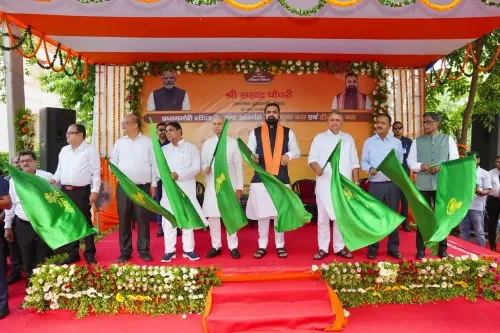
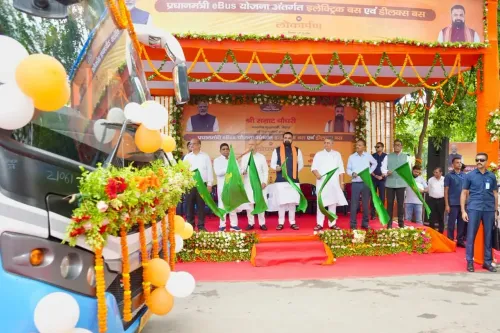
CM Nitish Kumar Launches Electric Buses in 6 Bihar Cities
Synopsis
Bihar Chief Minister Nitish Kumar has announced electric bus services across six cities — Patna, Muzaffarpur, Gaya, Bhagalpur, Darbhanga and Purnia — promising modern, eco-friendly public transport and reduced air pollution across the state's major urban centres.
Key Takeaways
Six cities covered: Electric buses will operate in Patna, Muzaffarpur, Gaya, Bhagalpur, Darbhanga and Purnia .
CM Nitish Kumar personally stated the initiative will deliver modern, safe, comfortable and environment-friendly public transport to passengers.
The move is expected to reduce air pollution and strengthen environmental conservation in Bihar's urban areas.
The plan aligns with India's FAME-II scheme , under which the central government funds electric bus procurement by states.
Bihar joins Delhi, Bengaluru and Hyderabad in deploying electric bus fleets as part of national clean mobility goals.
Fleet size, funding breakdown and rollout timelines remain to be officially confirmed.
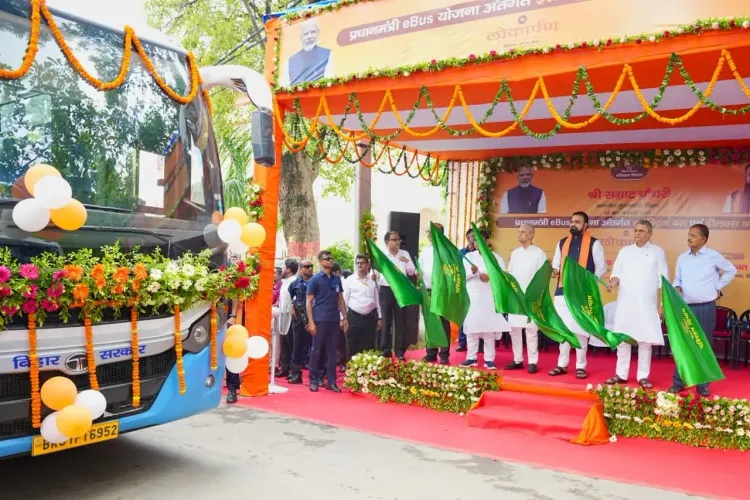
The Chief Minister's Office of Bihar, on Saturday, 25 July 2026, announced that Chief Minister Nitish Kumar has directed the launch of electric bus services across six major cities — Patna, Muzaffarpur, Gaya, Bhagalpur, Darbhanga, and Purnia — to provide modern, safe, comfortable and eco-friendly public transport to commuters.
What Was Said
Quoting the Chief Minister directly, the official post stated: 'Patna, Muzaffarpur, Gaya, Bhagalpur, Darbhanga evam Purnia mein electric bason ke sanchalan se yatriyon ko aadhunik, surakshit, suvidhajanank evam paryavaran-anukool sarvajanik parivahan uplabdh hoga' — meaning, 'The operation of electric buses in Patna, Muzaffarpur, Gaya, Bhagalpur, Darbhanga and Purnia will provide passengers with modern, safe, comfortable and environment-friendly public transport.' The statement further noted that this move will reduce air pollution and give new strength to environmental conservation.Context
Bihar has historically lagged behind more industrialised Indian states in urban public transport infrastructure. Patna, the state capital and its largest city, has long faced acute congestion and poor air quality. The inclusion of five additional cities — Muzaffarpur, Gaya, Bhagalpur, Darbhanga, and Purnia — signals an intent to extend clean mobility benefits beyond the capital to regional urban centres spread across north, central and eastern Bihar.Policy Backdrop
The announcement aligns with India's FAME-II scheme (Faster Adoption and Manufacturing of Electric Vehicles, Phase II, launched 2019), under which the central government extended funding support to states for procuring electric buses in urban areas to reduce vehicular emissions. Multiple Indian states including Delhi, Bengaluru and Hyderabad have already deployed large electric bus fleets under similar frameworks. Bihar's six-city plan follows this national pattern, reflecting India's broader commitments under international climate frameworks to electrify public transport. The Bihar Urban Development Department is the nodal state body responsible for implementing such urban mobility initiatives.Stakeholders and Impact
Urban commuters across the six cities stand to be the most immediate beneficiaries, gaining access to air-conditioned, low-emission public transport that reduces dependence on auto-rickshaws and private vehicles. The environmental dividend is equally significant: electric buses produce zero tailpipe emissions, directly addressing particulate pollution that has made several Bihar cities among the more polluted in the Gangetic plain. City transport corporations in each of the six centres will be tasked with day-to-day operations, while integration with any existing bus rapid transit infrastructure will be a key implementation challenge.What's Next
Attention will now turn to phased rollout timelines, procurement tenders for the bus fleet, and the financing structure — including whether central FAME-II funds, state budget allocations, or a combination will underwrite the project. Seamless integration with existing public transport networks in each city will determine how quickly commuters experience the on-ground change. CM Nitish Kumar's government will face scrutiny on delivery timelines, given Bihar's historically mixed record on large urban infrastructure projects.Point of View
Who has long positioned Bihar's development story around infrastructure upgrades. By extending the initiative beyond Patna to regional hubs like Darbhanga and Purnia, the government signals an intent to distribute urban development gains more evenly — a message with clear electoral resonance in a state where regional imbalances are a persistent grievance. The alignment with central FAME-II funding also reflects Bihar's growing ability to leverage national schemes for state-level visibility. However, the true test will lie in execution: past announcements on urban transport in Bihar have faced delays in procurement and integration, and commuters will be watching delivery timelines closely.
NationPress
25 Jul 2026
Frequently Asked Questions
Which cities will get electric buses in Bihar?
Electric buses will operate in six cities: Patna, Muzaffarpur, Gaya, Bhagalpur, Darbhanga and Purnia , as announced by Chief Minister Nitish Kumar's office on 25 July 2026.
What are the benefits of Bihar's electric bus scheme?
The electric buses will provide modern, safe, comfortable and environment-friendly public transport to passengers, and are expected to reduce air pollution while strengthening environmental conservation in Bihar's urban areas.
Is Bihar's electric bus plan linked to the central government's FAME-II scheme?
Bihar's electric bus initiative aligns with India's FAME-II scheme (2019), which provides central funding to states for procuring electric buses in cities to cut vehicular emissions, though the specific funding source for this plan has not been officially confirmed.
How does Bihar's electric bus plan compare to other Indian states?
Bihar follows states like Delhi, Bengaluru and Hyderabad , which have already deployed large electric bus fleets under national clean mobility frameworks aimed at reducing particulate pollution in urban areas.
When will electric buses start running in Bihar?
Exact rollout timelines have not yet been officially announced; the government's statement focused on the intent and benefits of the initiative, with procurement and phased deployment details yet to be confirmed.