CM Pema Khandu Meets JP Nadda Over Arunachal Flood Crisis
Synopsis
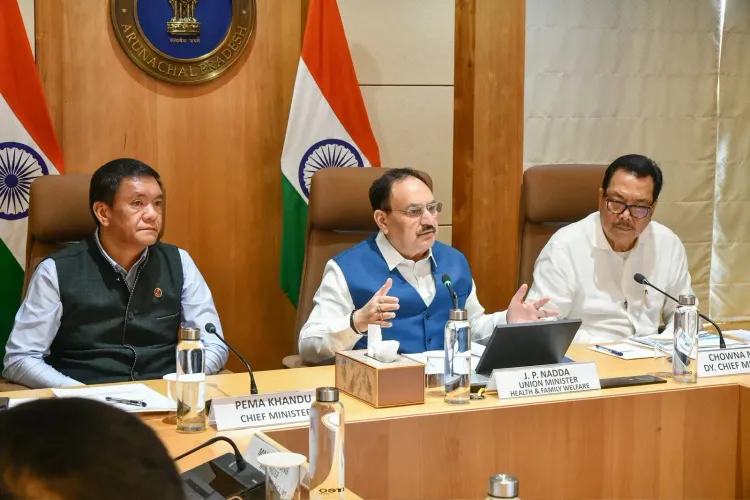
Arunachal Pradesh Chief Minister Pema Khandu met Union Minister JP Nadda on 6 August 2026 to present a district-wise flood damage assessment and seek financial aid and relaxation of disaster-response norms, citing the state's challenging terrain. Nadda assured continued central support under PM Modi.
Key Takeaways
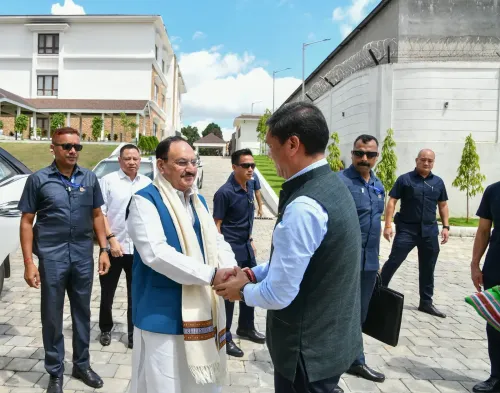
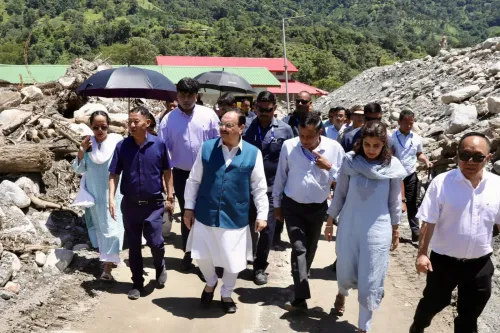
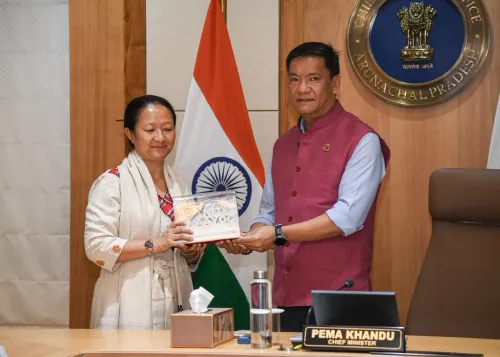
Pema Khandu met JP Nadda on 6 August 2026 to review flood damage across Arunachal Pradesh .
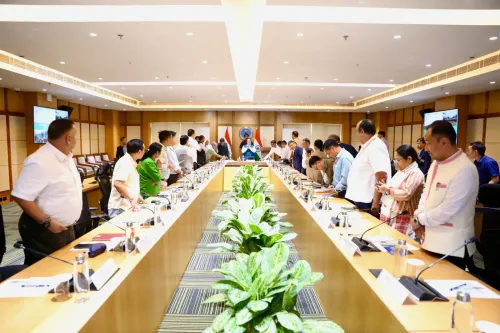
The meeting covered a district-wise damage assessment and overall loss estimates.
Khandu pressed for adequate financial support and relaxation of disaster-response norms, citing the state's unique hilly terrain.
Nadda assured continued support from the Government of India under PM Narendra Modi .
Key relief instruments include the State Disaster Response Fund (SDRF) and National Disaster Response Force (NDRF) mechanisms.
Formal relaxation of SDRF norms for hill states is the critical outcome to watch in the coming weeks.
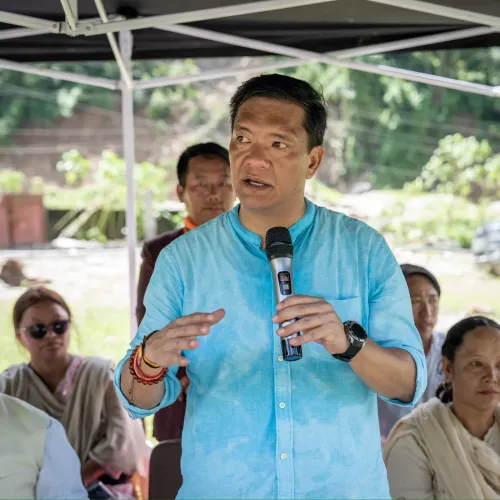
With floodwaters cutting across one of India's most rugged frontiers, Arunachal Pradesh Chief Minister Pema Khandu sat down with Union Minister JP Nadda on 6 August 2026 to lay out the scale of the damage — district by district — and press the Centre for financial relief and a relaxation of norms that the state's extraordinary terrain demands.
A terrain that turns every flood into a crisis
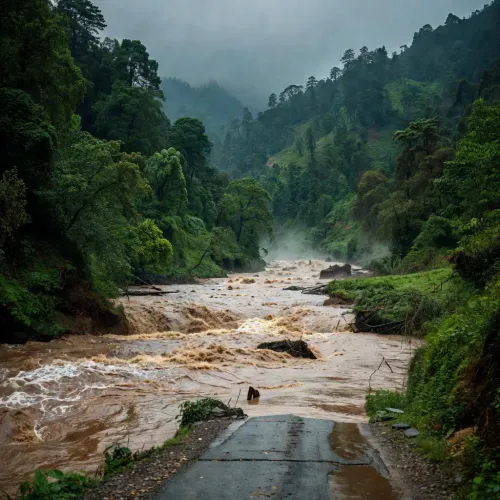
Arunachal Pradesh is not a state where standard disaster-response playbooks apply. Steep gorges, landslide-prone hillsides, and limited road connectivity mean that what is a manageable flood event elsewhere becomes a logistical emergency here. The Chief Minister made precisely this case to Nadda, arguing that uniform national norms — built around more accessible geographies — leave the state structurally under-compensated when calamity strikes.
The meeting covered a district-wise damage assessment and overall loss estimates, giving the Centre a granular picture of where the destruction has fallen hardest. Khandu also flagged the need for adequate financial support alongside the norm relaxations — two asks that have historically gone together whenever northeastern states seek relief from New Delhi.
Nadda's assurance and what it signals
Nadda, speaking on behalf of the Government of India, assured the Chief Minister of continued support under the leadership of Prime Minister Narendra Modi. That framing — invoking the PM directly — signals that the commitment is being pitched at the highest political level, not parked with a ministry's mid-level bureaucracy.
The Centre's primary instruments for such relief are the State Disaster Response Fund (SDRF) and National Disaster Response Force (NDRF) mechanisms, both of which have been activated for Arunachal Pradesh in previous monsoon cycles. Whether this cycle brings a formal relaxation of SDRF norms — the specific ask Khandu has put on the table — is now the number to watch.
The northeast's recurring monsoon reckoning
Joint flood reviews between the Centre and northeastern states have become a near-annual ritual of the monsoon season, driven by the region's geography and its strategic border location. What distinguishes this meeting is the explicit demand for norm relaxation, not just funds — a push that, if successful, could set a precedent for how the Centre calibrates disaster finance for hill states going forward.
For the families displaced by this season's floods across Arunachal's districts, the assurances now need to translate into disbursals. The clock on that conversion starts today.
Point of View
Not just funds, is the sharper edge here. If the Centre formalises a more flexible SDRF framework for high-terrain states, it could recalibrate how disaster finance flows to the entire northeastern region. The political optics of a Union Minister personally assuring relief — and invoking the Prime Minister by name — also serve to reinforce the BJP's narrative of responsive federal governance ahead of any upcoming electoral cycle in the state. The real test, as always, is the speed and scale of actual disbursals.
NationPress
6 Aug 2026
Frequently Asked Questions
Why did Pema Khandu meet JP Nadda in August 2026?
Arunachal Pradesh Chief Minister Pema Khandu met Union Minister JP Nadda on 6 August 2026 to review the flood situation in the state, present district-wise damage assessments, and seek financial support and relaxation of disaster-response norms from the Centre.
What did JP Nadda assure Arunachal Pradesh regarding flood relief?
JP Nadda assured Chief Minister Pema Khandu of continued support from the Government of India under the leadership of Prime Minister Narendra Modi for flood-affected people in Arunachal Pradesh.
Why does Arunachal Pradesh need special disaster-response norms?
Arunachal Pradesh has steep gorges, landslide-prone hills, and limited road connectivity, making standard disaster-response frameworks insufficient and leaving the state structurally under-compensated compared to more accessible geographies.
What funds does the Centre use to provide flood relief to states like Arunachal Pradesh?
The Centre primarily uses the State Disaster Response Fund (SDRF) and National Disaster Response Force (NDRF) mechanisms to provide flood and landslide relief to states, including Arunachal Pradesh, which has received such assistance in previous monsoon cycles.
What is the significance of the norm relaxation demand by Arunachal Pradesh?
A formal relaxation of SDRF norms for high-terrain states like Arunachal Pradesh could set a precedent for how disaster finance is calibrated for all northeastern hill states, making relief more proportionate to the actual challenges of disaster response in difficult terrain.