CM Rekha Gupta Flags Off 200 New Electric Buses in Delhi
Synopsis
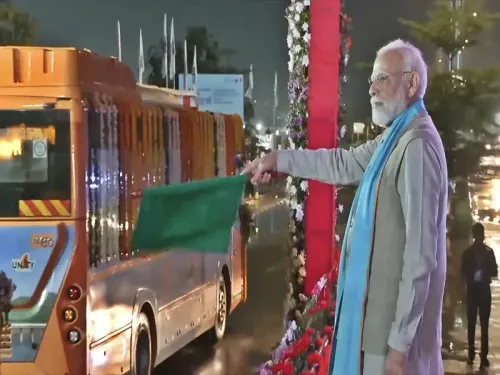
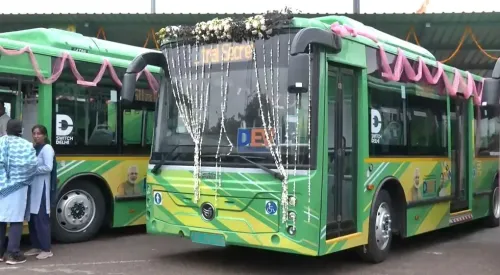
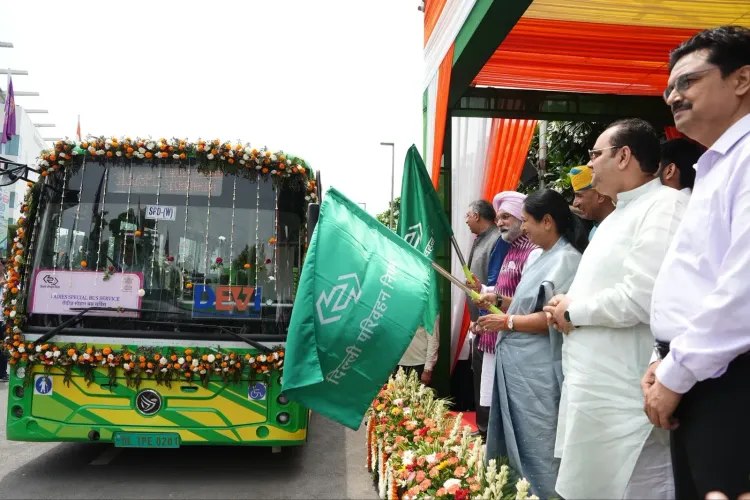
Delhi Chief Minister Rekha Gupta flagged off 200 new electric buses on 19 August 2026, taking the city's e-bus count to nearly 5,000. The event also launched 56 dedicated ladies special bus routes to major Delhi University colleges, a Delhi–Karnal interstate e-bus service, and a public EV charging station at Rajghat Depot-1.
Key Takeaways
200 new electric buses were flagged off at Delhi University Sports Complex on 19 August 2026 .
Delhi's total electric bus fleet now stands at approximately 5,000 buses .
56 Dedicated Ladies Special Electric Bus Services launched, connecting colleges including Hindu College, LSR, Gargi, Hansraj , and others.
A new Delhi–Karnal interstate electric bus service was inaugurated, extending e-mobility beyond the capital.
A public EV charging station at Rajghat Depot-1 was opened to support the growing electric fleet.
Lieutenant Governor Taranjit Singh Sandhu was the chief guest at the ceremony.
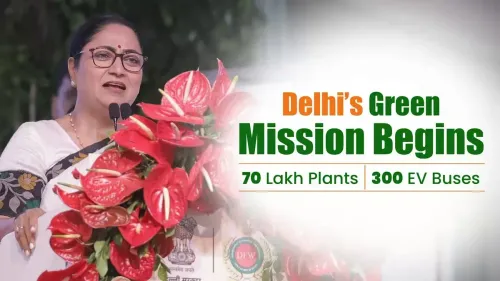
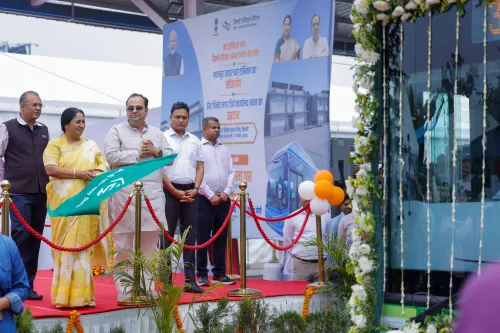
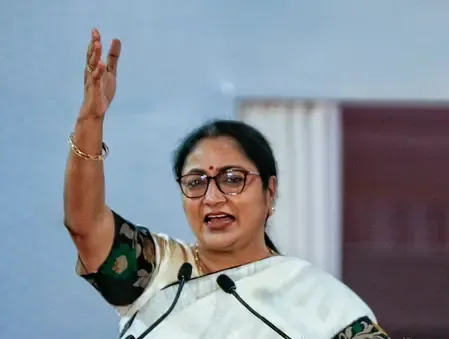
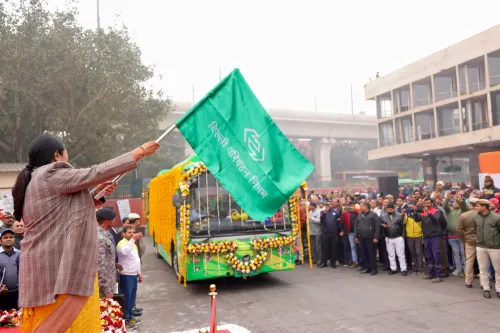
Two hundred electric buses rolled out of Delhi University Sports Complex on Wednesday, 19 August 2026 — and with them, Delhi's public transport fleet crossed a landmark threshold. Delhi Chief Minister Rekha Gupta flagged off the new additions in the presence of Lieutenant Governor Taranjit Singh Sandhu, pushing the capital's electric bus count to nearly 5,000.
56 Dedicated Routes for Women Students
The headline announcement of the day was the launch of 56 Dedicated Ladies Special Electric Bus Services — routes engineered specifically for women commuters travelling to some of Delhi's most prominent colleges. Hindu College, Ramjas, Daulat Ram, Shri Ram College of Commerce, Lady Shri Ram (LSR), Gargi, Hansraj, and Sri Guru Gobind Singh College of Commerce (SGGSCC) are all on the network. For thousands of women students who navigate Delhi's roads daily, a direct, dedicated electric service is a material shift — not a symbolic one.
Delhi–Karnal E-Bus and the Rajghat Charging Hub
The event also marked the inauguration of the Delhi–Karnal interstate electric bus service, extending clean-energy public transit beyond the capital's borders into Haryana. Simultaneously, a public EV charging station at Rajghat Depot-1 was opened — a piece of the infrastructure backbone without which a 5,000-bus electric fleet cannot function at scale.
Cabinet colleague Dr. Pankaj Kumar Singh and legislator Shri Suryaprakash Khatri were among the dignitaries present at the ceremony.
Delhi's Electric Fleet and the Road from FAME-I
Delhi's electric bus programme traces its origins to the central government's FAME-I scheme around 2019, with serious scale-up beginning from 2021 through successive procurement phases by the Delhi Transport Corporation (DTC). The broader ambition has always been twin-tracked: cut particulate emissions in the National Capital Region — one of the world's most polluted urban airsheds — while aligning with India's national electric mobility targets. Today's flagging-off is the latest chapter in that multi-year push.
Dedicated women's services and an interstate e-bus corridor represent the programme maturing beyond bulk fleet expansion into targeted, user-specific mobility solutions. The Rajghat charging station signals that charging infrastructure is now being treated as a public utility, not just a depot concern.
Delhi's electric bus story is no longer about ambition — it is about execution at scale, and the capital is betting that 5,000 electric buses is not a ceiling but a waypoint.
Point of View
Vocal demographic. The interstate Delhi–Karnal corridor is a quieter but strategically significant move, threading Delhi's clean-transport ambitions into a Centre-state cooperation narrative with Haryana. At 5,000 buses, Delhi's electric fleet is now large enough to be a governance legacy argument, not just a policy aspiration.
NationPress
19 Aug 2026
Frequently Asked Questions
How many electric buses does Delhi have now?
Following the addition of 200 new buses flagged off on 19 August 2026, Delhi's electric bus fleet stands at approximately 5,000 buses.
Which colleges are covered by the new ladies special electric bus routes in Delhi?
The 56 Dedicated Ladies Special Electric Bus Services cover major Delhi University colleges including Hindu College, Ramjas, Daulat Ram, Shri Ram College of Commerce, LSR, Gargi, Hansraj, and SGGSCC.
What is the Delhi–Karnal electric bus service?
The Delhi–Karnal interstate electric bus service, launched on 19 August 2026, connects Delhi with Karnal in Haryana using electric buses, extending clean-energy public transit beyond the capital.
Who flagged off the new electric buses in Delhi?
Delhi Chief Minister Rekha Gupta flagged off the 200 new electric buses at Delhi University Sports Complex, with Lieutenant Governor Taranjit Singh Sandhu present as the chief guest.
Where is the new public EV charging station in Delhi?
A public EV charging station was inaugurated at Rajghat Depot-1 as part of the same event on 19 August 2026, supporting Delhi's expanding electric bus and vehicle ecosystem.