CM Rekha Gupta Launches 'Arpan' Clothes Donation Drive at Metro Stations
Synopsis
Delhi Chief Minister Rekha Gupta signed a multi-agency MoU on 14 July 2026 to launch 'Arpan' old-clothes donation centres at 10 Delhi Metro stations. Donated garments will be recycled and upcycled, reducing textile waste while generating livelihood opportunities for women under the State Urban Livelihoods Mission.
Key Takeaways
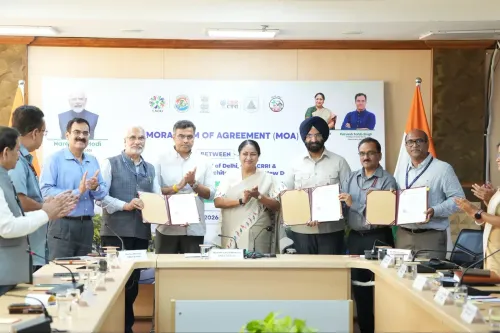
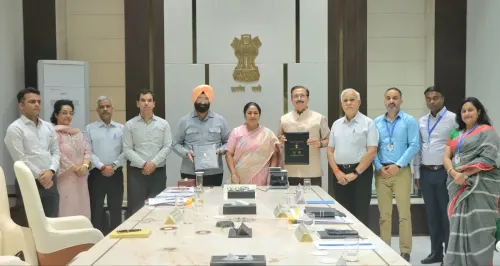
An MoU for the Old Clothes Donation Project was signed at Delhi Secretariat on 14 July 2026 .
Five parties signed: Delhi Government, DLWO, DMRC, SULM, ReSpun, and Clothes Box Foundation .
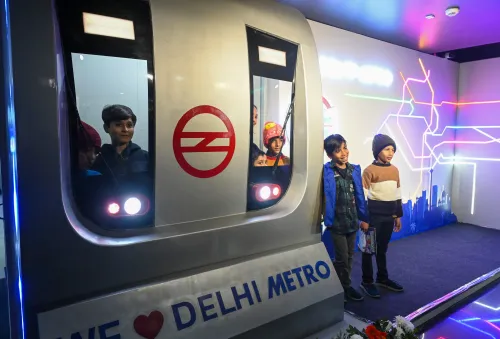
10 Delhi Metro stations will host Arpan clothing collection centres in the first phase.
Collected garments will be recycled and upcycled to reduce textile waste going to landfills.
The project aims to create new livelihood opportunities for women through the SULM framework.
The initiative aligns with Swachh Bharat Mission goals and UN SDG 12 on responsible consumption.
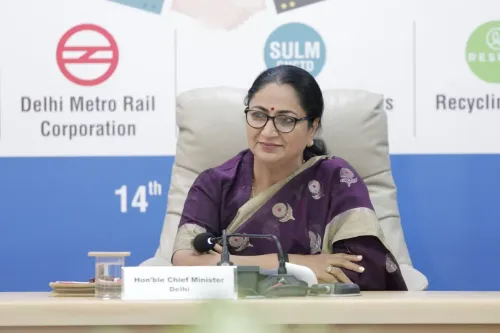
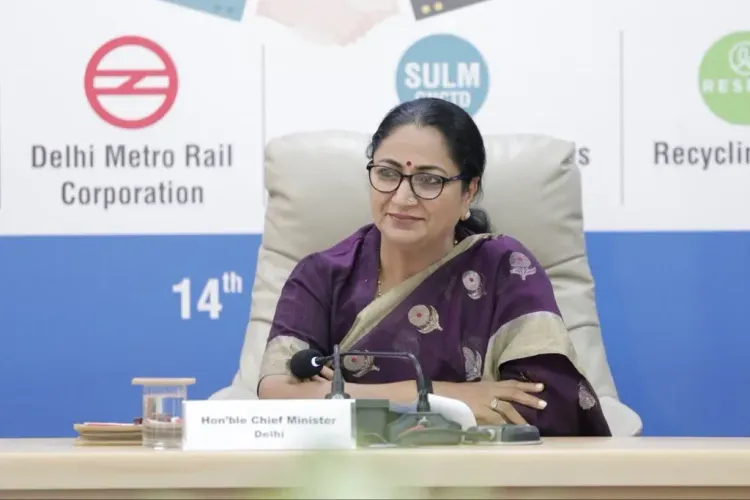
Delhi Chief Minister Rekha Gupta on Tuesday, 14 July 2026, presided over the signing of a Memorandum of Understanding at Delhi Secretariat to launch the Old Clothes Donation Project, a multi-agency initiative that will place clothing collection centres at 10 Delhi Metro stations under the name 'Arpan' (meaning 'offering' or 'dedication').
Posting on X, Chief Minister Gupta announced: 'Aaj Delhi Sachivalay mein Delhi Sarkar, DLWO, DMRC, SULM, ReSpun aur Clothes Box Foundation ke beech Old Clothes Donation Project ke liye MoU par hastakshar kiye gaye.' ('Today at Delhi Secretariat, an MoU was signed between the Delhi Government, DLWO, DMRC, SULM, ReSpun, and Clothes Box Foundation for the Old Clothes Donation Project.')
Context
The MoU was signed among five parties: the Delhi Government, the Delhi Livelihoods and Welfare Organisation (DLWO), the Delhi Metro Rail Corporation (DMRC), the State Urban Livelihoods Mission (SULM), and two non-profit partners — ReSpun and Clothes Box Foundation. The agreement formalises the framework under which 'Arpan' centres will be set up at metro stations, giving commuters a convenient drop-off point for old and unused clothing.
The Chief Minister stated that donated garments will be recycled and upcycled, giving them, in her words, 'naya jeevan' — a new life. The announcement was tagged with #ViksitDelhi, the ruling party's development branding for the capital.
Policy Backdrop
The project sits within India's broader circular-economy push, which seeks to divert textile waste from overflowing urban landfills. The Swachh Bharat Mission, launched in 2014, incorporated urban solid-waste management and recycling targets that this textile-focused initiative extends into the fabric-and-fashion sector.
Station-based clothing collection pilots have appeared in several Indian cities since the mid-2010s, but using the Delhi Metro network — one of the busiest urban transit systems in Asia — as a collection backbone gives the project a significant footprint from the outset. The approach also aligns with United Nations Sustainable Development Goal 12 on responsible consumption and production.
Stakeholders and Impact
The initiative targets three distinct outcomes: environmental conservation, a measurable reduction in textile waste, and the creation of new livelihood opportunities for women. The SULM component is specifically designed to channel processed garments into income-generating work for women in Delhi's urban informal economy.
For Delhi Metro commuters — who number in the millions daily — the Arpan centres will offer a low-friction way to donate clothing without making a special trip. The involvement of DMRC signals institutional buy-in from one of the city's most trusted public agencies, lending logistical credibility to the rollout.
What's Next
The immediate milestone is the operational launch of the 10 Arpan centres across selected Delhi Metro stations. No specific opening date or list of stations was disclosed in the Chief Minister's announcement. Subsequent phases could see expansion to additional stations across the DMRC network, depending on collection volumes and community uptake.
Longer term, the project's success will be measured by the volume of textiles diverted from landfills and the number of women brought into stable livelihoods through the recycling and upcycling supply chain — data points that stakeholders and civil-society groups will watch closely as Delhi positions itself as a model for circular urban governance.
Point of View
Waste reduction, and women's economic empowerment — under a single MoU, a structurally tidy approach that lets the BJP-led Delhi government claim credit across multiple voter-relevant verticals simultaneously. By anchoring collection at metro stations, the administration leverages DMRC's trusted public brand to drive participation without heavy additional infrastructure investment. The initiative echoes a pattern seen in other BJP-governed states of using existing public-transit infrastructure to deliver social and environmental schemes, reinforcing the 'Viksit Delhi' narrative ahead of future electoral cycles. Whether the project delivers on its livelihood promise will depend heavily on the operational capacity of SULM and its non-profit partners — the MoU signing is a political milestone, but the real test lies in execution data.
NationPress
14 Jul 2026
Frequently Asked Questions
What is the Arpan old clothes donation project in Delhi?
'Arpan' is a Delhi Government initiative under which old clothing can be dropped off at dedicated centres located at 10 Delhi Metro stations . The donated clothes will be recycled and upcycled, with the process also aimed at generating livelihood opportunities for women.
Which organisations signed the MoU for the Delhi Old Clothes Donation Project?
The MoU was signed on 14 July 2026 among the Delhi Government, DLWO (Delhi Livelihoods and Welfare Organisation), DMRC (Delhi Metro Rail Corporation), SULM (State Urban Livelihoods Mission), ReSpun, and Clothes Box Foundation .
Which Delhi Metro stations will have Arpan donation centres?
The Delhi Government announced that 10 Delhi Metro stations will host Arpan centres in the first phase, but the specific stations had not been publicly disclosed at the time of the MoU signing on 14 July 2026 .
How does the Arpan project help women in Delhi?
The project is designed to create new livelihood opportunities for women by channelling collected garments into a recycling and upcycling supply chain managed in part by the State Urban Livelihoods Mission (SULM) , which supports women in Delhi's urban informal economy.
How does the Delhi clothes donation project relate to Swachh Bharat Mission?
The Old Clothes Donation Project extends the urban solid-waste management and recycling goals of the Swachh Bharat Mission (launched in 2014 ) specifically to textile waste, aiming to divert used clothing from landfills through recycling and upcycling.