CM Rekha Gupta Thanks Union Minister Pralhad Joshi for Solar Scheme Push
Synopsis
Delhi Chief Minister Rekha Gupta on 19 July 2026 thanked Union Minister Pralhad Joshi for his guidance, reaffirming Delhi's commitment to the PM Surya Ghar: Muft Bijli Yojana — the central rooftop solar scheme offering up to 300 units of free electricity monthly to households — as part of India's clean energy push.
Key Takeaways
CM Rekha Gupta publicly thanked Union Minister Pralhad Joshi on 19 July 2026 for his guidance and blessings.
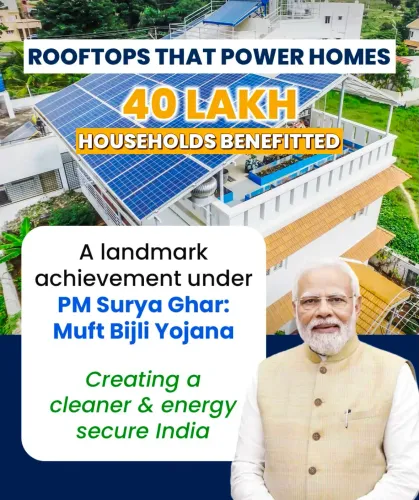
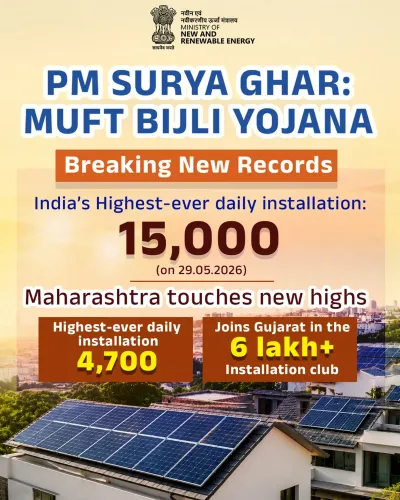
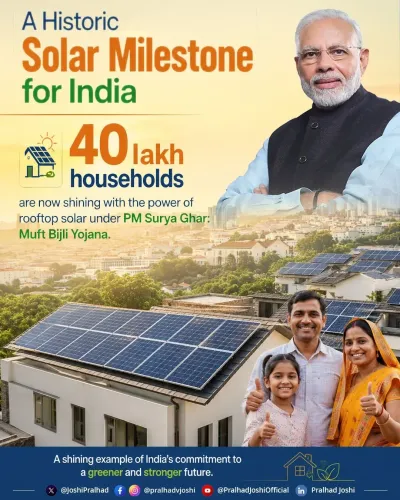
Delhi is actively implementing the PM Surya Ghar: Muft Bijli Yojana , the Union government's flagship rooftop solar programme.
The scheme, launched in February 2024 , provides central financial assistance for rooftop solar and up to 300 units of free electricity per month per household.
The exchange reflects structured coordination between Delhi's elected government and the Union Ministry of New and Renewable Energy .
India's broader solar target stands at 500 GW of non-fossil fuel capacity by 2030 , within which Delhi's urban rollout is a component.
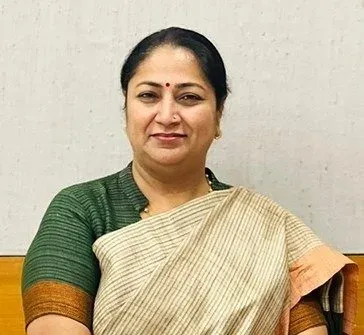
Delhi Chief Minister Rekha Gupta on Sunday, 19 July 2026, publicly thanked Union Minister for New and Renewable Energy Pralhad Joshi for his warm wishes and continued guidance, reaffirming Delhi's commitment to advancing the PM Surya Ghar: Muft Bijli Yojana under the Union government's framework for clean energy and energy self-reliance.
Context
In her post on X, CM Rekha Gupta acknowledged Joshi's encouragement and positioned Delhi as an active participant in the Union government's flagship rooftop solar programme. She stated that 'under your guidance, Delhi is advancing the vision of the PM Surya Ghar: Muft Bijli Yojana, strengthening the resolve of clean energy and energy self-reliance.' The exchange underscores the cooperative posture between Delhi's elected government and the Union Ministry of New and Renewable Energy.
Policy Backdrop
The PM Surya Ghar: Muft Bijli Yojana was launched by the Union government in February 2024 as a flagship rooftop solar initiative. The scheme provides central financial assistance for rooftop solar installations, enabling eligible households to receive up to 300 units of free electricity per month. The programme sits within India's broader National Solar Mission framework, which targets 500 GW of non-fossil fuel capacity by 2030.
Pralhad Joshi, as the Union Minister holding the portfolio of New and Renewable Energy, plays a central role in coordinating scheme implementation across states and Union Territories. Delhi, as a Union Territory with an elected government, engages with the ministry for subsidy disbursement and installation targets under the programme.
Stakeholders and Impact
The primary beneficiaries of the scheme in Delhi are urban households and electricity consumers who can offset their power bills through rooftop solar generation. Successful adoption reduces dependence on conventional grid power and contributes to the city's clean energy footprint. The scheme's central financial assistance model lowers the upfront cost barrier that has historically limited rooftop solar uptake in dense urban settings.
The coordination between CM Gupta's administration and Joshi's ministry reflects a standard pattern of Union-state collaboration for scheme targets and subsidy pipeline management — a dynamic that is especially relevant in a Union Territory like Delhi, where central oversight is structurally closer than in full states.
What's Next
Attention will now turn to state-level progress reports on rooftop solar installations in Delhi and any supplementary budget allocations the government may earmark for accelerating the scheme's reach in the coming fiscal cycle. Sustained political messaging from both the Chief Minister and the Union Minister signals that Delhi's solar rollout is being treated as a visible priority within the broader national clean energy agenda. The pace of household registrations and installation completions will be the concrete metric against which these commitments are measured.
Point of View
Making scheme credit-sharing a mutually reinforcing exercise. The post also serves to keep the PM Surya Ghar: Muft Bijli Yojana visible in Delhi's public discourse ahead of potential progress reviews. It fits a broader pattern of state-level BJP governments actively amplifying central clean energy initiatives as part of a unified electoral and policy narrative.
NationPress
20 Jul 2026
Frequently Asked Questions
What is the PM Surya Ghar: Muft Bijli Yojana?
The PM Surya Ghar: Muft Bijli Yojana is a Union government scheme launched in February 2024 that provides central financial assistance for rooftop solar panel installations, enabling eligible households to receive up to 300 units of free electricity every month.
Why did Delhi CM Rekha Gupta thank Pralhad Joshi?
CM Rekha Gupta thanked Union Minister Pralhad Joshi for his warm wishes and continued guidance in advancing the PM Surya Ghar: Muft Bijli Yojana in Delhi, reaffirming the city's commitment to clean energy and energy self-reliance.
Who is Pralhad Joshi?
Pralhad Joshi is the Union Minister holding the portfolio of New and Renewable Energy, responsible for coordinating the implementation of central solar and renewable energy schemes across states and Union Territories.
How is Delhi implementing rooftop solar schemes?
Delhi, as a Union Territory with an elected government, works with the Union Ministry of New and Renewable Energy to meet installation targets and manage subsidy disbursement under the PM Surya Ghar: Muft Bijli Yojana for urban households.
What is India's solar energy target by 2030?
India aims to achieve 500 GW of non-fossil fuel energy capacity by 2030 under its National Solar Mission framework, with rooftop solar schemes like PM Surya Ghar: Muft Bijli Yojana contributing to this goal.