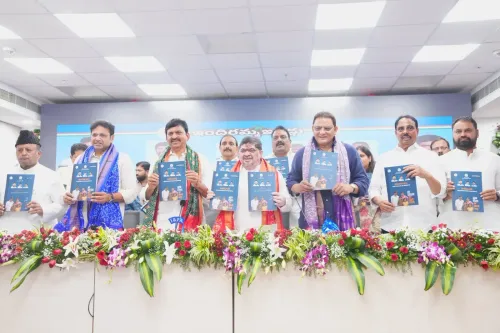
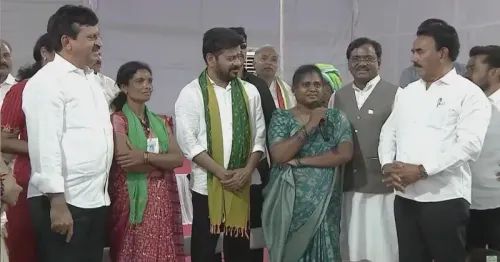
CM Revanth Reddy Reviews Indiramma Indlu Housing Scheme
Synopsis
Telangana CM A. Revanth Reddy reviewed the Indiramma Indlu scheme on 24 July 2026, committing to build 7,680 subsidised flats for Hyderabad's urban poor across 17 constituencies, with the state providing Rs 5 lakh per unit and free government land.
Key Takeaways
Revanth Reddy reviewed the Indiramma Indlu housing scheme on 24 July 2026 .
Flats will measure 528 sq ft (carpet area 400 sq ft ); total cost per unit is Rs 11 lakh .
The state government provides a subsidy of Rs 5 lakh per flat; beneficiaries contribute Rs 6 lakh .
First phase covers 7,680 flats across 17 assembly constituencies in Hyderabad .
Government-owned land worth hundreds of crores is being allocated free of cost to keep the scheme affordable.
Flats will be built near beneficiaries' existing neighbourhoods — reversing the peripheral-construction approach of past administrations.
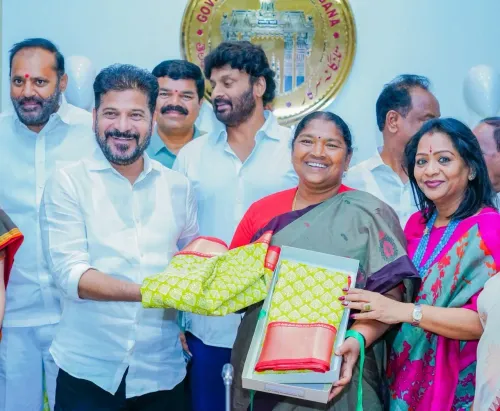
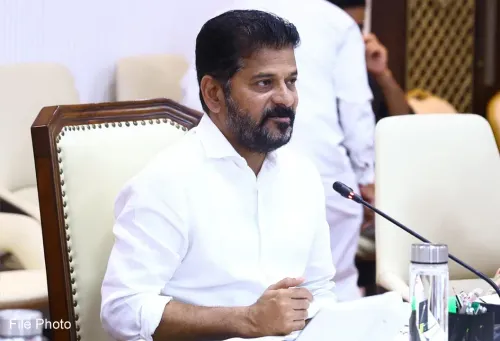
Telangana Chief Minister A. Revanth Reddy on Friday, 24 July 2026, announced a review of the Indiramma Indlu housing scheme, reaffirming the state government's commitment to building subsidised flats for the urban poor within Hyderabad city limits — close to where beneficiary families already live.
Context
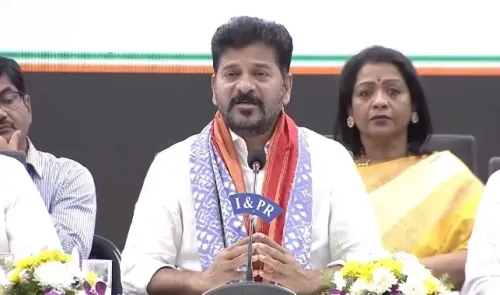
Posting in Telugu, CM Revanth Reddy stated that every family deserves to live with self-respect and that owning a home is a universal aspiration. He noted that rising construction and land costs have made homeownership an unaffordable burden for the poor, prompting the government to intervene directly. 'Our goal is for every family to live with dignity. A home of one's own is everyone's dream,' he wrote.
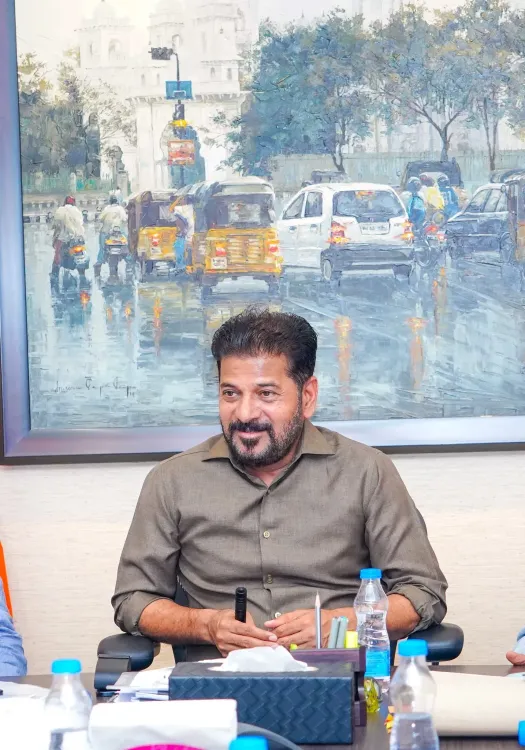
The Chief Minister said he personally chaired a progress review of the scheme on the day of the post. The review covered construction timelines, land allocation, and beneficiary outreach across the city's assembly segments.
Policy Backdrop
Under the Indiramma Indlu scheme, the state government will construct flats measuring 528 square feet (with a carpet area of 400 square feet) for eligible urban poor families. The total construction cost per unit is estimated at Rs 11 lakh, of which the Telangana state government will provide a subsidy of Rs 5 lakh; the remaining Rs 6 lakh is the beneficiary's share.
The scheme revives the spirit of the original Indiramma housing programme launched under the Congress government in undivided Andhra Pradesh in 2006, which aimed to provide pucca houses to below-poverty-line families. The current iteration is tailored to the urban context, addressing the acute affordability gap in one of India's fastest-growing metropolitan areas.
Land in Hyderabad's urban core currently commands between Rs 1.5 lakh and Rs 2 lakh per square yard, making private homeownership virtually impossible for low-income households. The state government is allocating government-owned land — valued at hundreds of crores of rupees — free of cost to make the scheme viable.
Stakeholders and Impact
In the first phase, 7,680 flats will be constructed across 17 assembly constituencies in the Hyderabad metropolitan area. A defining feature of the current approach is location: unlike previous administrations, which built housing on the city's periphery — leaving units largely unoccupied — the Revanth Reddy government has decided to build flats near the existing neighbourhoods where beneficiary families reside.
This proximity-first model is designed to ensure that families do not have to abandon their livelihoods, schools, and social networks to access government housing. CM Revanth Reddy also highlighted that construction activity within populated areas would generate local employment, providing an additional economic benefit to the same communities being housed.
The scheme falls under the broader Praja Palana governance framework of the Telangana Congress government, which has positioned welfare delivery and family self-respect as its central electoral and administrative commitments since taking office in December 2023.
What's Next
The immediate focus will be on beneficiary selection and land finalisation for the 7,680 first-phase flats across the 17 constituencies. Subsequent phases and additional land parcel announcements are expected as the programme scales. Potential coordination with the central government's Pradhan Mantri Awas Yojana (Urban) — which provides credit-linked subsidies for urban housing — may also be clarified in upcoming state budget sessions or policy announcements. The speed and transparency of beneficiary identification will be closely watched by urban welfare advocates and opposition parties alike.
Point of View
The party also draws a direct lineage to the Congress-era housing programme in undivided Andhra Pradesh, reinforcing its welfare identity ahead of future electoral cycles. The free land allocation is fiscally significant but raises questions about the inventory of suitable government parcels within a densely built metropolis where land at Rs 1.5-2 lakh per square yard is scarce. How swiftly the state can move from review to ground-breaking — and how transparently it selects the 7,680 first-phase beneficiaries — will determine whether this becomes a genuine policy achievement or a well-publicised intent.
NationPress
24 Jul 2026
Frequently Asked Questions
What is the Indiramma Indlu scheme in Telangana?
Indiramma Indlu is a Telangana state government housing scheme that builds subsidised flats for urban poor families in Hyderabad. Each flat is 528 sq ft, costs Rs 11 lakh to construct, and the government pays Rs 5 lakh as a subsidy while the beneficiary contributes Rs 6 lakh.
How many flats will be built under Indiramma Indlu in the first phase?
The first phase will deliver 7,680 flats spread across 17 assembly constituencies within the Hyderabad metropolitan area.
Who is eligible for Indiramma Indlu flats in Hyderabad?
The scheme targets urban poor families living in Hyderabad. Beneficiaries will be selected from within the 17 assembly constituencies covered in the first phase; exact eligibility criteria are expected to be announced during the rollout.
How much subsidy does the Telangana government give for Indiramma Indlu?
The Telangana state government provides a subsidy of Rs 5 lakh per flat. The remaining Rs 6 lakh of the Rs 11 lakh construction cost is the beneficiary's share.
Why is the Telangana government building flats inside Hyderabad city instead of on the outskirts?
CM Revanth Reddy has stated that past governments built housing far from the city, leaving units unoccupied because families could not afford to relocate away from their livelihoods. The current scheme deliberately builds flats near beneficiaries' existing neighbourhoods so they can maintain their jobs, schools, and community ties.