CM Sai Declares Bastar on Path to Peace at Rajyotsav 2026
Synopsis
At Chhattisgarh's Foundation Day ceremony on November 1, 2026, Chief Minister Vishnu Deo Sai declared that Bastar — long ravaged by Maoist insurgency — is now moving toward peace and development, crediting PM Modi, Home Minister Shah, and the sacrifices of security forces.
Key Takeaways
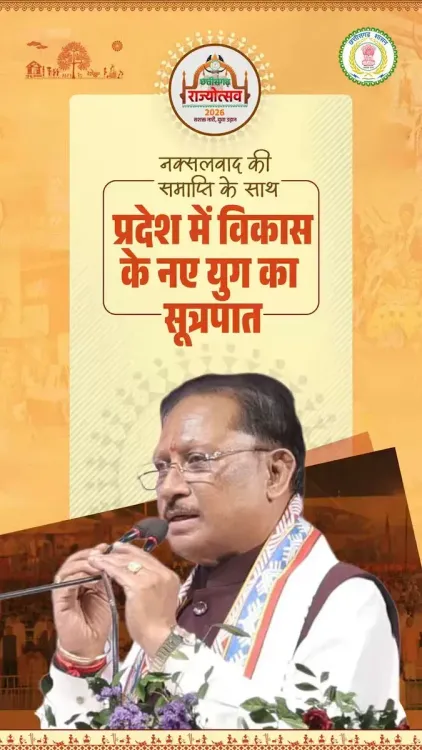
Chief Minister Vishnu Deo Sai addressed the Rajyotsav 2026 inauguration at Rajyotsav Maidan, Nava Raipur Atal Nagar on November 1, 2026 .
He declared Bastar and all of Chhattisgarh are on a new path of peace and development, free from the grip of Naxalism.
The CM credited PM Narendra Modi's guidance, Home Minister Amit Shah's resolve, and the sacrifice of security personnel for the change.
The SAMADHAN strategy , launched by the Ministry of Home Affairs in 2017 , underpins the federal counter-insurgency and development framework in Left Wing Extremism-affected areas.
Chhattisgarh was formed on November 1, 2000 , and inherited some of India's most Maoist-affected territory, particularly in the Bastar division .
CM Sai, who took office in December 2023 , is Chhattisgarh's first tribal Chief Minister and has made the anti-Naxal campaign central to his administration's agenda.
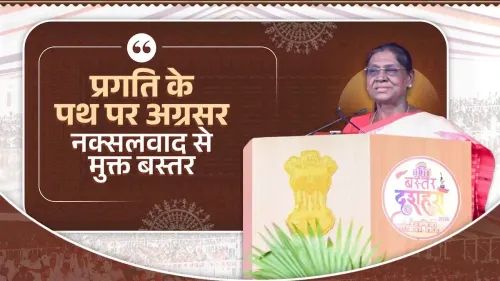
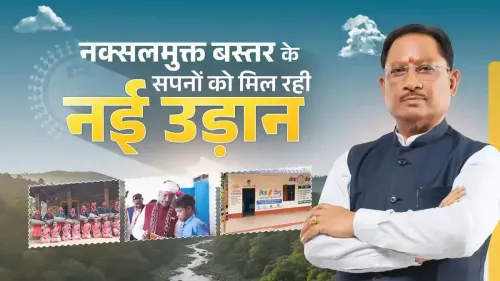
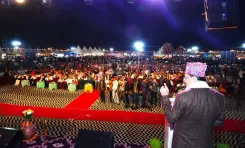
On Chhattisgarh's 26th Foundation Day, Chief Minister Vishnu Deo Sai stood before the state and declared what was once unthinkable: that Bastar — for decades synonymous with Maoist violence and fear — is finally turning toward peace and development. Speaking at the Rajyotsav 2026 inauguration ceremony at Rajyotsav Maidan, Nava Raipur Atal Nagar on November 1, 2026, the Chief Minister's Office of Chhattisgarh shared his address, framing the moment as the realisation of a long-held aspiration of the people of Bastar.
In his remarks, CM Sai credited the momentum to three forces: the guidance of Prime Minister Narendra Modi, the resolve of Union Home Minister Amit Shah, and — pointedly — the courage and sacrifice of the security forces on the ground. 'Bastar ki janta lambe samay se Naxalwad se mukt hokar vikas ki mukhyadhara se judne ki aakanksha rakhti thi, jo ab sakaar ho rahi hai,' he said — 'The people of Bastar had long aspired to break free from Naxalism and join the mainstream of development; that aspiration is now being realised.'
Decades of Insurgency, One Turning Point
Bastar, the vast southern division of Chhattisgarh, has carried the weight of Left Wing Extremism longer than the state itself has existed. When Chhattisgarh was carved out of Madhya Pradesh in November 2000, it inherited some of the most deeply Maoist-influenced territory in the country — dense forests, tribal communities, and a near-total absence of state infrastructure that insurgents exploited for decades. Roads were ambushed. Schools were torched. Election campaigns ran at personal peril.
The federal government's SAMADHAN strategy, introduced by the Ministry of Home Affairs in 2017, attempted to break this cycle through a multi-pronged approach — simultaneous pressure on security, development delivery, and rehabilitation of surrendered cadres. The strategy's logic was simple: security operations create space; infrastructure fills it. The BJP's central and state governments have repeatedly cited falling violence statistics as evidence that this approach is working.
Rajyotsav as a Political Stage
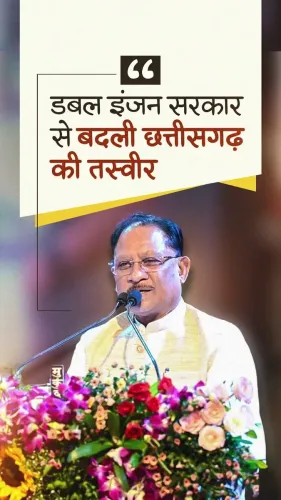
Foundation Day celebrations in Indian states have always doubled as governance report cards, and Rajyotsav 2026 was no different. CM Sai, who took office in December 2023 as Chhattisgarh's first tribal Chief Minister, has consistently positioned the anti-Naxal campaign as central to his administration's identity. Invoking both Modi and Shah by name in his address underlines the coordinated, top-down nature of the campaign — and signals that the state government is keen to share both credit and political momentum with the Centre.
For the residents of Bastar's tribal belt, the stakes are intensely practical. Mainstream connectivity — roads, health centres, schools, banking — has lagged generations behind the rest of Chhattisgarh. Every district declared stable opens the door to infrastructure investment that was simply impossible when contractors, teachers, and officials faced mortal risk.
What Comes After the Guns Fall Silent
The harder test, as security analysts and development economists have long argued, comes after the operational phase. Holding ground means delivering the schools, clinics, and livelihoods that the state was unable to provide for decades. The government's next moves — whether new road projects, district-level welfare schemes, or formal declarations of Naxal-free zones — will reveal whether the political narrative of a pacified Bastar translates into measurable change for its people.
On November 1, 2026, at least, Chhattisgarh's government made its declaration from the Foundation Day stage — and the people of Bastar are watching to see the promise kept.
Point of View
The CM simultaneously nationalises the credit and frames Bastar's transformation as a top-down, coordinated achievement rather than a localised success. The harder political and developmental test lies ahead: whether the post-insurgency period translates into concrete infrastructure delivery in tribal Bastar, which will determine whether this moment is a milestone or merely a milestone claim.
NationPress
2 Nov 2026
Frequently Asked Questions
What did CM Vishnu Deo Sai say about Naxalism at Rajyotsav 2026?
CM Sai declared at the Rajyotsav 2026 inauguration on November 1, 2026, that Bastar and all of Chhattisgarh are moving toward peace and development after breaking free from Naxalism, crediting PM Modi, Home Minister Amit Shah, and the security forces.
What is the SAMADHAN strategy for fighting Naxalism in India?
SAMADHAN is a multi-pronged strategy introduced by India's Ministry of Home Affairs in 2017 to address Left Wing Extremism through simultaneous security operations, development delivery, and rehabilitation of surrendered Maoist cadres.
Is Bastar Naxal-free now?
The Chhattisgarh government declared at Rajyotsav 2026 that Bastar is on a new path of peace and development; however, formal district-level declarations of Naxal-free zones and specific operational details are yet to be officially notified.
Who is Vishnu Deo Sai and when did he become Chhattisgarh Chief Minister?
Vishnu Deo Sai is a BJP leader who became Chhattisgarh's Chief Minister in December 2023, making him the state's first tribal Chief Minister.
Why is Bastar significant in the context of Naxalism in India?
Bastar is the southern division of Chhattisgarh with a large tribal population and has historically been one of India's most Maoist-affected regions, where insurgency severely disrupted development and security for decades.