CM Sai Ensures Mother-Tongue Education Rights in Chhattisgarh
Synopsis
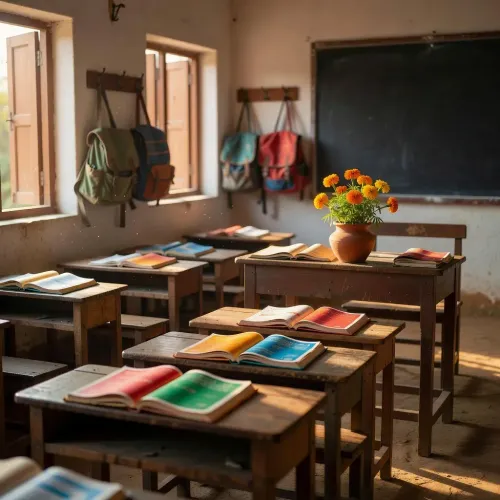
The Chief Minister's Office of Chhattisgarh on 19 July 2026 reaffirmed the right to mother-tongue education, saying no child should be left behind due to language barriers. The move aligns with NEP 2020 and targets tribal and rural students across the linguistically diverse state.
Key Takeaways
The Chief Minister's Office of Chhattisgarh announced on 19 July 2026 that the right to education in one's mother tongue has been ensured for all children in the state.
Chief Minister Vishnu Deo Sai and the state School Education Department were directly tagged, signalling institutional ownership of the commitment.
Chhattisgarh's tribal population speaks languages including Gondi , Halbi , and Chhattisgarhi , making mother-tongue instruction critical for foundational learning.
The policy aligns with the National Education Policy 2020 , which recommends mother-tongue or regional-language medium instruction at least until Grade 5 .
The initiative is framed under the 'Sushasan Sarkar' (Good Governance) banner and positioned as a pillar of the 'Viksit Chhattisgarh' development vision.
Upcoming school enrolment data and foundational literacy assessments will be key indicators of on-ground implementation.
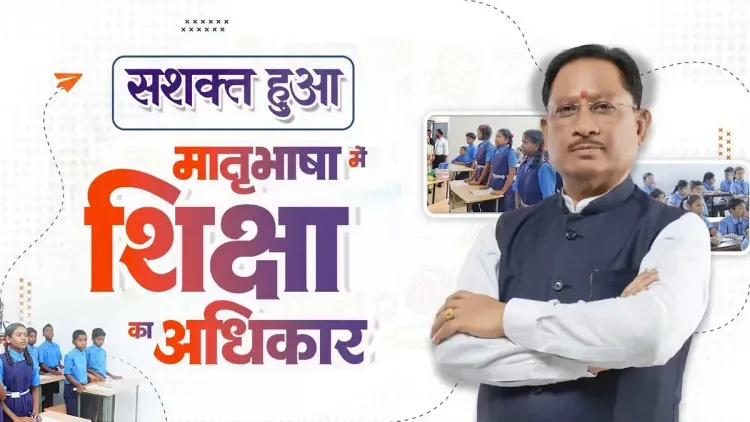
The Chief Minister's Office of Chhattisgarh, on Sunday, 19 July 2026, reaffirmed the state government's commitment to ensuring that no child in Chhattisgarh is held back on account of language barriers, announcing the right to education in one's mother tongue as a cornerstone of its governance agenda.
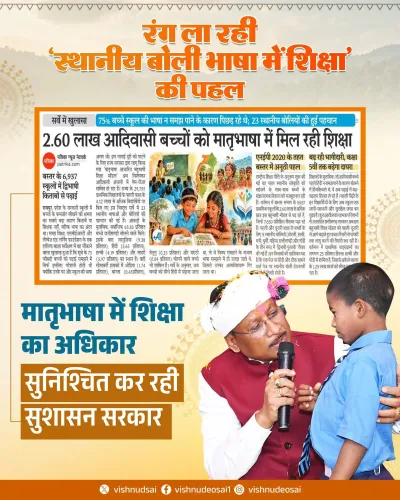
Posting in Hindi, the CMO stated: 'शिक्षा में बच्चों को ना हो भाषा की बाधा, इसलिए सुनिश्चित किया मातृभाषा में शिक्षा का अधिकार' ('So that children face no language barrier in education, the right to education in the mother tongue has been ensured'). The post, tagged to Chief Minister Vishnu Deo Sai and the state's School Education Department, framed mother-tongue instruction as both a governance priority and the foundation of a 'Viksit Chhattisgarh' — a developed Chhattisgarh.
Context
Chhattisgarh is home to a substantial tribal population whose primary languages include Gondi, Halbi, and Chhattisgarhi. For generations, children from these communities have entered classrooms where instruction is delivered in a language unfamiliar to them, creating a foundational comprehension gap that compounds into higher dropout rates and weaker learning outcomes. The CMO's post directly addresses this structural challenge, asserting that 'education becomes meaningful only when it is connected to the child's understanding, culture, and identity.'Policy Backdrop
The push aligns with the National Education Policy 2020, which recommends that children receive instruction in their mother tongue or regional language at least until Grade 5. The NEP's rationale is grounded in research showing that foundational literacy and numeracy are acquired faster when children learn in a language they already speak at home. Chhattisgarh's emphasis on mother-tongue medium education fits a nationwide pattern, with multiple linguistically diverse states revising their primary curricula after the NEP's rollout to reduce dropout rates and improve retention. The state government, under the banner of 'Sushasan Sarkar' (Good Governance Government), has positioned this commitment as part of its broader 'Viksit Chhattisgarh' development framework.Stakeholders and Impact
The primary beneficiaries are tribal and rural primary school children across Chhattisgarh who speak indigenous or regional languages as their first tongue. By ensuring instruction in a familiar language, the policy aims to give every child, as the CMO stated, 'an equal opportunity to advance in accordance with their talent.' Teachers, curriculum designers, and the School Education Department of Chhattisgarh are the key institutional actors responsible for translating this commitment into classroom practice — through adapted textbooks, trained educators, and assessment frameworks in local languages.What's Next
Attention will now turn to the operational details: how the state revises syllabi, trains teachers in tribal and regional languages, and measures outcomes in mother-tongue medium classrooms through annual school education reports. Enrolment data and foundational literacy assessments in upcoming academic years will be the clearest indicators of whether the policy commitment translates into measurable gains for children from linguistically marginalised communities. A sustained improvement in these metrics would strengthen the case for Chhattisgarh as a model for mother-tongue education implementation under the NEP 2020 framework.Point of View
The BJP-led government is attempting to demonstrate that administrative governance and cultural identity are complementary rather than competing priorities. The move also positions Chhattisgarh within the broader NEP 2020 implementation race among states, where early-grade language policy has become a visible metric of reform seriousness. The real test, however, lies in curriculum revision timelines and teacher training capacity — areas where intent and execution have historically diverged across Indian states.
NationPress
20 Jul 2026
Frequently Asked Questions
What is Chhattisgarh's mother-tongue education policy?
The Chhattisgarh government has affirmed the right of every child to receive education in their mother tongue, aiming to remove language barriers for tribal and rural students and align with the National Education Policy 2020's recommendation of mother-tongue medium instruction up to Grade 5.
Which languages are spoken by tribal children in Chhattisgarh?
Tribal communities in Chhattisgarh primarily speak languages such as Gondi, Halbi, and Chhattisgarhi, which are distinct from Hindi and have historically been underrepresented in formal school instruction.
How does NEP 2020 relate to mother-tongue education in Chhattisgarh?
The National Education Policy 2020 recommends that children be taught in their mother tongue or regional language at least until Grade 5. Chhattisgarh's policy commitment is in line with this national framework.
Who is the Chief Minister of Chhattisgarh in 2026?
Vishnu Deo Sai is the Chief Minister of Chhattisgarh, having assumed office in December 2023 as a BJP leader.
What is 'Viksit Chhattisgarh'?
'Viksit Chhattisgarh' translates to 'Developed Chhattisgarh' and is the state government's overarching development vision under which initiatives such as mother-tongue education are being framed.