CM Samrat Choudhary Cites World Bank Data on India's Poverty Drop
Synopsis
Bihar Chief Minister Samrat Choudhary highlighted World Bank data showing India's extreme poverty rate fell from 27.1% in 2011-12 to 2.6% in 2023-24, crediting PM Modi's welfare and inclusive-development agenda as the driver of the historic decline.
Key Takeaways
Bihar CM Samrat Choudhary posted on 30 October 2026 citing a World Bank report on India's poverty reduction.
India's extreme poverty rate fell from 27.1% (2011-12) to 2.6% (2023-24) according to the cited data.
The lower-middle-income poverty rate dropped from 57.7% to 16.1% over the same period.
Choudhary credited the gains to PM Narendra Modi 's focus on public welfare and social upliftment programmes.
NITI Aayog 's Multidimensional Poverty Index reports from 2021 onwards have documented parallel declines in deprivation across health, education and living standards.
The post frames the welfare progress as part of the broader Viksit Bharat (Developed India) national goal.
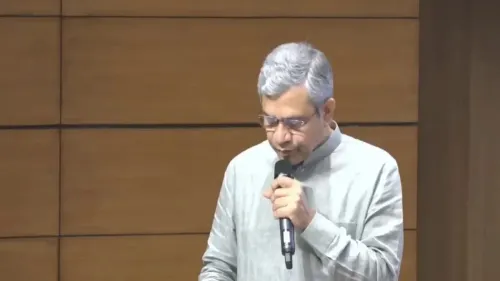
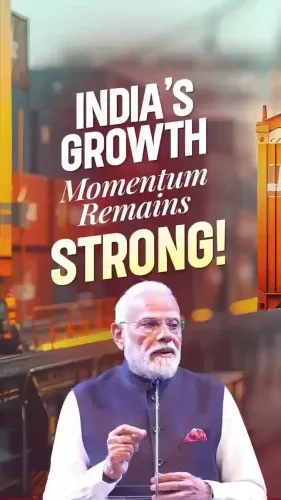
A number that once defined India's development challenge has shrunk to a fraction of its former size — and Bihar Chief Minister Samrat Choudhary wants the country to notice. On Friday, 30 October 2026, Choudhary took to X to highlight what he described as the most powerful proof of inclusive growth: a World Bank report showing India's extreme poverty rate collapsing from 27.1 per cent in 2011-12 to just 2.6 per cent in 2023-24.
Posting in Hindi, Choudhary wrote: 'समाज की अंतिम पंक्ति में खड़े व्यक्ति के जीवन में आया सकारात्मक बदलाव ही समावेशी विकास की सबसे बड़ी पहचान है' — 'The greatest measure of inclusive development is the positive change in the life of the person standing in the last row of society.' He credited the effort to Prime Minister Narendra Modi's focus on public welfare and social upliftment.
Two Poverty Lines, Both Falling Sharply
The figures Choudhary cited span two distinct benchmarks. The extreme poverty rate — measured at the lower threshold — fell from 27.1 per cent to 2.6 per cent over roughly twelve years. The lower-middle-income poverty rate, a broader measure capturing households just above destitution, dropped even more dramatically: from 57.7 per cent to 16.1 per cent over the same period.
Together, the two data points suggest that tens of millions of Indian families moved not just out of extreme deprivation, but into more stable economic ground. 'These figures represent not just a reduction in poverty,' Choudhary said, 'but the change in the lives of crores of families, better opportunities, and progress towards a dignified life.'
The Policy Architecture Behind the Numbers
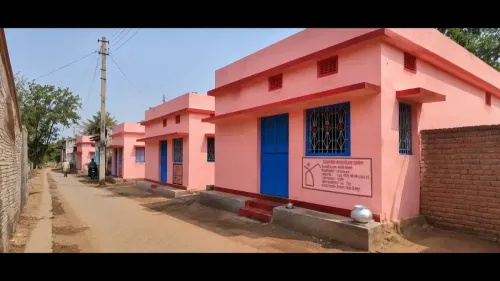
The gains span a period that covers successive central government administrations, but the post squarely anchors them in the Modi-era policy framework — a combination of direct benefit transfers, food security coverage, rural housing, sanitation drives, and financial inclusion through Jan Dhan accounts. NITI Aayog's Multidimensional Poverty Index reports, published from 2021 onwards, have tracked parallel declines across health, education and living-standards indicators, giving the World Bank data a domestic corroboration.
For Bihar — consistently among India's lower-income states — the national poverty narrative carries particular resonance. Choudhary's post places the state within the larger arc from jankалyan (public welfare) to samaveshi vikas (inclusive development) to the ruling coalition's flagship aspiration: Viksit Bharat, a developed India.
From Data Point to Political Claim
Senior BJP leaders have routinely cited international and domestic welfare data to build the case that structural, not merely cyclical, poverty reduction is under way. Choudhary's post follows that pattern — using a multilateral institution's own numbers to pre-empt charges of self-promotion. The World Bank's poverty assessments carry credibility precisely because they are produced outside India's domestic political debate.
The next test of the trend will come with updated NITI Aayog MPI data and any forthcoming World Bank India poverty assessments — figures that opposition parties and independent economists will scrutinise just as closely as the government celebrates them. The journey Choudhary describes is real in the data; whether it continues at the same pace is the question every budget cycle will have to answer.
Point of View
At heart, a political argument about governance outcomes. Citing a World Bank report, rather than government-issued statistics alone, insulates the claim from the usual charge of self-serving accounting. The move also signals Bihar's alignment with the Centre's 'Viksit Bharat' aspiration ahead of what will be closely watched electoral cycles. The real analytical question is whether the pace of poverty reduction can be sustained as the low-hanging gains — financial inclusion, cooking gas connections, basic housing — are largely captured, and the harder last-mile challenges of income mobility and employment quality remain.
NationPress
30 Oct 2026
Frequently Asked Questions
What does the World Bank report say about India's poverty rate?
According to the World Bank report cited by Bihar CM Samrat Choudhary, India's extreme poverty rate fell from 27.1% in 2011-12 to 2.6% in 2023-24, and the lower-middle-income poverty rate dropped from 57.7% to 16.1% over the same period.
Who is Samrat Choudhary and why did he post about poverty data?
Samrat Choudhary is the Chief Minister of Bihar and a senior BJP leader. He shared the World Bank poverty figures on 30 October 2026 to highlight what he called the success of PM Narendra Modi's inclusive development and welfare programmes.
What government schemes are credited for India's poverty reduction?
Central government initiatives including direct benefit transfers, food security schemes, rural housing programmes, sanitation drives, and financial inclusion through Jan Dhan accounts are cited as key drivers of India's poverty decline since 2014.
What is the NITI Aayog Multidimensional Poverty Index?
The NITI Aayog Multidimensional Poverty Index (MPI) is a domestic measure that tracks deprivation across health, education and living standards. Published from 2021 onwards, its findings broadly corroborate the World Bank's poverty trend data for India.
What is Viksit Bharat and how does it relate to poverty reduction?
Viksit Bharat, meaning 'Developed India', is the central government's long-term vision for India to become a fully developed nation. CM Choudhary's post frames declining poverty as a milestone on the path from public welfare delivery to that broader national aspiration.