CM Samrat Choudhary Highlights India-Japan Investment Push
Synopsis
Bihar CM Samrat Choudhary amplified PM Modi's remarks at the India-Japan Annual Summit, citing 120 new business agreements expected to bring over 10 billion dollars in Japanese investment, with a decade-long goal of 10 trillion yen and doubling Japanese corporate presence in India.
Key Takeaways
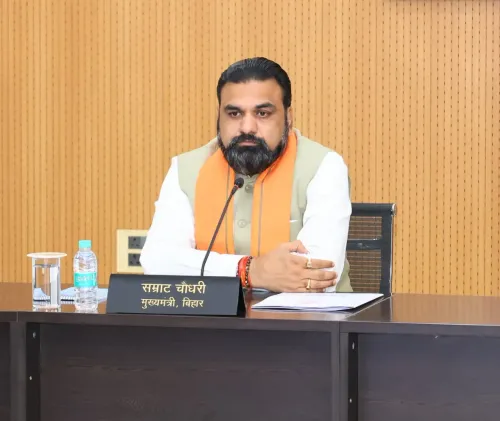
Bihar Chief Minister Samrat Choudhary shared PM Narendra Modi 's remarks on the India-Japan Annual Summit on 2 July 2026 .
PM Modi cited approximately 120 new business agreements signed between India and Japan in the past one year.
These agreements are expected to bring more than 10 billion US dollars in Japanese investment into India.
India's stated goal is to attract 10 trillion yen from Japan over the next 10 years .
A parallel target is to double the number of Japanese companies operating in India within the same period.
The India-Japan economic partnership has been anchored by the Comprehensive Economic Partnership Agreement of 2011 and the Special Strategic and Global Partnership of 2014 .
Bihar Chief Minister Samrat Choudhary on Thursday, 2 July 2026, shared remarks by Prime Minister Narendra Modi on the strengthening investment partnership between India and Japan, citing ambitious targets set at the India-Japan Annual Summit. The post, shared from Choudhary's official X account, quotes Modi as outlining a decade-long roadmap for scaling Japanese corporate presence in India.
Context
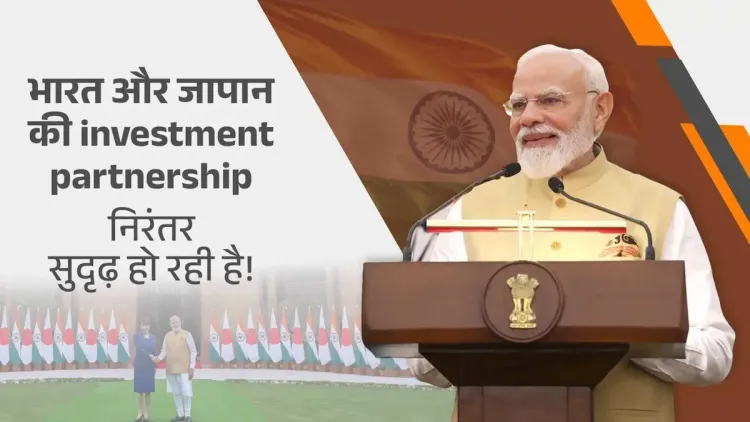
Choudhary's post carries a direct quote attributed to Prime Minister Modi: 'भारत और जापान की investment partnership निरंतर सुदृढ़ हो रही है' ('The investment partnership between India and Japan is continuously strengthening'). Modi is quoted as stating that approximately 120 new business agreements have been signed over the past one year, which are expected to bring more than 10 billion US dollars in Japanese investment into India. The remarks were made in the context of the #IndiaJapanAnnualSummit.
The post goes on to quote Modi's stated goal: to attract 10 trillion yen in investment from Japan over the next 10 years, and to double the number of Japanese companies operating in India. Choudhary's amplification of the summit messaging signals broad BJP alignment behind the bilateral economic agenda.
Policy Backdrop
India and Japan formalised their economic relationship through the Comprehensive Economic Partnership Agreement signed in 2011, which reduced tariffs and expanded trade and investment flows between the two countries. The partnership was elevated to a Special Strategic and Global Partnership in 2014, with Japan pledging fresh public and private investment commitments to India during Prime Minister Modi's visit that year.
Since then, successive India-Japan Annual Summits have produced incremental investment targets and business-to-business agreements, particularly in sectors such as infrastructure, automobiles, and electronics. Japan has also been a significant source of Official Development Assistance for large-scale Indian infrastructure projects, including metro rail networks and bullet train corridors.
Stakeholders and Impact
Japanese investors and Indian manufacturing-sector players are the primary stakeholders in this bilateral investment framework. A doubling of Japanese corporate presence in India would have downstream effects on employment, technology transfer, and supply-chain integration, particularly in states that have positioned themselves as investment destinations.
For Bihar, whose Chief Minister is amplifying this message, the broader India-Japan investment push carries potential relevance to infrastructure development and industrial investment in the state. The 10 trillion yen decade-long target, if tracked through state-level implementation mechanisms, could open avenues for eastern Indian states historically underrepresented in FDI inflows.
What's Next
Attention will now turn to the outcomes and follow-through mechanisms announced at the India-Japan Annual Summit, including whether specific sector-wise or state-wise investment pipelines are formalised. Tracking the progress of the 120 business agreements cited by Modi will be a key indicator of whether the bilateral investment relationship meets its stated targets. The next annual summit will serve as a natural checkpoint for assessing movement toward the 10 trillion yen goal and the doubling of Japanese corporate presence in India.
Point of View
Whose CM is actively sharing this messaging, association with high-profile bilateral investment milestones serves both developmental signalling and political positioning. The move fits a broader pattern where state leaders align with Centre-driven foreign investment stories to attract downstream FDI interest to their own regions.
NationPress
2 Jul 2026
Frequently Asked Questions
What did PM Modi say at the India-Japan Annual Summit 2026?
PM Modi stated that approximately 120 new business agreements had been signed between India and Japan in the past year, expected to bring over 10 billion US dollars in Japanese investment, with a goal of 10 trillion yen over the next decade.
What is the India-Japan 10 trillion yen investment target?
India has set a goal to attract 10 trillion yen in investment from Japan over the next 10 years, alongside doubling the number of Japanese companies operating in India.
Why did Bihar CM Samrat Choudhary post about the India-Japan Summit?
Choudhary shared PM Modi's remarks from the India-Japan Annual Summit on his X account, amplifying the bilateral investment messaging as part of broader BJP political communication.
How many business agreements were signed between India and Japan recently?
According to PM Modi's quoted remarks, approximately 120 new business agreements were signed between India and Japan in the past one year.
What is the India-Japan Special Strategic and Global Partnership?
The Special Strategic and Global Partnership is the framework established in 2014 under which India and Japan elevated their bilateral ties, with Japan pledging fresh public and private investment commitments to India.