CM Sawant Highlights Modi Govt's 12-Year Women Welfare Record
Synopsis
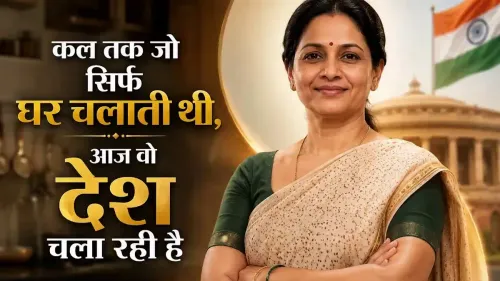
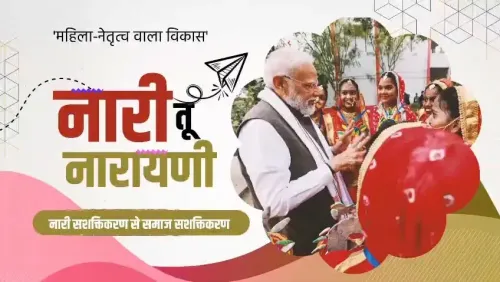
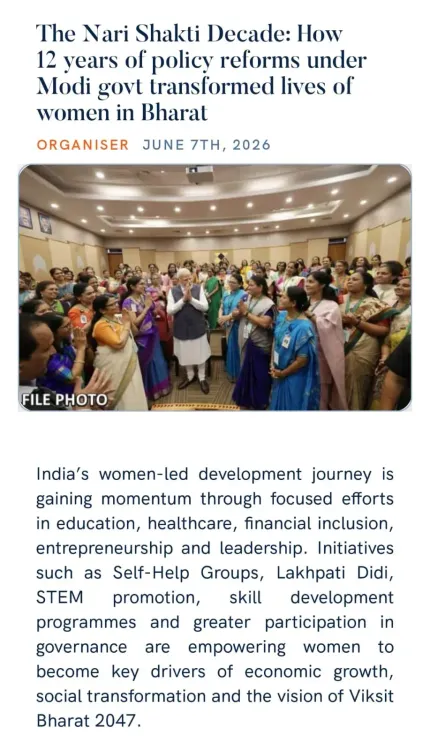
Goa Chief Minister Pramod Sawant amplified the 'Nari Shakti Decade' narrative on June 7, 2026, spotlighting 12 years of Modi government women-centric reforms including Beti Bachao Beti Padhao, Ujjwala Yojana, and the Women's Reservation Bill as cornerstones of BJP's welfare record.
Key Takeaways
Goa CM Pramod Sawant shared the 'Nari Shakti Decade' feature on June 7, 2026 via the NaMo App, aligning state BJP messaging with the central government's women-welfare narrative.
Beti Bachao Beti Padhao , launched in January 2015 , targeted the declining child sex ratio and girls' school enrolment across India.
Pradhan Mantri Ujjwala Yojana , started in May 2016 , provided clean LPG connections to women in below-poverty-line households.
The Nari Shakti Vandan Adhiniyam (Women's Reservation Bill), passed in September 2023 , reserves one-third of legislative seats for women.
Implementation of the Women's Reservation Act remains tied to the next delimitation exercise, keeping it a live policy watch point.
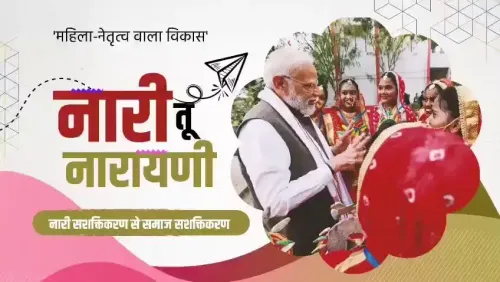
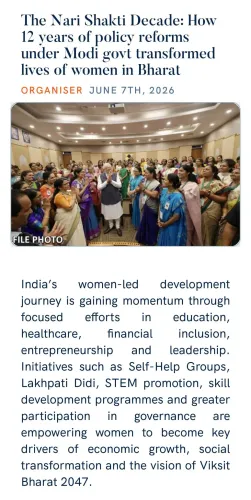
Goa Chief Minister Pramod Sawant on Sunday, June 7, 2026, shared a detailed account of what the Modi government describes as a 'Nari Shakti Decade' — marking 12 years of women-centric policy reforms since 2014. Sawant shared the piece via the NaMo App, amplifying a narrative that frames the Bharatiya Janata Party's welfare agenda around women's empowerment.
Context
The post, shared by Chief Minister Sawant, links to a feature article examining how central government schemes over the past 12 years have sought to transform the lives of women across India. The framing — 'Nari Shakti Decade' — is part of a broader BJP communication strategy that periodically aggregates welfare scheme outcomes to underscore the government's women-first policy record. Sawant's amplification signals alignment between state-level BJP leadership and the central government's messaging on this theme.
Policy Backdrop
Among the flagship programmes cited in this policy arc is Beti Bachao Beti Padhao, launched in January 2015, which targeted the declining child sex ratio and sought to improve enrolment of girl children in schools. Pradhan Mantri Ujjwala Yojana, inaugurated in May 2016, extended clean LPG cooking connections to women in below-poverty-line households, replacing hazardous traditional fuels.
The legislative pillar of this decade was the Nari Shakti Vandan Adhiniyam — the Women's Reservation Bill — passed by Parliament in September 2023, which reserves one-third of seats for women in the Lok Sabha, state assemblies, and the Delhi Legislative Assembly. Together, these measures form the policy lineage that the 'Nari Shakti Decade' label seeks to encapsulate.
Stakeholders and Impact
The primary beneficiaries of this policy cluster are women from below-poverty-line households, girl children in underserved districts, and women aspiring to elected office. Financial inclusion drives running parallel to these schemes have also sought to bring women into the formal banking system through Jan Dhan Yojana accounts, enabling direct benefit transfers.
For Goa, Chief Minister Sawant's endorsement of this national narrative reinforces the state government's positioning on women's welfare, even as Goa — a comparatively prosperous coastal state — faces different implementation challenges from the larger Hindi-belt states where many of these schemes were primarily targeted.
What's Next
Attention now turns to state-level implementation reports on the Women's Reservation Act, whose operative provisions are linked to the completion of the next delimitation exercise. Observers will also watch for new allocations earmarked for women-specific schemes in the forthcoming Union Budget. The 'Nari Shakti Decade' framing is likely to remain a recurring theme in BJP communications ahead of state elections, as the party seeks to consolidate its record on gender welfare.
Point of View
The communication also reinforces the ecosystem of party-aligned digital outreach that bypasses traditional media gatekeepers. The broader pattern suggests this messaging will intensify as delimitation timelines come into sharper focus.
NationPress
24 Oct 2026
Frequently Asked Questions
What is the Nari Shakti Decade?
The 'Nari Shakti Decade' is a BJP-coined phrase referring to 12 years of women-centric policy reforms under the Modi government since 2014, encompassing schemes such as Beti Bachao Beti Padhao, Pradhan Mantri Ujjwala Yojana, and the Women's Reservation Bill.
What is the Nari Shakti Vandan Adhiniyam?
The Nari Shakti Vandan Adhiniyam, also called the Women's Reservation Bill, was passed by Parliament in September 2023. It reserves one-third of seats for women in the Lok Sabha, state legislative assemblies, and the Delhi Legislative Assembly, with its operative provisions linked to the next delimitation exercise.
What is Pradhan Mantri Ujjwala Yojana?
Pradhan Mantri Ujjwala Yojana is a central government scheme launched in May 2016 to provide free LPG cooking gas connections to women living in below-poverty-line households, replacing hazardous traditional cooking fuels.
Why did Goa CM Pramod Sawant share the Nari Shakti article?
Chief Minister Sawant shared the article via the NaMo App on June 7, 2026, as part of BJP's broader communication strategy to highlight the Modi government's 12-year record on women's welfare and empowerment ahead of future electoral cycles.
What is Beti Bachao Beti Padhao?
Beti Bachao Beti Padhao is a national scheme launched in January 2015 to address the declining child sex ratio in India and promote the education and welfare of the girl child.