CM Sawant marks 12 years of Modi govt's women empowerment push
Synopsis
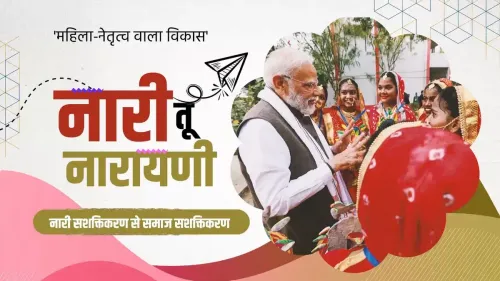
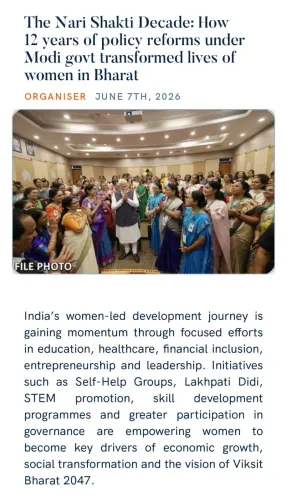
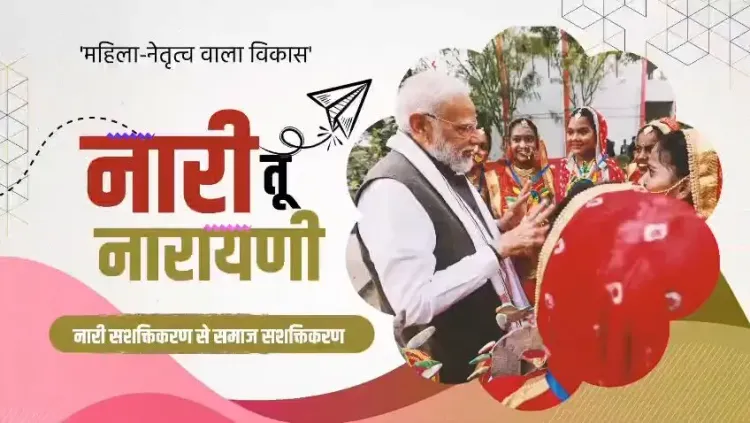
Goa Chief Minister Pramod Sawant on 12 June 2026 marked twelve years of Prime Minister Modi's women-centric governance, citing a policy arc from Swachh Bharat and Ujjwala Yojana to Nari Shakti Vandan Adhiniyam and Lakhpati Didi, framing it as a shift from welfare to economic and political empowerment.
Key Takeaways
Goa CM Pramod Sawant posted on 12 June 2026 marking #12YearsOfNariShakti under PM Narendra Modi .
Schemes cited span 2014–2023 : Swachh Bharat, Ujjwala Yojana, Beti Bachao Beti Padhao, MUDRA, Lakhpati Didi, Drone Didi and Nari Shakti Vandan Adhiniyam.
The Nari Shakti Vandan Adhiniyam (2023) reserves one-third of Lok Sabha and state assembly seats for women — a bill that had lapsed repeatedly since 1996 .
Lakhpati Didi targets women in self-help groups to earn at least one lakh rupees annually through skill and enterprise support.
Sawant frames the policy journey as a shift from basic welfare to economic agency and political representation under the Viksit Bharat 2047 vision.
Implementation of women's legislative reservations depends on completion of the delimitation exercise.
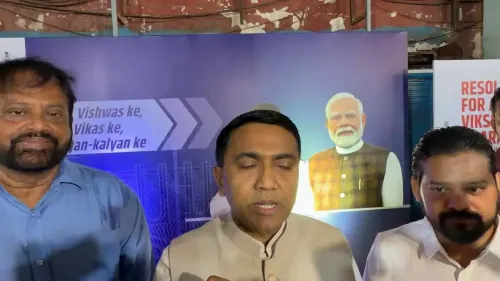
Goa Chief Minister Pramod Sawant on Friday, 12 June 2026, took to X to mark what he described as twelve transformative years of women empowerment under the leadership of Prime Minister Narendra Modi, citing a range of central government schemes from sanitation to political representation as evidence of a structural shift in policy approach.
Context
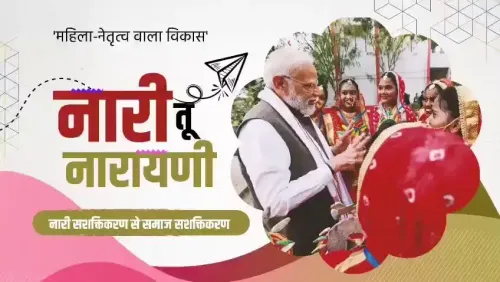
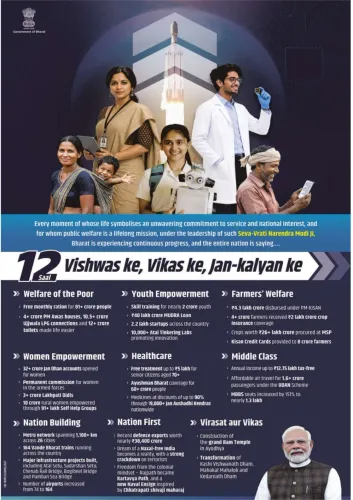
Sawant's post, tagged #12YearsOfNariShakti, frames the BJP-led central government's record since 2014 as a progression from basic welfare to economic agency and political power for women. He writes that the journey covers 'dignity and basic necessities' through schemes such as Swachh Bharat, Ujjwala Yojana, Beti Bachao Beti Padhao and MUDRA, and extends to 'leadership and economic empowerment' through Nari Shakti Vandan Adhiniyam, Lakhpati Didi and Drone Didi.
The Chief Minister characterises this as 'not just about welfare, but about creating equal opportunities, strengthening participation and empowering Nari Shakti as the driving force of Viksit Bharat' — referencing the government's long-term development vision for 2047.
Policy Backdrop
The schemes Sawant cites span more than a decade of central policy. The Swachh Bharat Mission, launched on 2 October 2014, targeted open-defecation-free status and improved sanitation access — a change with direct health and safety implications for women in rural households. Pradhan Mantri Ujjwala Yojana, launched in 2016, extended LPG connections to below-poverty-line households, primarily targeting women to reduce exposure to smoke from traditional cooking fuels.
Beti Bachao Beti Padhao, started in 2015, addressed the declining child sex ratio and promoted girl-child survival and education. Pradhan Mantri MUDRA Yojana, introduced in April 2015, offered collateral-free loans to micro and small enterprises, with women forming a significant share of borrowers.
The most recent landmark cited is the Nari Shakti Vandan Adhiniyam, the constitutional amendment passed by Parliament in September 2023 that reserves one-third of seats for women in the Lok Sabha and state legislative assemblies. The bill had been introduced as far back as 1996 and lapsed repeatedly before its enactment. The Lakhpati Didi initiative, under the DAY-NRLM framework, aims to enable women in self-help groups to earn at least one lakh rupees annually through skill and enterprise support.
Stakeholders and Impact
The primary beneficiaries across these programmes are rural women, women's self-help groups and female micro-entrepreneurs. The policy arc — from clean fuel and toilets to drone-piloting training and legislative reservation — reflects a stated intent to move women from passive recipients of welfare to active economic and political participants.
Sawant's framing aligns with the BJP's broader national messaging ahead of state elections and the eventual implementation of women's seat reservations, which require a delimitation exercise before taking effect.
What's Next
The roll-out of women's reserved seats in Parliament and state assemblies remains a closely watched process, contingent on the completion of delimitation. At the state level, programmes such as Drone Didi and Lakhpati Didi are expected to see expanded training and enrolment drives. Sawant's post signals that Goa's BJP leadership intends to keep women-centric central schemes at the forefront of its political communication as the Viksit Bharat 2047 narrative gains momentum nationally.
Point of View
The post constructs a teleological arc — welfare first, then agency — that mirrors the BJP's 'Viksit Bharat' framing and positions women not as beneficiaries but as co-authors of national progress. The timing, ahead of delimitation and eventual activation of the Nari Shakti Vandan Adhiniyam, suggests the party is building a sustained communication campaign around women's political representation. For state-level leaders like Sawant, amplifying central schemes also reinforces alignment with New Delhi's priorities in a small state where central transfers and visibility matter electorally.
NationPress
25 Sept 2026
Frequently Asked Questions
What is #12YearsOfNariShakti about?
#12YearsOfNariShakti marks twelve years of the Modi government's women-centric policies since 2014, covering schemes from Swachh Bharat and Ujjwala Yojana to the Nari Shakti Vandan Adhiniyam passed in 2023.
What is the Nari Shakti Vandan Adhiniyam?
The Nari Shakti Vandan Adhiniyam is a constitutional amendment passed by Parliament in September 2023 that reserves one-third of seats for women in the Lok Sabha and state legislative assemblies. It will take effect after a delimitation exercise is completed.
What is Lakhpati Didi?
Lakhpati Didi is a central government initiative under the DAY-NRLM framework that supports women in self-help groups to earn at least one lakh rupees annually through skill training and enterprise support.
What did Goa CM Pramod Sawant say about women empowerment?
Goa CM Pramod Sawant said the last twelve years represent a transformative era of women empowerment under PM Modi, describing the policy journey as moving beyond welfare to creating equal opportunities and empowering women as the driving force of Viksit Bharat.
When was Beti Bachao Beti Padhao launched?
Beti Bachao Beti Padhao was launched in 2015 to address the declining child sex ratio and promote the survival, protection and education of the girl child across India.