CM Sawant Hails 12 Years of Northeast Transformation Under Modi

Synopsis
Goa Chief Minister Pramod Sawant on 20 June 2026 credited Prime Minister Narendra Modi's Act East Policy for transforming Northeast India's highways, railways, airports and digital links over twelve years, invoking the Ashtalakshmi framework and the Sabka Saath, Sabka Vikas vision.
Key Takeaways
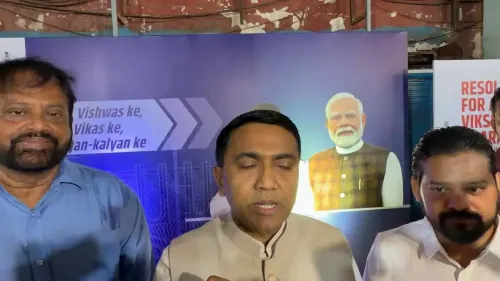
Goa CM Pramod Sawant posted on 20 June 2026 praising twelve years of Northeast India's development under PM Narendra Modi .
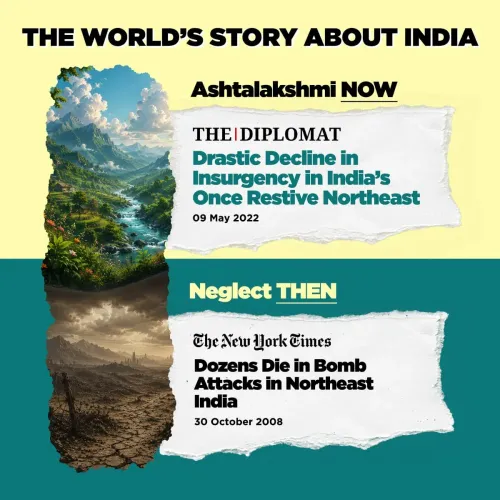
The post invokes the Ashtalakshmi framework, the BJP's collective term for the eight northeastern states as symbols of prosperity.
Sawant highlighted progress across highways, railways, airports and digital connectivity in the region.
The Act East Policy , launched at the 2014 India-ASEAN Summit , upgraded India's earlier Look East Policy with a focus on faster Northeast integration.
Key ongoing projects include the India-Myanmar-Thailand Trilateral Highway and northeastern segments of the Bharatmala Pariyojana .
Future Union Budget allocations for DoNER and Act East projects will be a key indicator of continued momentum.
Goa Chief Minister Pramod Sawant on Saturday, 20 June 2026, praised the infrastructural and digital transformation of Northeast India over the past twelve years, attributing the region's development to the vision of Prime Minister Narendra Modi. Invoking the government's Act East Policy and the slogan Sabka Saath, Sabka Vikas, Sabka Vishwas, Sawant described the Northeast as a 'shining example' of what connected, inclusive governance can achieve.
Context
Sawant's post, tagged #12YearsOfRisingNorthEast, comes as the Bharatiya Janata Party (BJP) marks twelve years of the Modi government's governance milestone. The Chief Minister framed the Northeast's rise as a direct product of the Centre's strategic pivot — from highways and railways to airports and digital connectivity — calling it a model for a 'stronger, connected and empowered Bharat.' He also referenced the Ashtalakshmi framework, a term the BJP uses to collectively describe the eight northeastern states as eight forms of the goddess Lakshmi, symbolising prosperity.
The post's headline, 'Act East and Act Fast,' is a pointed riff on the Act East Policy, signalling urgency in deepening integration of the region with both mainland India and Southeast Asia.
Policy Backdrop
India's engagement with its eastern neighbourhood has a long lineage. The Look East Policy, launched in 1991 under Prime Minister P.V. Narasimha Rao, initially focused on economic ties with Southeast Asia. In 2014, at the India-ASEAN Summit, Prime Minister Modi formally upgraded it to the Act East Policy, shifting emphasis to faster implementation and positioning the Northeast as the gateway to ASEAN markets.
Since then, flagship programmes such as the Bharatmala Pariyojana and dedicated northeastern railway expansion projects have sought to close the region's connectivity deficit. The Ministry of Development of North Eastern Region (DoNER) has channelled sustained central allocations toward roads, rail links, and broadband infrastructure across all eight states.
Stakeholders and Impact
The primary beneficiaries of improved northeastern connectivity are the region's residents and border communities, whose access to markets, healthcare, and education has historically been constrained by difficult terrain and inadequate infrastructure. Enhanced digital connectivity also opens pathways for local entrepreneurs and small businesses to reach national and international markets.
At a strategic level, a better-connected Northeast strengthens India's hand in regional diplomacy. Ongoing projects such as the India-Myanmar-Thailand Trilateral Highway are designed to create physical economic corridors linking South Asia with Southeast Asia, making the region central to India's foreign-policy ambitions under Act East.
What's Next
Attention will now turn to the remaining segments of the India-Myanmar-Thailand Trilateral Highway and the next Union Budget's allocations for DoNER and Act East projects, which will indicate whether the pace of investment is sustained. Political observers will also watch whether the BJP's 'Ashtalakshmi' framing gains further traction as the party consolidates its presence in northeastern states ahead of upcoming assembly cycles. Sawant's vocal endorsement from Goa underscores a broader party effort to present northeastern development as a national achievement story.
Point of View
' the party is reinforcing a dual narrative: the Northeast as both a domestic inclusion win and a foreign-policy asset. The fact that a Goa CM, geographically distant from the Northeast, is amplifying this message reflects a deliberate party-wide messaging push rather than a purely local concern. The emphasis on speed — 'Act Fast' — also implicitly acknowledges that significant connectivity gaps remain, setting expectations for the next budget cycle.
NationPress
20 Jun 2026
Frequently Asked Questions
What is the Ashtalakshmi framework for Northeast India?
'Ashtalakshmi' is a term used by the BJP to collectively describe the eight northeastern states — Assam, Arunachal Pradesh, Manipur, Meghalaya, Mizoram, Nagaland, Sikkim and Tripura — as eight forms of the goddess Lakshmi, symbolising the region's potential for prosperity.
What is India's Act East Policy?
The Act East Policy was announced by Prime Minister Narendra Modi at the India-ASEAN Summit in 2014, upgrading the earlier Look East Policy of 1991. It focuses on faster economic integration with Southeast Asia, with the Northeast serving as the primary connectivity corridor.
What infrastructure projects have been built in Northeast India since 2014?
Since 2014, the central government has expanded road links under the Bharatmala Pariyojana, extended railway lines into remote northeastern areas, upgraded airports, and rolled out broadband connectivity across the eight northeastern states.
What is the India-Myanmar-Thailand Trilateral Highway?
The India-Myanmar-Thailand Trilateral Highway is a flagship Act East project intended to create a road corridor linking India's Northeast with Myanmar and Thailand, opening a physical trade and people-to-people route into Southeast Asia. Several segments remain under construction.
Why is Goa CM Pramod Sawant commenting on Northeast India's development?
Sawant's post is part of a broader BJP campaign marking twelve years of the Modi government, with party leaders across states amplifying the Northeast development narrative as a national achievement under the 'Sabka Saath, Sabka Vikas' framework.