CM Sukhu Pledges Full Funding for Himachal Panchayats

Synopsis
Chief Minister Sukhvinder Singh Sukhu has pledged that Himachal Pradesh will allow no shortage of funds for panchayat development, aiming to strengthen villages and accelerate rural growth. The statement reinforces the Congress-led government's focus on decentralised, grassroots governance across the state's gram panchayats.
Key Takeaways
CM Sukhvinder Singh Sukhu assured on 24 June 2026 that panchayats in Himachal Pradesh will face no shortage of development funds.
The commitment targets the strengthening of gram panchayats as the primary vehicle for rural growth across the state.
Himachal Pradesh has progressively devolved functions and finances to local bodies through amendments to its Panchayati Raj Act since the 2000s .
The 73rd Constitutional Amendment of 1992 forms the legal backbone for panchayat empowerment in India.
Key central schemes including MGNREGA are implemented through panchayat bodies, making fund certainty critical to rural service delivery.
Follow-through will be assessed through actual grant releases and rural infrastructure progress across the state's approximately 3,226 gram panchayats .
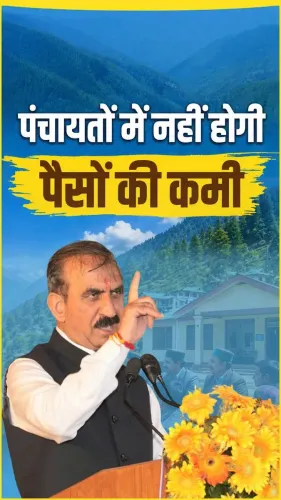
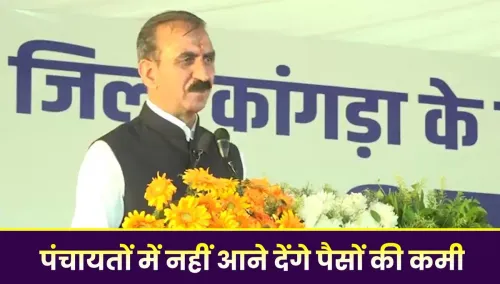
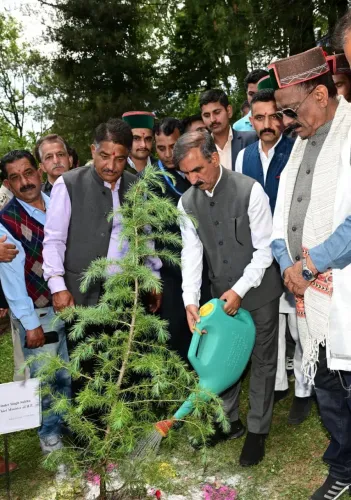
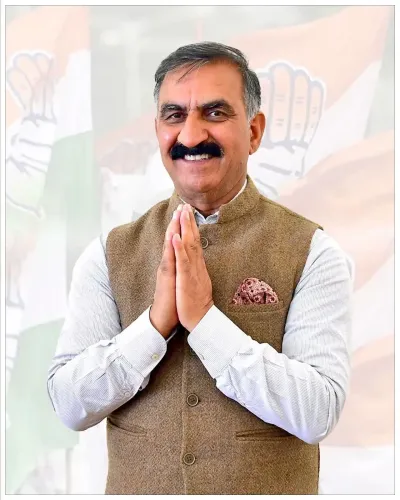
The Chief Minister's Office of Himachal Pradesh, on Wednesday, 24 June 2026, shared a commitment from Chief Minister Thakur Sukhvinder Singh Sukhu that no shortage of funds will be allowed for the development of panchayats, so that villages grow stronger and move forward.
In his statement, CM Sukhu said, 'Panchayaton ke vikas ke liye paidon ki koi kami nahi rahne di jayegi, taki gaon mazboot hokar aage badhen' ('There will be no shortage of funds for the development of panchayats, so that villages grow stronger and move forward'). The assurance underlines the state government's stated priority of rural empowerment through strengthened local bodies.
Context
Sukhvinder Singh Sukhu has led Himachal Pradesh as Chief Minister since December 2022, representing the Indian National Congress. His administration has repeatedly emphasised grassroots governance and rural welfare as central planks of its agenda. This latest statement reinforces that focus by placing fiscal adequacy for panchayats at the centre of rural development policy.
Panchayati Raj institutions are the constitutional bedrock of local self-government in India. The 73rd Constitutional Amendment of 1992 mandated their establishment and empowerment, giving gram panchayats a formal role in village-level planning and the delivery of public services.
Policy Backdrop
Himachal Pradesh has progressively amended its Panchayati Raj Act through the 2000s and 2010s to devolve greater functions and funds to gram panchayats. These reforms were designed to align state practice with the constitutional vision of decentralised governance and to improve the reach of rural infrastructure programmes.
Across India, states have channelled central scheme funds — including those under MGNREGA and various rural infrastructure initiatives — through panchayat bodies. Ensuring adequate and timely fund flow to these bodies remains a persistent challenge, making the Chief Minister's assurance directly relevant to on-the-ground delivery.
Stakeholders and Impact
The primary beneficiaries of stronger panchayat funding are rural communities across Himachal Pradesh's roughly 3,226 gram panchayats. Adequate finances allow local bodies to commission roads, water supply schemes, sanitation infrastructure, and community facilities without depending on ad hoc state releases.
Elected panchayat representatives — pradhans and ward members — stand to gain greater operational credibility if the funding commitment translates into predictable grants. Civil society organisations working on rural governance have long argued that fund certainty is the single most important enabler of effective local self-government.
What's Next
Attention will now turn to the Himachal Pradesh state budget cycle and any formal announcements on enhanced panchayat grants or devolution of additional functions to local bodies. The government's follow-through on this commitment will be measured against actual fund releases to gram panchayats and the pace of rural infrastructure completion across the state.
If the assurance is backed by a structured devolution framework, it could set a benchmark for other hill states grappling with the challenge of financing remote village-level governance.
Point of View
Where gram panchayats are both service-delivery units and electoral constituencies. The Congress government, in power since December 2022, has consistently positioned grassroots empowerment as its ideological differentiator. However, the real test lies in the translation of rhetoric into predictable, formula-based fund devolution rather than discretionary releases. If backed by structural reform in the state's fiscal transfer mechanism, the commitment could meaningfully advance the 73rd Amendment's three-decade-old promise of genuine local self-government.
NationPress
24 Jun 2026
Frequently Asked Questions
What did CM Sukhu say about panchayat funding in Himachal Pradesh?
CM Sukhvinder Singh Sukhu stated on 24 June 2026 that there will be no shortage of funds for panchayat development in Himachal Pradesh, so that villages grow stronger and move forward.
How many gram panchayats are there in Himachal Pradesh?
Himachal Pradesh has approximately 3,226 gram panchayats that serve as the primary units of local self-government and rural development in the state.
What is the legal basis for panchayat empowerment in India?
The 73rd Constitutional Amendment of 1992 mandated the establishment and empowerment of panchayats as units of local self-government, giving them a formal role in village-level planning and public service delivery.
Which party governs Himachal Pradesh and who is the Chief Minister?
Himachal Pradesh is governed by the Indian National Congress, with Thakur Sukhvinder Singh Sukhu serving as Chief Minister since December 2022.
Why is fund certainty important for panchayats in India?
Predictable and adequate funding allows panchayat bodies to plan and execute rural infrastructure projects — roads, water supply, sanitation — without delays caused by irregular state fund releases, which has been a long-standing challenge in decentralised governance.