CM Yogi Slams Caste Politics, Says It Only Fills Ruling Families' Pockets
Synopsis
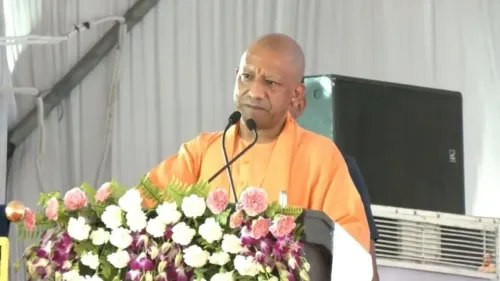
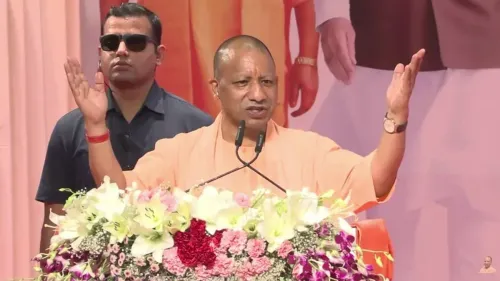
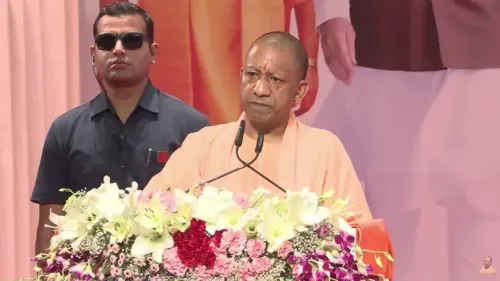
Uttar Pradesh Chief Minister Yogi Adityanath on June 21, 2026, posted a sharp rebuke of caste-based politics, saying parties that practise casteism use power only to enrich their own families — a pointed critique directed at opposition dynastic politics in UP.
Key Takeaways
CM Yogi Adityanath posted on June 21, 2026 attacking parties that practise caste-based politics, accusing them of using power to fill their own family's coffers.
The post included a video and was made in Hindi , with the key line translating to: 'Those who practise casteism, when they come to power, only fill the stomachs of their own family.' No party or individual was named explicitly, but the critique aligns with BJP 's long-standing 'anti-parivarvad' messaging in Uttar Pradesh .
Adityanath has maintained this anti-dynastic, anti-caste-patronage narrative consistently since assuming office in 2017 .
The statement is directed at Uttar Pradesh's electorate of over 24 crore people, where caste remains a central factor in politics.
Opposition rebuttals and possible new welfare or anti-corruption announcements from the state government are expected in response.
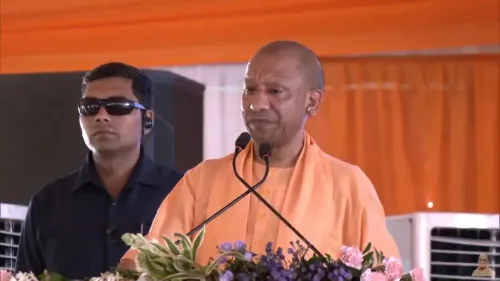
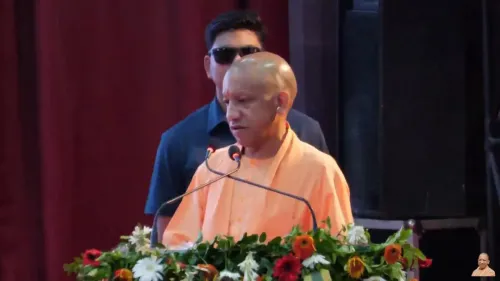
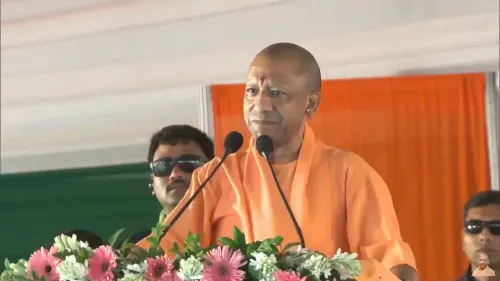
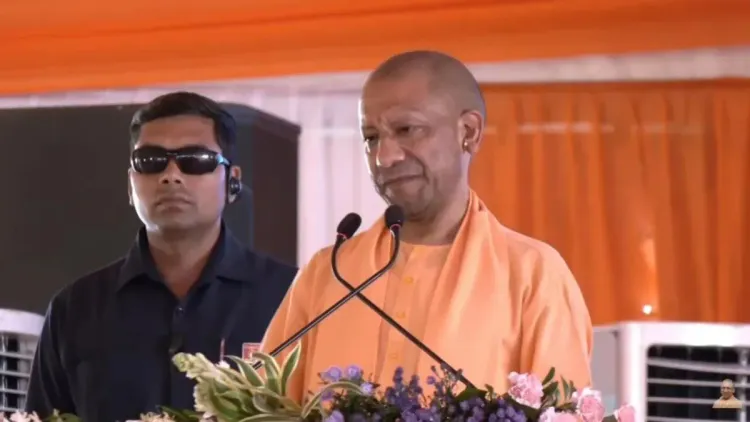
Uttar Pradesh Chief Minister Yogi Adityanath on Sunday, June 21, 2026, launched a sharp attack on caste-based politics, asserting that parties which practise casteism use power solely to enrich their own families rather than serve the people of the state.
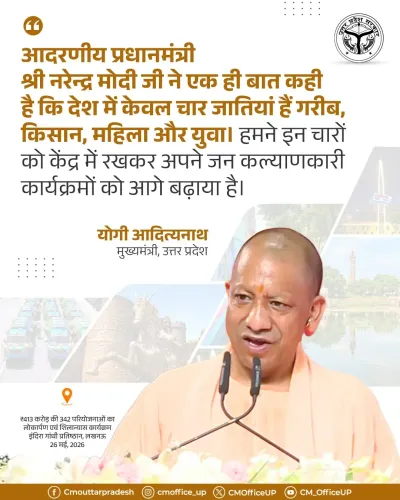
In his post, CM Yogi wrote: 'Jativaad ki rajneeti karne wale jab satta mein aate hain to apne parivaar ka pet bharte hain' — 'Those who practise the politics of casteism, when they come to power, only fill the stomachs of their own family.' The remark, shared with a video, is a pointed critique of dynastic and caste-driven governance models that have historically characterised opposition politics in Uttar Pradesh.
Context
The statement fits a well-established rhetorical pattern for Adityanath, who has consistently positioned his administration as a break from what the BJP describes as 'parivarvad' — dynastic rule — and caste appeasement. Since taking charge as Chief Minister in 2017, he has framed governance in Uttar Pradesh as merit-based and development-oriented, contrasting it with previous regimes accused of favouring specific caste groups and family networks.
The post does not name any party or individual explicitly, but the critique of caste-based politics in the context of Uttar Pradesh is widely understood to be directed at opposition formations, particularly those with a legacy of family-led caste mobilisation in the state.
Policy Backdrop
Adityanath's 2017 election campaign was anchored on ending 'parivarvad' and caste patronage networks, promising instead a governance model where welfare schemes reach all communities regardless of caste identity. That messaging has remained a cornerstone of BJP's political communication in Uttar Pradesh across successive election cycles.
The broader BJP national narrative has similarly emphasised direct benefit transfers and universal scheme coverage as an antidote to caste-broker politics, arguing that targeted caste mobilisation by rival parties has historically served political families more than ordinary voters.
Stakeholders and Impact
The statement is aimed squarely at Uttar Pradesh's vast electorate — the state has a population of over 24 crore — where caste arithmetic remains a decisive factor in electoral outcomes. Parties such as the Samajwadi Party, historically linked to Yadav community mobilisation under the Yadav family leadership, are the implicit targets of such messaging.
Opposition parties are expected to rebut the charge, pointing to their own welfare records and questioning the BJP government's performance on employment, law and order, and social equity in the state. UP voters, particularly from communities that feel excluded from caste-patronage networks, are the primary audience for this kind of political signalling.
What's Next
Statements of this nature from CM Yogi typically precede or accompany announcements of new state-level welfare or anti-corruption measures, and political observers will watch for any such policy follow-through from the Lucknow administration. Opposition parties in Uttar Pradesh are likely to respond with counter-narratives, making this exchange an early indicator of the political temperature in the state ahead of any future electoral contest.
Point of View
Non-Jatav voters in Uttar Pradesh since 2017 — communities that historically felt bypassed by caste-patronage networks. By keeping the target implicit rather than named, the message is designed to resonate broadly while avoiding the legal and optics risks of a direct personal attack. The timing of such statements, often ahead of policy announcements or electoral positioning, suggests this is as much a governance signal as a political one. If sustained with concrete welfare outreach, it could reinforce the BJP's claim to being the party of universal, not caste-selective, development in India's largest state.
NationPress
21 Jun 2026
Frequently Asked Questions
What did CM Yogi Adityanath say about caste politics on June 21 2026?
CM Yogi Adityanath posted on X that parties which practise caste-based politics, when they come to power, use it only to enrich their own families rather than serving the public.
Which party is CM Yogi targeting with his caste politics remarks?
CM Yogi did not name any party explicitly, but his remarks are widely seen as targeting opposition parties in Uttar Pradesh with a history of dynastic, family-led caste mobilisation — particularly the Samajwadi Party.
What is 'parivarvad' and why does BJP criticise it?
'Parivarvad' means dynastic politics or family rule. The BJP, including CM Yogi, criticises it as a system where political power is used to benefit a ruling family's interests rather than delivering governance to all citizens.
Has CM Yogi made similar statements against caste politics before?
Yes. Since becoming Chief Minister in 2017, Yogi Adityanath has repeatedly attacked caste-based and dynastic politics, making it a central plank of the BJP's political narrative in Uttar Pradesh.
What is the significance of CM Yogi's anti-caste politics post for UP voters?
The statement is aimed at Uttar Pradesh's electorate of over 24 crore people, particularly communities that feel excluded from traditional caste-patronage networks, signalling that the BJP government prioritises universal welfare over caste-selective governance.