CM Yogi: UP is now India's economic growth engine
Synopsis
Chief Minister Yogi Adityanath declared on November 18, 2026, that Uttar Pradesh has shed its BIMARU label to become India's economic growth engine, invoking pride among the state's youth, women, and farming communities.
Key Takeaways
CM Yogi Adityanath declared on November 18, 2026 that Uttar Pradesh is no longer a BIMARU state but India's economic growth engine.
The BIMARU tag — applied to Bihar, MP, Rajasthan, and UP since the 1980s — has long symbolised lagging socio-economic performance.
The statement explicitly addresses youth, women, and farmers as the beneficiaries and symbols of UP's new economic identity.
Yogi Adityanath has prioritised law-and-order reform and industrial policy since taking office in 2017 to reposition UP as an investment destination.
Upcoming state GDP figures and conversion of investor summit pledges into real jobs will serve as the definitive test of this claim.
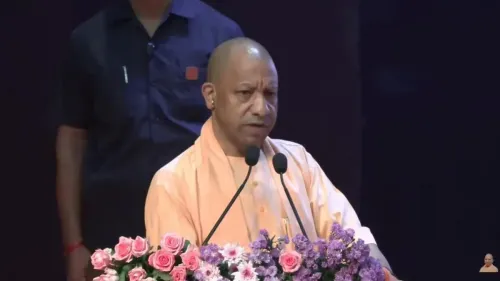
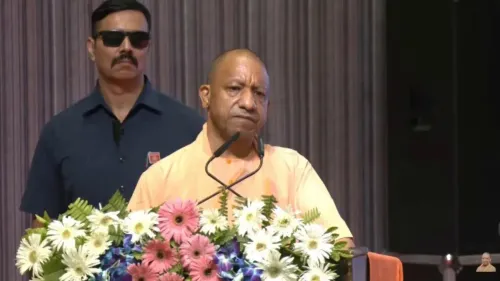
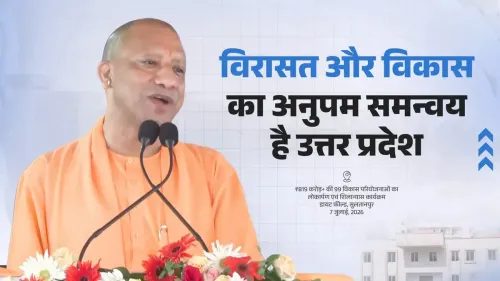
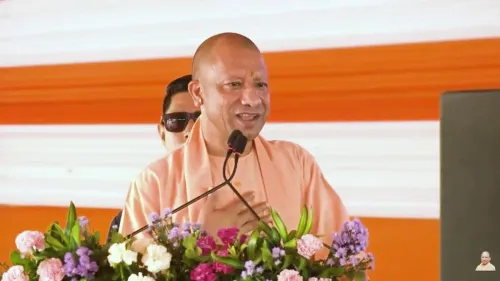
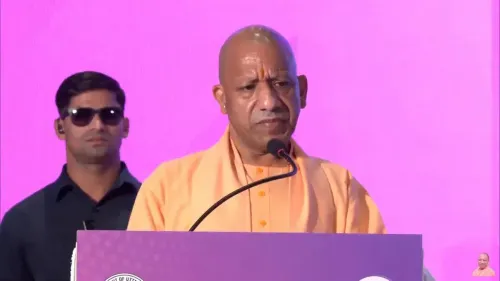
Uttar Pradesh — once written off as a drag on the national economy — has reinvented itself as India's growth engine, Chief Minister Yogi Adityanath declared on Wednesday, November 18, 2026, in a pointed message broadcast by the Chief Minister's Office of Uttar Pradesh on X.
The post quotes CM Yogi directly: 'Ab Uttar Pradesh bimaru rajya nahin, balki Bharat ki economy ka growth engine bankar ubhara hai' — 'Uttar Pradesh is no longer a BIMARU state; it has emerged as the growth engine of India's economy.' The statement is addressed to youth, women, farmers (annadata kisan), and every section of society, calling the transformation a source of collective pride.
From BIMARU to boardroom: what the label shift means
The term BIMARU — an acronym coined in the 1980s for Bihar, Madhya Pradesh, Rajasthan, and Uttar Pradesh — became shorthand for lagging literacy, high fertility rates, and stunted industrial output. For decades it stuck to UP like a brand, colouring investor perceptions and policy debates alike. Rejecting that label is not merely rhetorical: it signals that the state's political leadership believes the underlying data has shifted enough to sustain a new narrative.
Yogi Adityanath, who took office in 2017, made economic rebranding a central plank of his administration from the start, pairing law-and-order reforms with an aggressive industrial policy push. Investor summits and infrastructure corridor announcements became a recurring feature of the state's public calendar — each one a deliberate signal to domestic and foreign capital that Uttar Pradesh was open for business.
The audiences named — and why each one matters
The phrasing of the CM's statement is notable for who it names. Youth represent the demographic dividend that any economic transformation must absorb. Women have been a focal point of welfare and self-help group programmes across northern states. And the explicit inclusion of farmers — addressed by the respectful term annadata, 'one who provides food' — threads an agricultural identity through what is otherwise an industrial-growth message. UP's economy remains heavily agrarian, and any credible growth story has to carry the village along with the factory.
Northern Indian states have broadly pursued this dual track since the mid-2010s: infrastructure corridors to unlock industrial zones, combined with farm-income and welfare messaging to maintain political coalitions. UP's latest declaration fits that pattern — but the scale of India's most populous state means the stakes, and the scrutiny, are proportionally larger.
What the numbers will have to prove
Declarations of transformation invite verification. Upcoming state GDP figures, the conversion rate of investment pledges from recent summits into actual on-ground jobs, and the trajectory of agricultural income will all be watched as the real audit of this claim. The CM's message sets a benchmark the administration has now publicly chosen to be judged against — a calculated bet that confidence, stated loudly enough, compounds into reality.
For the millions of young people, women, and farmers Yogi Adityanath addressed today, the question is simple: does the pride on the poster match the payslip in the pocket?
Point of View
Women, and farmers in the same breath as economic growth, the message stitches together UP's welfare-state identity with an aspirational industrial one — a coalition-building move as much as an economic claim. The BIMARU frame was always as political as it was statistical, and challenging it head-on signals confidence that the government believes its record can survive scrutiny. Whether investor commitments materialise into jobs will determine if this rhetoric becomes a durable political asset or a liability.
NationPress
18 Nov 2026
Frequently Asked Questions
What does BIMARU mean and why was UP called a BIMARU state?
BIMARU is an acronym for Bihar, Madhya Pradesh, Rajasthan, and Uttar Pradesh, coined in the 1980s to describe states with poor literacy, high population growth, and weak economic development. UP was included because of its historically lagging socio-economic indicators.
What has CM Yogi Adityanath done for UP's economy since 2017?
Since taking office in 2017, CM Yogi Adityanath has focused on law-and-order reforms, industrial policy changes, investor summits, and infrastructure corridor development to attract investment and reposition Uttar Pradesh as a business-friendly destination.
Is Uttar Pradesh now officially no longer a BIMARU state?
CM Yogi Adityanath has claimed Uttar Pradesh has shed the BIMARU label and become India's growth engine. However, an official reclassification does not exist; the BIMARU label was always an informal economic descriptor, and the claim will be tested against upcoming state GDP and employment data.
Why did CM Yogi mention youth, women, and farmers in his economic statement?
By naming youth, women, and farmers, CM Yogi signalled that UP's economic transformation is meant to benefit all sections of society — not just urban or industrial communities. It reflects both the state's demographic reality and the political importance of these groups to the ruling BJP.
What is Uttar Pradesh's rank in India's economy?
Uttar Pradesh is India's most populous state and one of its largest economies by nominal GDP. Its exact ranking varies by measure, but successive BJP governments have targeted making it a top-two or top-three state economy in India.