Congress Proposes No-Confidence Motion Against Lok Sabha Speaker Amidst Heated Debate
Synopsis
The Congress party's no-confidence motion against Lok Sabha Speaker Om Birla has ignited a heated debate in the House. With 118 Opposition MPs backing the motion, questions arise over procedural integrity and the authority of the presiding officer.
Key Takeaways
Congress's no-confidence motion against Speaker Om Birla is a significant political maneuver.
The motion is backed by 118 Opposition MPs , indicating substantial support.
Debate highlights the importance of procedural integrity in parliamentary democracy.
Questions raised about the authority of the presiding officer during the discussion.
The Lok Sabha will dedicate 10 hours to discussing the motion.
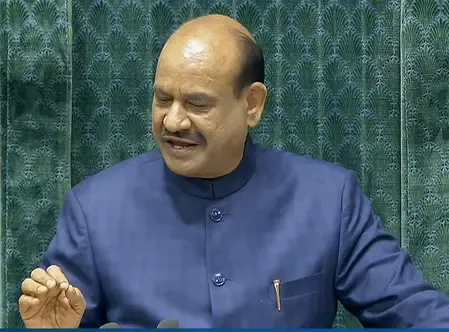
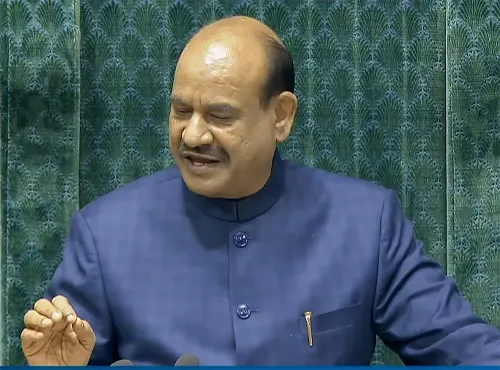
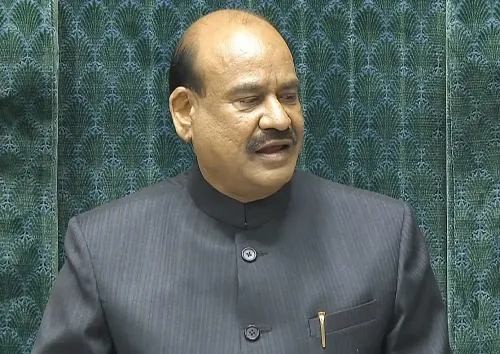
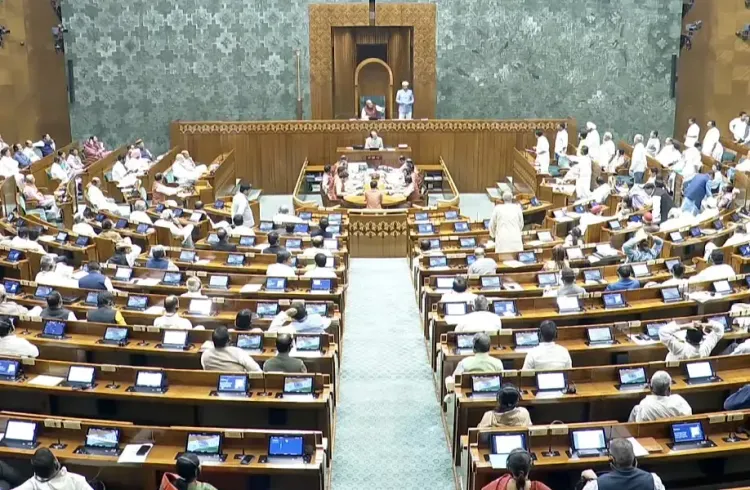
New Delhi, March 10 (NationPress) The Congress party took a significant step on Tuesday by introducing a no-confidence motion aimed at removing Lok Sabha Speaker Om Birla, which sparked intense discussions within the House regarding procedural regulations and the authority of the presiding officer during the debate.
Congress MP Mohammed Jawed officially presented the resolution for the ousting of Speaker Birla, supported by signatures from 118 Opposition MPs. They have accused the Speaker of showing a “partisan” stance, particularly after allegations surfaced that Rahul Gandhi, the Leader of Opposition, was not permitted to speak.
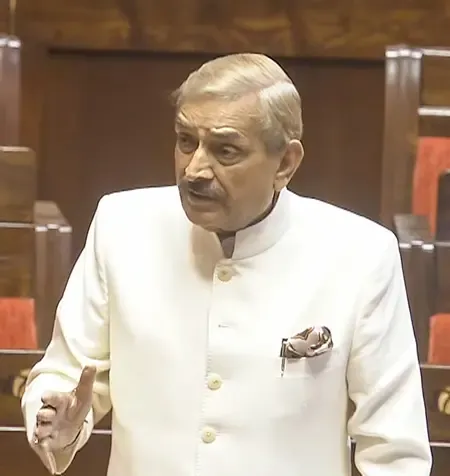
Following the introduction of the motion, a debate ensued concerning procedural matters after AIMIM MP Asaduddin Owaisi and Trinamool Congress MP Saugata Roy raised points of order about whether Jagdambika Pal, who was overseeing the session, had the authority to continue managing the proceedings.
Owaisi cited parliamentary protocols, asserting that the Speaker could not preside over the discussions while a removal motion was being considered. He highlighted that the absence of a Deputy Speaker led to the current presiding officer being effectively appointed with the Speaker's consent, rendering them unfit to lead the debate on the motion.
He proposed that the House should first reach an agreement on who should preside before commencing the discussion.
In response, BJP MP Nishikant Dubey argued that the rules permit any member presiding in the Chair to wield similar powers as the Speaker and oversee proceedings. Parliamentary Affairs Minister Kiren Rijiju echoed Dubey’s interpretation, reinforcing this viewpoint.
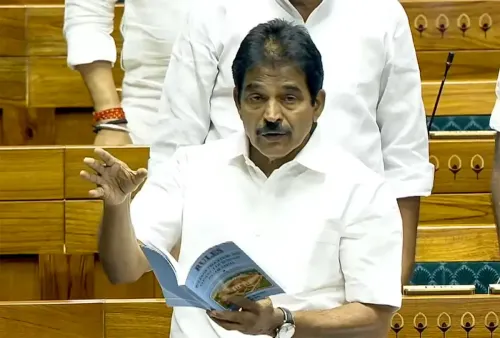
During the heated exchange, Congress MP K.C. Venugopal criticized the government for the lack of a Deputy Speaker and insisted that a consensus on the presiding authority was necessary before proceeding with the debate.
BJP MP Ravi Shankar Prasad also interjected, stating that the person in the Chair has full authority to oversee the House's proceedings.
After weighing both sides' arguments, Jagdambika Pal confirmed that the Speaker's position was still filled, thus granting him the authority to continue the proceedings. It was agreed that the Lok Sabha would dedicate 10 hours to discussing the motion to remove Speaker Om Birla. Pal commended Speaker Birla's “generosity” and reiterated the rules regarding the motion’s notification and presentation.
He also noted that initial errors in the notice had been “generously” rectified by Speaker Birla himself. Pal emphasized that the Speaker had chosen not to preside over the House during the debate voluntarily.
As additional points of order were raised by several members, Pal assured them that they would have the chance to address their concerns later. Subsequently, Congress MP Mohammed Jawed formally moved the resolution seeking the removal of Speaker Om Birla.
Point of View
This recent motion introduced by Congress reflects a significant moment in Indian parliamentary democracy. The ensuing debates highlight the critical issues of procedural fairness and the balance of power within the legislative framework. It's essential to focus on the implications of these events for governance and democratic processes.
NationPress
1 Oct 2026
Frequently Asked Questions
What is a no-confidence motion?
A no-confidence motion is a parliamentary procedure used to remove a government official, such as a Speaker, from office by demonstrating a lack of confidence in their ability to perform their duties.
Who moved the no-confidence motion against Om Birla?
The no-confidence motion against Lok Sabha Speaker Om Birla was formally moved by Congress MP Mohammed Jawed, with support from 118 Opposition MPs.
What were the main arguments during the debate?
The debate centered around procedural rules, the authority of the presiding officer, and the claims of the Speaker's partisan conduct, particularly concerning the treatment of Opposition leaders.
How long will the Lok Sabha discuss this motion?
The Lok Sabha has agreed to discuss the motion to remove Speaker Om Birla for a total of 10 hours.
What is the significance of appointing a Deputy Speaker?
The appointment of a Deputy Speaker is crucial for ensuring impartiality in parliamentary proceedings, especially when a motion against the Speaker is in consideration.