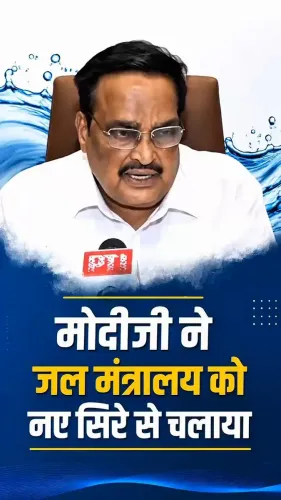
Jal Shakti Minister CR Paatil at PM-Kisan 24th Instalment Event in Surat
Synopsis
PM Modi released PM-Kisan's 24th instalment from Banaskantha, Gujarat, transferring ₹18,690 crore to 9.34 crore farmer families. Jal Shakti Minister C. R. Paatil attended the Surat event, where Gujarat's 52 lakh farm families received over ₹1,000 crore.
Key Takeaways
₹18,690 crore disbursed as the 24th instalment of PM-Kisan Samman Nidhi on October 30, 2026 .
9.34 crore farmer families across India received the direct bank transfer in a single day.
Gujarat's 52 lakh+ farmer families received a combined share of over ₹1,000 crore .
PM Modi launched the instalment from Banaskantha, Gujarat ; Union Jal Shakti Minister C.
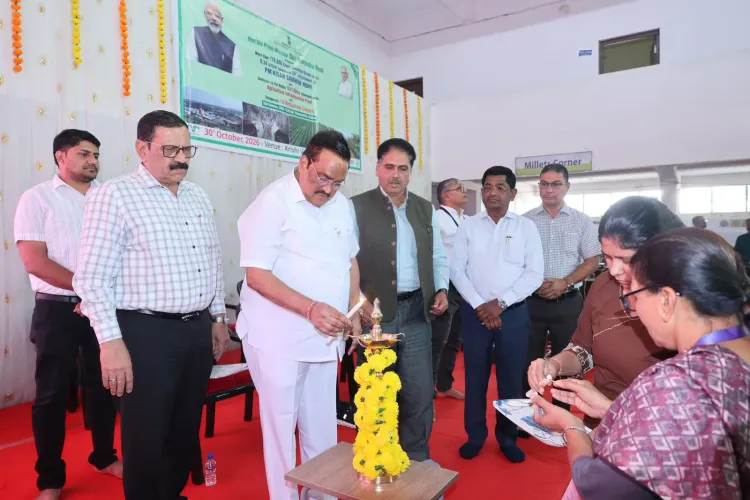
Paatil attended the parallel event at Surat's Krishi Vigyan Kendra .
PM-Kisan, launched in February 2019 , provides ₹6,000 per year in three instalments via Direct Benefit Transfer to eligible landholding farm families.
Paatil linked the income transfer to the government's wider agenda of irrigation improvement and water conservation under the Jal Shakti Ministry.
Nearly 9.34 crore farmer families woke up on Friday, October 30, 2026, to a direct cash transfer — ₹18,690 crore hitting their bank accounts in one sweep, as Prime Minister Narendra Modi released the 24th instalment of the PM-Kisan Samman Nidhi from Banaskantha, Gujarat. Union Jal Shakti Minister C. R. Paatil was on the ground at Surat's Krishi Vigyan Kendra, standing alongside farmers as the funds flowed.
₹1,000 crore for Gujarat's 52 lakh farm families
Gujarat claimed a significant slice of the national transfer: more than 52 lakh farmer families in the state received a combined share of over ₹1,000 crore in this single disbursement. The Krishi Vigyan Kendra in Surat served as the local focal point, gathering farmers to mark the moment in person. For Paatil — a senior BJP leader and former Gujarat state party president — the homecoming had obvious symbolic weight.
Paatil posted on X, sharing that he was grateful for the opportunity to join 'kisan bhai-behno' (farmer brothers and sisters) at the event. He described Prime Minister Modi as having 'once again reinforced his commitment to the 'annadatas'' — the literal providers of food — with this release.
PM-Kisan at instalment 24: how the scheme has scaled
PM-Kisan Samman Nidhi was launched in February 2019 as a central sector direct benefit transfer scheme, providing eligible landholding farm families with ₹6,000 per year paid in three instalments of ₹2,000 each. The Direct Benefit Transfer architecture was designed specifically to cut out intermediaries — money moves straight from the central treasury to the farmer's verified bank account. After seven-plus years of operation and 24 instalments, it has become the largest cash-transfer programme for the agricultural sector in India's history.
The sheer arithmetic of instalment 24 underlines the scale: ₹18,690 crore disbursed in a single day to households spread across every state and union territory. No paperwork, no middleman. The programme's design has remained deliberately simple — and that simplicity is part of its political durability.
Water, irrigation, and the Jal Shakti link
Paatil's presence was not purely ceremonial. His post explicitly connected the income-support push to the government's broader farm agenda: 'farmer prosperity, modern agriculture, better irrigation, and water conservation are being given the highest priority under the Prime Minister's visionary leadership.' As the minister heading the Jal Shakti Ministry — which oversees drinking water, irrigation, and the Har Ghar Jal mission — Paatil's attendance underscored the policy argument that water security and income support are two sides of the same rural development coin.
He closed his post with a crisp formulation: 'Samriddh kisan, surakshit jal aur viksit Bharat — yahi hamara sankalp hai' (Prosperous farmers, secure water, and a developed India — this is our resolve.) The invocation of 'Jai Jawan, Jai Kisan' — a phrase that traces back to Prime Minister Lal Bahadur Shastri's 1965 rallying cry — grounded the moment in a longer national narrative of valuing those who feed and defend the country.
Banaskantha as the national launchpad
Banaskantha, in northern Gujarat, is a predominantly agrarian district — home to a large farming community and a natural political backdrop for a scheme-release event of this scale. Using a Gujarat venue for a nationwide transfer also fits a recognisable pattern: the state's agricultural reach, its high DBT compliance rates, and its political significance make it a frequent stage for central scheme milestones. The next marker to watch will be the scale and timing of the 25th instalment, and whether the forthcoming Union Budget signals any revision to the annual outlay or eligibility criteria for PM-Kisan.
For now, the scoreboard is unambiguous: 24 instalments, ₹18,690 crore, 9.34 crore families — and a minister in Surat making sure every farmer in Gujarat knew exactly where it came from.
Point of View
Gujarat, as the national launchpad and Paatil's prominent local presence reflects the BJP's ongoing effort to fuse central welfare delivery with state-level political visibility, especially in an electorally significant state. Paatil's explicit tethering of cash transfers to water security and irrigation priorities reveals a deliberate ministry-level messaging strategy: positioning Jal Shakti not just as a utilities department but as a co-author of rural prosperity. The cumulative scale — 24 instalments, tens of thousands of crores — also sharpens the scheme's role as the government's single most legible proof-of-delivery to the farm vote.
NationPress
30 Oct 2026
Frequently Asked Questions
What is the PM-Kisan 24th instalment amount and release date?
The 24th instalment of PM-Kisan Samman Nidhi was released on October 30, 2026 , with a total disbursement of ₹18,690 crore transferred to approximately 9.34 crore farmer families across India.
How much did Gujarat farmers receive in PM-Kisan 24th instalment?
More than 52 lakh farmer families in Gujarat received a combined share of over ₹1,000 crore in the 24th PM-Kisan instalment.
What is PM-Kisan Samman Nidhi and how does it work?
PM-Kisan Samman Nidhi is a central government scheme launched in February 2019 that provides eligible landholding farmer families with ₹6,000 per year in three instalments of ₹2,000 each, transferred directly to their bank accounts via the Direct Benefit Transfer system.
Why was CR Paatil at the PM-Kisan event in Surat?
Union Jal Shakti Minister C. R. Paatil attended the PM-Kisan 24th instalment event at Surat's Krishi Vigyan Kendra to join farmers as the funds were released, also underscoring the policy connection between farmer income support and the Jal Shakti Ministry's water conservation and irrigation mandate.
From where did PM Modi release the PM-Kisan 24th instalment?
Prime Minister Narendra Modi released the 24th PM-Kisan instalment from Banaskantha , a predominantly agrarian district in northern Gujarat , on October 30, 2026 .