Delhi CM Rekha Gupta Unveils Water & Sewer Charge Reform

Synopsis
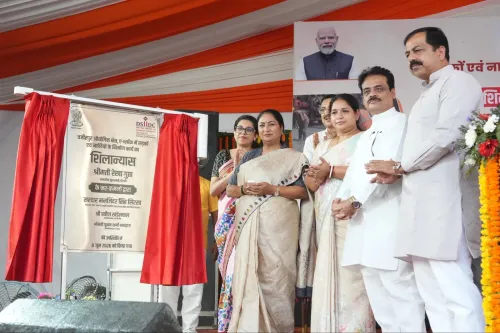
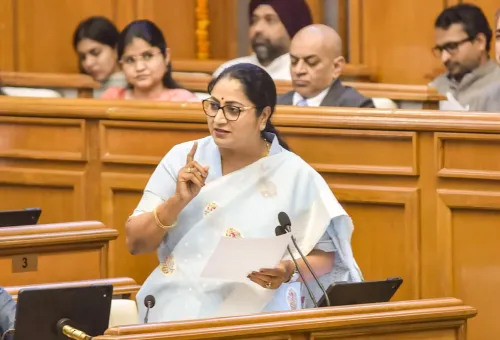
Delhi Chief Minister Rekha Gupta on 28 May 2026 unveiled a new Water & Sewer Infrastructure Charge policy that ties levies to actual water demand and cuts procedural hurdles, promising major relief for families building homes in the capital.
Key Takeaways
Delhi CM Rekha Gupta announced the new Water & Sewer Infrastructure Charge policy on 28 May 2026 .
The policy links infrastructure charges to verified water demand , replacing earlier opaque levy structures.
The reform aims to cut unnecessary procedures and reduce costs for Delhi families building homes.
The Delhi Jal Board , governed under the Delhi Water Board Act, 1998 , is the implementing authority.
The announcement is part of the administration's broader #ViksitDelhi urban-development agenda.
Formal notification of revised charge slabs and procedural changes by the Delhi Jal Board is the next key step to watch.
Delhi Chief Minister Rekha Gupta on Thursday, 28 May 2026 announced a new Water & Sewer Infrastructure Charge policy for the national capital, promising to end years of opaque levies and procedural hurdles that have long burdened families seeking to build homes in Delhi.
Context
In her post, CM Rekha Gupta stated that 'building a home in Delhi meant extra charges, complex rules and endless hurdles' — a condition she said 'is changing now.' The announcement centres on a revised framework that ties infrastructure charges directly to verified water demand, replacing the earlier flat or opaque levy structure that critics said bore little relation to actual consumption needs.
The reform is positioned under the #ViksitDelhi ('Developed Delhi') banner, the governing administration's broader urban-development agenda for the capital.
Policy Backdrop
Water and sewer charges in Delhi have historically been administered by the Delhi Jal Board under the Delhi Water Board Act, 1998, with tariff revisions issued periodically. Over the years, builders and individual homeowners have flagged that the charge structure added unpredictable costs to construction timelines, particularly for residential projects in newer or peri-urban parts of the city.
Across Indian states, there has been a steady push to simplify building-related levies as urban housing demand rises and governments seek to reduce procedural delays. The new policy aligns Delhi with that broader national trend, linking infrastructure fees to actual water need rather than administrative estimates.
Stakeholders and Impact
The primary beneficiaries identified in the announcement are Delhi families and home builders who have navigated multi-step approval processes and variable charge demands when applying for new water and sewer connections. By anchoring charges to verified demand, the policy is designed to make costs more predictable at the planning stage.
The Delhi Jal Board, as the implementing authority, will be responsible for notifying revised charge slabs and integrating the simplified procedures into its approvals workflow. Residents' groups and housing developers are expected to watch closely for the detailed notification that will specify the new charge formula and the procedural steps being removed.
What's Next
The immediate step to watch is the formal gazette notification of revised charge slabs by the Delhi Jal Board, which will give builders and homeowners the specific numbers and procedures they need to plan projects. Any subsequent public feedback process could lead to further adjustments before full implementation.
If the simplified framework is rolled out without friction, it could serve as a template for other urban local bodies in the National Capital Region grappling with similar infrastructure-financing challenges. The administration's ability to translate the policy announcement into a smooth on-ground process will be the real measure of the reform's impact for ordinary Delhi families.
Point of View
The Gupta administration is attempting to bring rationality to a system widely seen as opaque, while also signalling governance competence ahead of continued urban expansion in the capital. The reform fits a pattern visible across BJP-governed states of repackaging procedural simplification as tangible pro-citizen delivery. The real test will be implementation: whether the Delhi Jal Board's notification translates the policy intent into a genuinely simpler, cheaper experience for builders and families on the ground.
NationPress
11 Oct 2026
Frequently Asked Questions
What is Delhi's new Water and Sewer Infrastructure Charge policy?
It is a reform announced by Delhi CM Rekha Gupta on 28 May 2026 that ties water and sewer infrastructure charges to verified water demand, cutting unnecessary procedures for those building homes in Delhi .
Who announced the Water and Sewer Infrastructure Charge reform in Delhi?
Delhi Chief Minister Rekha Gupta , a BJP leader, announced the policy on her official social media account on 28 May 2026 .
How does the new policy help families building homes in Delhi?
By linking charges to actual water needs rather than opaque estimates, the policy is designed to make costs more predictable and reduce the procedural steps required to obtain water and sewer connections for new homes.
What is the Delhi Jal Board's role in this reform?
The Delhi Jal Board , the capital's water utility operating under the Delhi Water Board Act, 1998 , is the implementing authority responsible for notifying the revised charge slabs and updated approval procedures.
What is ViksitDelhi?
ViksitDelhi ('Developed Delhi') is the Rekha Gupta administration's urban-development agenda for the national capital, under which this water and sewer charge reform has been announced.