DRI busts wildlife trafficking syndicate, seizes 440 items, arrests 33
Synopsis
In one of India's largest multi-agency wildlife enforcement drives, the DRI and CBI have dismantled an interstate trafficking syndicate, making 440 seizures across a dozen cities and arresting 33 people — including ivory traders in Rajasthan, Karnataka, and West Bengal — while also intercepting exotic species smuggled through international airports from Bangkok, Kuala Lumpur, and Colombo.
Key Takeaways
The DRI and CBI , in a coordinated crackdown, busted an interstate wildlife trafficking syndicate across West Bengal and Maharashtra .
A total of 440 seizures were made and 33 persons arrested across multiple operations.
Rescued species include 15 Slow Lorises , 28 Star Tortoises , six Egyptian Vultures , and two Binturongs — all under Schedule I of the Wildlife (Protection) Act.
The DRI seized 15 kg of ivory in total, with separate operations in Sujangarh (Rajasthan) , Mysuru (Karnataka) , and Howrah (West Bengal) .
Airport operations foiled smuggling attempts by passengers arriving from Bangkok , Kuala Lumpur , and Colombo .
Raids spanned 13 cities including Bengaluru, Pune, Chennai, Surat, Kolkata, and Hojai.
The Directorate of Revenue Intelligence (DRI), working in coordination with the Central Bureau of Investigation (CBI) and other agencies, has dismantled an interstate wildlife trafficking syndicate operating across West Bengal and Maharashtra, resulting in 440 total seizures and the arrest of 33 persons. The sweeping multi-city operation targeted both domestic trafficking networks and international smuggling routes through major Indian airports.
Key Recoveries and Rescued Species
Among the most significant recoveries from the interstate syndicate were 15 Slow Lorises, two Binturongs, 28 Star Tortoises, six Egyptian Vultures, and two Shikra birds — all listed under Schedule I of the Wildlife (Protection) Act, 1972, which affords them the highest level of legal protection. Intelligence for the case was developed by the DRI, after which the CBI took over the investigation and subsequently arrested six persons.
At international airports, the DRI foiled multiple smuggling attempts by passengers arriving from Bangkok, Kuala Lumpur, and Colombo. Seized species in these operations included Albino Red-eared Turtles, Hypo Zero Bearded Dragons, African Spurred Tortoises, Borneo Pythons, Green Iguanas, Mangrove Monitor Lizards, Argentine Black and White Tegus, Goeldi's Marmosets, Yellow Cheeked Gibbons, Indonesian Blue Tongued Skinks, Siamang Gibbons, Woolly Monkeys, Silvery Lutungs, and multiple python variants.
Ivory Seizures and Rajasthan, Karnataka Operations
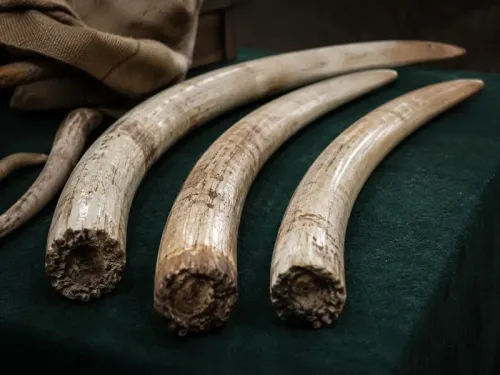
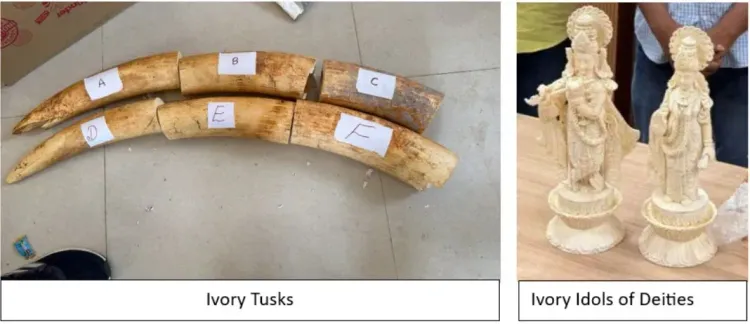
The DRI seized a total of 15 kg of ivory tusks and ivory-based items over the course of these operations. In a targeted intercept near Sujangarh, Rajasthan, approximately 11 kg of elephant tusks were recovered and four persons arrested; they were handed over to the forest department for further action under the Wildlife (Protection) Act. A separate raid in Mysuru, Karnataka yielded 4 kg of ivory and led to the apprehension of three more individuals, also transferred to forest authorities.
In Howrah, West Bengal, DRI officers seized two ivory idols and arrested two persons; the idols are suspected to have been smuggled from Bangladesh.
Pan-India Sweep: Cities and Products
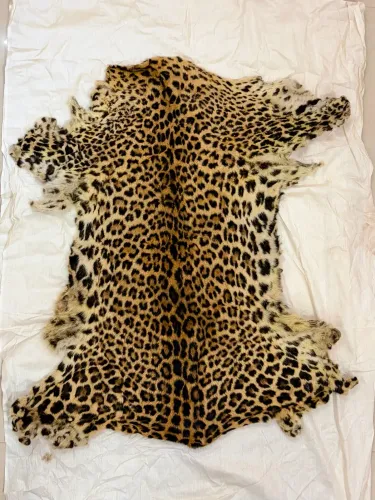
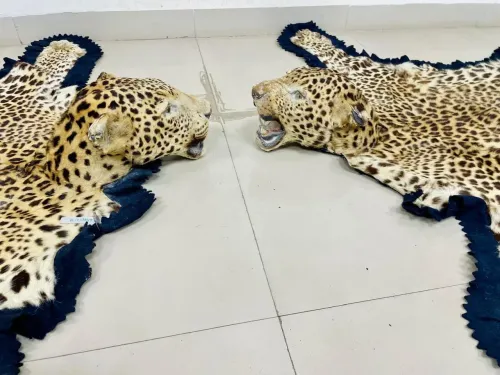
Coordinated raids across Bengaluru, Warangal, Pune, Surat, Chennai, Kolkata, Trichy, Madurai, Srikakulam, Hojai (Assam), Rajasthan, Mysuru, and Howrah led to the recovery of pangolin scales, leopard pelt, seahorse-based articles, red sanders, and protected species of gibbons, lizards, tortoises, birds, squirrels, snakes, and red sand boas. The breadth of the operation signals a well-entrenched trafficking infrastructure spanning at least a dozen states.
What Comes Next
The CBI-led investigation into the interstate syndicate is ongoing. Seized animals and wildlife products have been handed to relevant forest and wildlife authorities. This operation is among the largest multi-agency wildlife enforcement drives in recent years, and enforcement agencies are expected to pursue further leads arising from the arrested persons' disclosures.
Point of View
33 arrests, 13 cities, three international flight corridors — exposes wildlife trafficking not as a fringe crime but as a structured, cross-border industry. What stands out is the airport interception angle: passengers flying in from Bangkok, Kuala Lumpur, and Colombo with exotic reptiles and primates suggest India is an active destination market, not just a transit hub. The CBI's involvement alongside DRI is notable, signalling that investigators are following financial trails, not just contraband. The real test will be whether prosecutions follow through — past wildlife busts in India have often stalled at the arrest stage, with convictions remaining rare.
NationPress
12 Oct 2026
Frequently Asked Questions
What did the DRI seize in the wildlife trafficking bust?
The DRI, along with the CBI, seized a total of 440 wildlife items and products across multiple operations. These included live protected species such as Slow Lorises, Star Tortoises, Egyptian Vultures, Binturongs, exotic reptiles, primates, and birds, as well as pangolin scales, leopard pelt, red sanders, seahorse-based articles, and approximately 15 kg of elephant ivory.
How many people were arrested in the DRI wildlife operation?
A total of 33 persons were arrested across all operations. Of these, six were arrested by the CBI in connection with the interstate syndicate in West Bengal and Maharashtra, while others were apprehended in separate ivory-related raids in Rajasthan, Karnataka, and West Bengal.
Which cities were covered in the DRI wildlife crackdown?
The operations spanned at least 13 cities and regions: Bengaluru, Warangal, Pune, Surat, Chennai, Kolkata, Trichy, Madurai, Srikakulam, Hojai in Assam, Rajasthan, Mysuru, and Howrah.
How were exotic animals being smuggled into India?
The DRI intercepted passengers arriving at Indian international airports from Bangkok, Kuala Lumpur, and Colombo who were attempting to smuggle protected and exotic species including Borneo Pythons, Goeldi's Marmosets, Yellow Cheeked Gibbons, Siamang Gibbons, and various reptiles into the country.
What happens to the seized animals and arrested persons?
Rescued animals and wildlife products have been handed over to forest and wildlife authorities for care and further action under the Wildlife (Protection) Act, 1972. Persons arrested in the ivory cases were also transferred to the forest department, while the CBI continues to investigate the interstate syndicate.