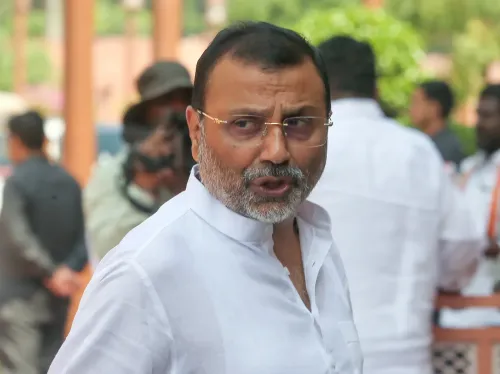
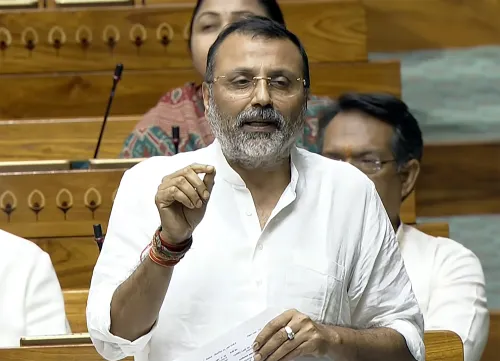
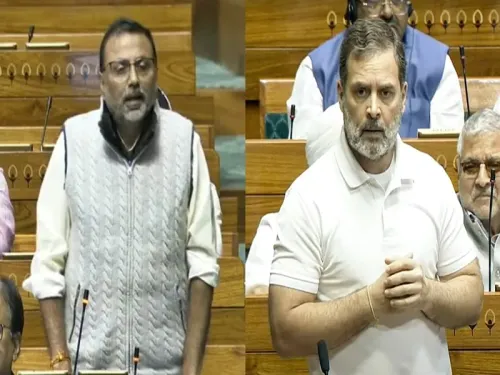
BJP's Nishikant Dubey questions Rahul Gandhi on 2018 Chinese ministers meeting
Synopsis
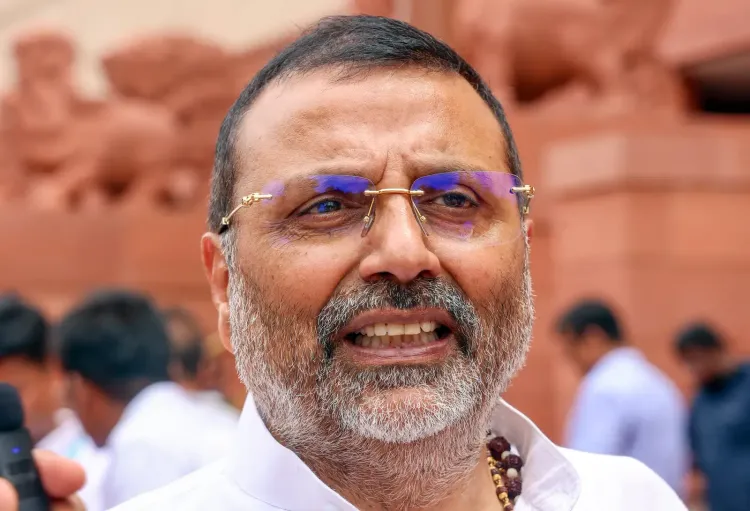
BJP MP Nishikant Dubey publicly challenged Rahul Gandhi on X over an alleged meeting with two Chinese ministers during a 2018 pilgrimage and an INC-CPC exchange programme — turning Gandhi’s own call for a public debate against him, hours after PM Modi coined the ‘Dimagi Naxal’ charge in Chhattisgarh.
Key Takeaways
BJP MP Nishikant Dubey posted on X on 9 November questioning Rahul Gandhi over an alleged meeting with two Chinese ministers during the 2018 Kailash Mansarovar pilgrimage .
Dubey also asked Gandhi to name the 200 people reportedly sent to China under a 2008 INC–Communist Party of China exchange programme.
PM Modi had, the previous day, warned of ‘Dimagi Naxals’ having infiltrated political parties, in a remark widely seen as targeting Congress and the INDIA bloc .
Congress challenged Modi to a public debate on what it called a ‘false narrative’; Gandhi had posted his own challenge on X before Dubey’s response.
Dubey cited a 2011 statement by P.
Chidambaram calling Left-wing extremism the most violent movement in India, to complicate Congress’s pushback.
Neither side has yet produced documentary evidence to support their respective claims.
Bharatiya Janata Party (BJP) Lok Sabha MP Nishikant Dubey on Monday, 9 November publicly questioned Leader of Opposition Rahul Gandhi over an alleged meeting with two Chinese ministers during a Kailash Mansarovar pilgrimage in 2018, intensifying a charged exchange over the alleged role of foreign entities in Indian politics. The challenge came within hours of Gandhi having dared Prime Minister Narendra Modi to a public debate on accusations of being 'Dimagi Naxals' and anti-nationals.
Dubey's Two-Question Challenge on X
Dubey, a four-time BJP MP from Jharkhand, posted his challenge directly on X (formerly Twitter), tagging Gandhi's own post in which the Congress leader had called for a public debate. “Question 1. Mr Rahul Gandhi, when you went on the Kailash Mansarovar pilgrimage in 2018, which two Chinese ministers did you meet? 2. After the 2008 agreement between Indian National Congress (INC) and the Communist Party of China, which 200 people have you sent to China under the exchange program by 2018? What are their names and addresses?” Dubey wrote.
Dubey also referenced news reports from 2011 in which then Union Home Minister P. Chidambaram described Left-wing extremism as the ‘most violent movement’ in India — a move apparently aimed at drawing a contrast with the Congress party’s current posture on security narratives.
Chidambaram’s 2011 Remark Resurfaces
Dubey dug out a statement Chidambaram had made at a national workshop of collectors from 60 Maoist-hit districts in New Delhi, in which the then Home Minister said: “The most violent movement in India is not terrorism or insurgency but Left-wing extremism. While 26 people were killed in terrorist violence and 46 killed in insurgency (27 in Jammu and Kashmir), 297 people were killed in Naxal violence. That is ten times those killed in terror incidents.” The citation is notable: it uses a Congress-era minister’s own words to complicate the party’s present-day pushback against the ‘Dimagi Naxal’ framing.
Modi’s ‘Dimagi Naxal’ Remark and Its Political Fallout
The chain of events was set off a day earlier, on Sunday, when PM Modi, while interacting with Central Reserve Police Force (CRPF) personnel in Chhattisgarh, declared that eliminating Maoism was not the ‘final destination’ and warned of ‘Dimagi Naxals’ who had, according to him, “infiltrated several political parties and different organisations.”
In what was widely read as a veiled attack on Gandhi and other parties in the INDIA bloc — who have questioned the integrity of institutions including the Election Commission of India (ECI) — Modi said: “Even today, they are inciting people against the country’s Constitution and democracy. We must identify them, defeat them and ensure the security of the nation.”
Congress Demands Public Debate, BJP Raises Foreign-Link Questions
Congress responded by daring the government to a public debate on what it called a ‘false narrative,’ with Gandhi challenging Modi directly. Within hours, Dubey’s post on X shifted the focus to Gandhi’s 2018 pilgrimage and an alleged INC–Communist Party of China exchange programme said to have been active from 2008 onward. Neither claim has been independently verified, and Congress has not yet publicly responded to the specific questions posed by Dubey.
This exchange is the latest episode in an escalating pattern of mutual allegations about foreign influence and institutional loyalty, a theme that has sharpened ahead of upcoming state elections. All sides are yet to produce documentary evidence to support their respective claims.
Point of View
Without the government itself having to present evidence. What is striking is the sequencing: Modi’s ‘Dimagi Naxal’ framing in Chhattisgarh came first, Gandhi’s debate challenge came second, and Dubey’s China-link salvo came third — a coordinated political pattern rather than a spontaneous exchange. The Chidambaram citation is especially pointed: it uses Congress’s own record on Naxal violence to blunt the party’s current counter-narrative. The critical question that neither side has addressed is evidentiary — the Chinese ministers’ identities, the exchange programme’s participant list, and Modi’s definition of ‘Dimagi Naxal’ all remain asserted, not demonstrated.
NationPress
9 Nov 2026
Frequently Asked Questions
What did BJP MP Nishikant Dubey ask Rahul Gandhi?
Dubey asked Gandhi two questions on X: which two Chinese ministers Gandhi met during his 2018 Kailash Mansarovar pilgrimage, and the names and addresses of the 200 people reportedly sent to China under a 2008 agreement between the INC and the Communist Party of China. Congress has not yet publicly responded to these specific questions.
What is the ‘Dimagi Naxal’ remark by PM Modi?
PM Modi used the term ‘Dimagi Naxal’ while interacting with CRPF personnel in Chhattisgarh on Sunday to describe individuals who, he alleged, had infiltrated political parties and organisations and were inciting people against the Constitution. His remarks were widely seen as a veiled attack on the Congress-led INDIA bloc.
Why did Rahul Gandhi challenge PM Modi to a debate?
Gandhi challenged Modi to a public debate in response to the ‘Dimagi Naxal’ charge and broader BJP allegations that Congress leaders were anti-nationals or controlled by foreign entities. Gandhi posted the challenge on X, calling the narrative false.
What is the significance of the 2008 INC–Communist Party of China agreement cited by Dubey?
Dubey referenced what he described as a 2008 agreement between the INC and the Communist Party of China under an exchange programme, claiming 200 people were sent to China by 2018. The claim has not been independently verified, and Congress has not confirmed or denied the specifics raised by Dubey.
How does the Chidambaram 2011 statement factor into this controversy?
BJP MP Dubey cited a 2011 statement in which then Union Home Minister P. Chidambaram said Left-wing extremism — not terrorism or insurgency — was the most violent movement in India, with 297 Naxal-related deaths against 26 in terrorism. Dubey’s invocation of this quote was aimed at using Congress’s own past record to undercut its current pushback against the ‘Dimagi Naxal’ framing.