Naravane urges defence self-reliance, says India always prepared
Synopsis
Former Army chief Gen Manoj Naravane says China-Pakistan collusion is old news that India already plans for. In his view, the real vulnerability is at home: key IAF aircraft are still imported. He also warned that the 'undemarcated' boundary with Tibet will keep producing border incidents unless talks continue.
Key Takeaways
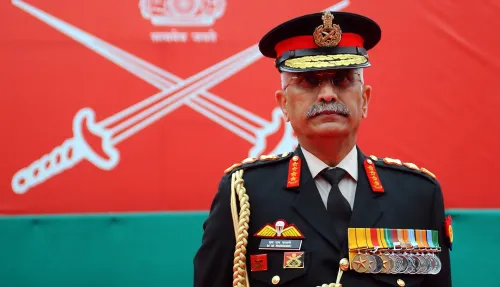
Former Army chief General Manoj Mukund Naravane spoke in Pune on 28 November 2026 at an event felicitating 20 citizens .
He said India's security decisions are guided solely by national interest and long-term vision.
He called the Pakistan-China partnership not new and said India factors it into its strategy.
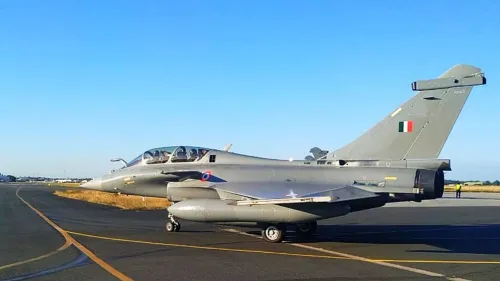
He flagged that several platforms, especially Indian Air Force aircraft, are still sourced from abroad.
He said the boundary with Tibet remains “undemarcated” and called Commander-level talks positive.
He said the Agnipath scheme, now four years old, can be refined and the Centre is aware of needed changes.
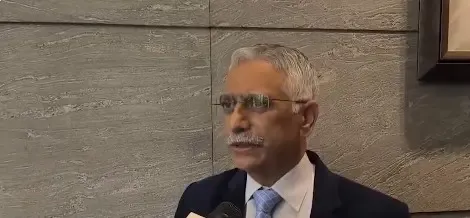
Former Chief of Army Staff General Manoj Mukund Naravane on Saturday, 28 November 2026, said in Pune that India's strategic and security decisions are driven only by national interest and long-term vision. He called for stronger indigenous defence capabilities to cut India's reliance on foreign military equipment. Naravane made the remarks at a city programme that felicitated 20 citizens for their contribution and service to Pune.
National Interest Guides Strategy
Speaking to reporters on the sidelines of the event, General Naravane said India listens to a range of viewpoints but acts on what it considers right for its national interests. He added that India has consistently preferred to resolve differences through dialogue.
He said the country's strategic planning always accounts for regional security realities. That stance reflects New Delhi's long-held position of strategic autonomy in a polarised global order.
Pakistan-China Partnership and the Self-Reliance Answer
Referring to the long-standing partnership between Pakistan and China, the former Army chief said it is not a new development. He said India factors in the possibility of cooperation between the two neighbours when it formulates future strategies.
Naravane said the answer to such challenges lies in greater self-reliance in defence production. He noted that several modern military platforms, particularly aircraft used by the Indian Air Force, are still sourced from overseas. According to him, India must reduce this dependence by developing and strengthening indigenous capabilities within the existing self-reliance framework.
On preparedness, Naravane described national security as an ongoing process that needs constant vigilance. “We have been prepared in the past, we are prepared today, and we will remain prepared in the future,” he said, expressing confidence that the Indian Armed Forces can meet any challenge.
India-China Border and Commander-Level Talks
On the India-China border, General Naravane said the boundary between India and the Tibet region remains “undemarcated”, which leads to periodic incidents. He said such issues have occurred before and are likely to continue unless the two sides address them through sustained engagement.
He called the ongoing military Commander-level talks between the two sides a positive development. Dialogue, he said, helps both countries understand each other's concerns and work towards solutions.
His views carry particular weight because he led the Army during a period of heightened tension along the Line of Actual Control.
Agnipath Scheme and Defence Reforms
On defence reforms, including the Agnipath recruitment scheme, Naravane said every policy can be improved over time. He noted that four years have passed since Agnipath was introduced and said the Union government is aware of the changes and refinements needed.
He added that recent announcements reflect efforts to strengthen and improve the initiative. His remarks come as debate continues over how the short-service recruitment model balances military readiness with its broader goals.
As India expands its domestic defence manufacturing base and keeps up border dialogue with China, Naravane's case for indigenous capability and sustained engagement is likely to remain central to the country's security debate.
Point of View
The Air Force still depends heavily on imported aircraft, and that gap matters most in a two-front scenario. His acknowledgement that Agnipath needs refinement, from a former chief who oversaw its rollout period, is a quiet signal that the reform's design is still being debated inside the establishment. The 'undemarcated' border remark is a reminder that disengagement talks manage the problem rather than resolve it.
NationPress
28 Nov 2026
Frequently Asked Questions
What did General Naravane say about defence self-reliance?
He said India must strengthen indigenous defence capabilities to reduce dependence on foreign military equipment. He noted that several platforms, particularly Indian Air Force aircraft, are still sourced from overseas.
What did Naravane say about the Pakistan-China partnership?
He said the partnership between Pakistan and China is not a new development. He added that India factors in possible cooperation between the two countries when formulating its future strategies.
Why does Naravane say incidents occur on the India-China border?
He said the boundary between India and the Tibet region remains undemarcated, which leads to periodic incidents. He called the ongoing Commander-level talks a positive step towards mutual understanding.
What is Naravane's view on the Agnipath scheme?
He said every policy can be improved over time and that the Union government is aware of the refinements Agnipath needs, four years after its introduction. He added that recent announcements reflect efforts to strengthen the scheme.
Where did General Naravane make these remarks?
He spoke at a programme in Pune on 28 November 2026, where 20 citizens were felicitated for their contribution and service to the city.