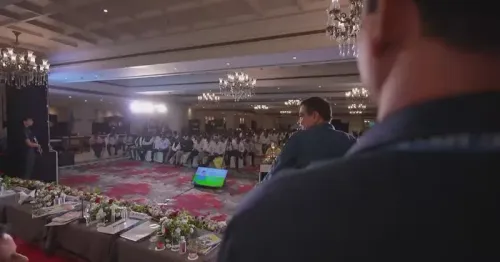
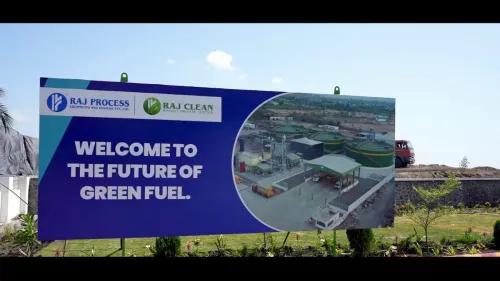
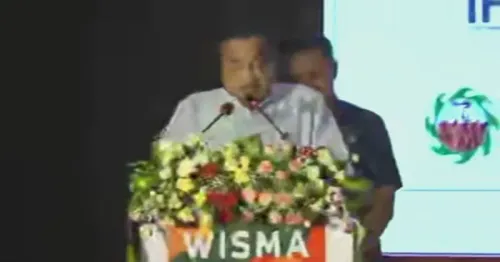
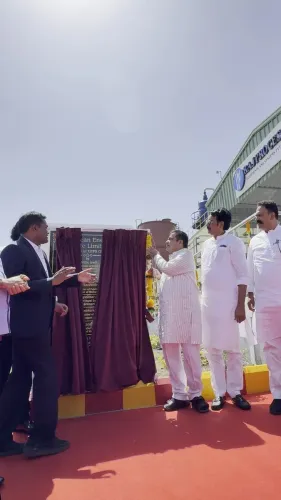
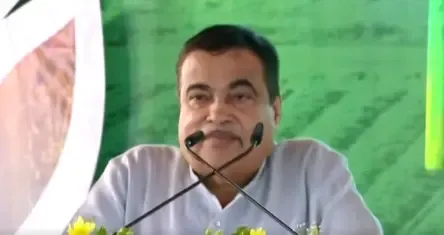
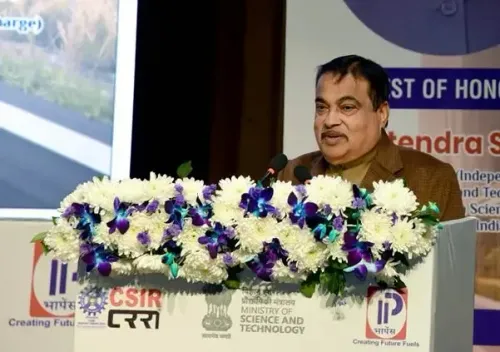
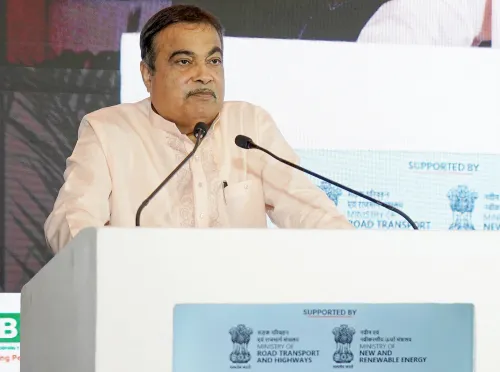
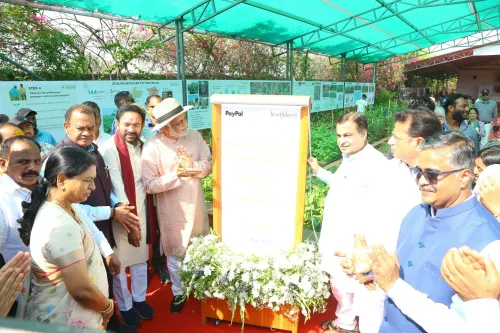
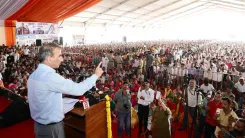
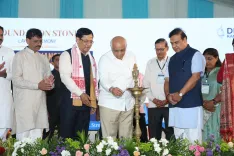
Gadkari addresses Biochar Seminar in Nagpur
Synopsis
Union Minister Nitin Gadkari addressed the Biochar Generation Seminar organised by Agrovision Foundation in Nagpur on 26 September 2026, linking biochar technology to India's net-zero goals, rural income, and the circular economy — amplifying a biomass agenda he has championed for years.
Key Takeaways
Union Minister Nitin Gadkari addressed the Biochar Generation Seminar in Nagpur on 26 September 2026 , organised by Agrovision Foundation .
Biochar converts agricultural biomass waste into a soil carbon-locking resource, supporting both emission cuts and crop yield improvements.
Gadkari's advocacy aligns with the National Policy on Biofuels 2018 , which promoted biomass technologies for rural income and emissions reduction.
India's 2070 net-zero target elevates biochar as a cost-effective carbon-sequestration option in the agricultural sector.
Policy watchers are tracking whether biochar standards may be incorporated into future agricultural or infrastructure guidelines given Gadkari's ministerial influence.
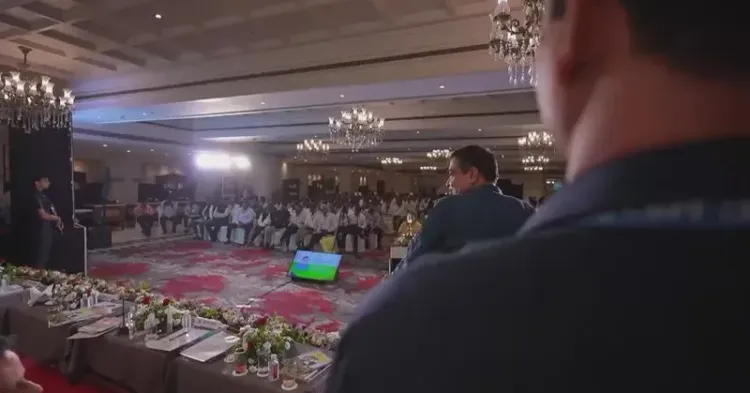
From the heart of Maharashtra's agro-industry circuit, Union Road Transport and Highways Minister Nitin Gadkari stepped onto the dais at a Biochar Generation Seminar organised by the Agrovision Foundation in Nagpur on Saturday, 26 September 2026 — a gathering that sits at the crossroads of climate action, farm income, and India's long road to net-zero.
Biochar, biofuels, and Gadkari's rural-tech conviction
Biochar — charcoal produced by burning organic biomass in low-oxygen conditions — is no fringe idea. It locks carbon into the soil for centuries, improves crop yields, and converts agricultural waste that would otherwise be burned in the open field into a productive resource. For a minister who has consistently championed biofuels and biomass technologies well beyond his transport mandate, the Nagpur seminar is a natural platform.
Gadkari has long argued that India's farmers must become energy and resource producers, not merely consumers of input subsidies. That argument threads directly through the National Policy on Biofuels 2018, which elevated biomass-based technologies as tools for simultaneously cutting emissions and boosting rural incomes — a dual mandate Gadkari has cited repeatedly across forums.
Nagpur's role as India's agro-innovation stage
Nagpur is not just Gadkari's political home base — it has become a recurring venue for agro-industry convenings, owing to its central geography and its proximity to Vidarbha's farming belt, one of India's most agriculturally stressed regions. Agrovision Foundation has used the city as a launchpad for technology demonstrations aimed at smallholder farmers, making the choice of venue deliberate and pointed.
India's broader push toward waste-to-wealth agriculture aligns tightly with its 2070 net-zero commitment. Carbon sequestration through biochar is increasingly discussed as one of the lower-cost, higher-impact tools available to a country where agricultural residue burning remains a major seasonal pollution crisis — particularly visible every winter in northern India.
What the seminar signals for policy watchers
Gadkari's presence lends political weight to a technology that has so far remained largely in research and pilot circles. The sector is watching closely for any signal that biochar could be written into future agricultural guidelines or — given Gadkari's home ministry — even into road construction standards that already incorporate waste materials. Follow-up action by state agro bodies in Maharashtra could accelerate that trajectory.
India's circular-economy agenda needs champions with clout. When a senior cabinet minister shows up for a biochar seminar, the room stops being a technical workshop and starts being a policy conversation. That is precisely the shift the sector needs.
Point of View
Gadkari is positioning biomass-to-biochar as a politically viable, farmer-friendly solution — one that could gain traction in the run-up to state election cycles in Maharashtra and beyond.
NationPress
26 Sept 2026
Frequently Asked Questions
What is biochar and how does it help farmers?
Biochar is a carbon-rich charcoal made by heating organic agricultural waste in low-oxygen conditions. Applied to soil, it locks carbon for centuries, improves fertility, and reduces the need to burn crop residue in fields, directly benefiting farmers' soil health and income.
Why did Gadkari attend a biochar seminar?
Gadkari has a long record of promoting biofuels and biomass technologies beyond his transport portfolio. He addressed the Agrovision Foundation's Biochar Generation Seminar in Nagpur on 26 September 2026 to spotlight biochar as a tool for rural income and climate action.
What is the Agrovision Foundation?
Agrovision Foundation is an organisation based in Nagpur, Maharashtra that organises agro-industry events and technology demonstrations aimed at farmers and agricultural stakeholders across India.
How does biochar relate to India's net-zero target?
Biochar sequesters carbon in soil for centuries rather than releasing it during open burning of crop residue. This makes it a cost-effective carbon-removal tool aligned with India's 2070 net-zero commitment and its broader circular-economy goals in agriculture.
Could biochar become part of Indian government policy?
Policy watchers are tracking whether Gadkari's advocacy could push biochar standards into future agricultural guidelines or even highway construction norms — the latter falling directly under his ministry. No formal announcement has been made yet.