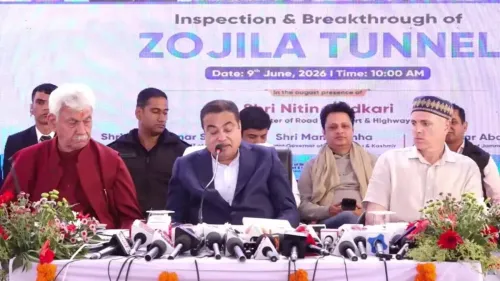
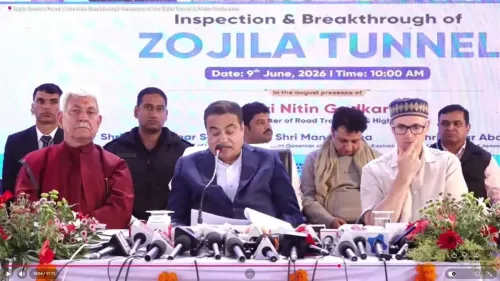
Gadkari: J&K highway projects to open by July 3 for Amarnath Yatra 2026
Synopsis
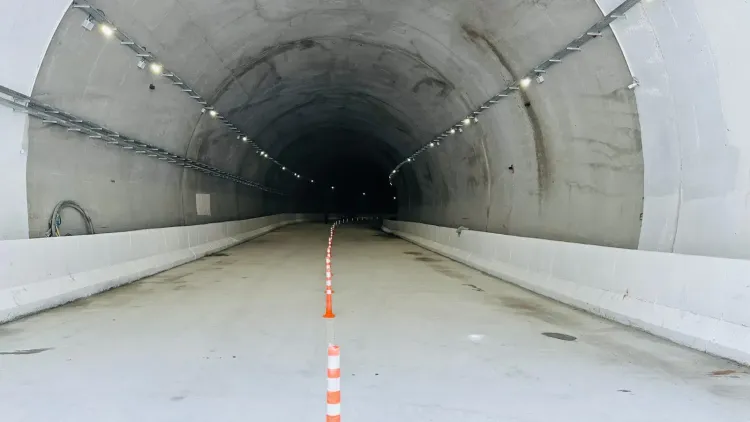
Union Minister Nitin Gadkari has announced that landmark National Highway projects in Jammu and Kashmir will open to traffic on July 3, 2026, days before the Shri Amarnath Ji Yatra 2026, promising safer pilgrim travel, stronger regional connectivity, and a boost to tourism and trade.
Key Takeaways
Opening date set: The highway projects are scheduled to open to traffic on 3 July 2026 , ahead of the Shri Amarnath Ji Yatra 2026 .
Pilgrim safety focus: The projects are designed to provide safer and more reliable travel conditions for Amarnath pilgrims on high-altitude routes.
Broader connectivity gains: The projects are expected to boost tourism, trade, and economic growth across Jammu and Kashmir .
Policy alignment: The work aligns with both the Bharatmala Pariyojana and the PM Gati Shakti National Master Plan for integrated infrastructure development.
Post-2019 push: Central highway investment in J&K has accelerated since the Jammu and Kashmir Reorganisation Act of 2019 , treating road access as an economic and security priority.
Union Road Transport and Highways Minister Nitin Gadkari announced on Wednesday, July 1, 2026, that a set of landmark highway projects in Jammu and Kashmir are scheduled to open to traffic on 3 July 2026, ahead of the Shri Amarnath Ji Yatra 2026. The minister said the projects would deliver safer and more reliable travel for pilgrims while strengthening regional connectivity across the Union Territory's National Highway network.
Context
Posting on X under the hashtags #PragatiKaHighway and #GatiShakti, Gadkari described the projects as 'landmark,' promising they will boost 'tourism, trade, and economic growth' and enhance the 'resilience' of Jammu and Kashmir's National Highway network. The announcement is timed to coincide with the run-up to the annual Amarnath Yatra, one of India's most demanding high-altitude pilgrimages, which draws hundreds of thousands of devotees each year and is heavily dependent on reliable road access through mountainous terrain.
The opening date of 3 July 2026 places the projects online just days after the minister's post, signalling that construction or upgradation work on the identified stretches is in its final stages. While the minister did not name the specific highway stretches in the post, the reference to pilgrim safety and regional connectivity points to routes feeding the Amarnath shrine in the Himalayas.
Policy Backdrop
The announcement sits within two major central policy frameworks. The Bharatmala Pariyojana, approved in 2015, targets the construction and upgrade of over 34,000 km of National Highways, with dedicated attention to strategic corridors in Jammu and Kashmir. The PM Gati Shakti National Master Plan, launched in 2021, brought coordinated multi-ministry planning to road, rail, and logistics infrastructure to cut logistics costs and reduce transit times.
Following the Jammu and Kashmir Reorganisation Act of 2019, the central government accelerated highway investment in the region as part of a broader push for economic integration and all-weather connectivity. Road infrastructure in the Union Territory has since been treated as both an economic and a security priority, with project timelines frequently aligned to religious and tourist calendars to demonstrate visible progress on the ground.
Stakeholders and Impact
The most immediate beneficiaries are the pilgrims undertaking the Shri Amarnath Ji Yatra 2026, who will gain access to safer and more dependable road conditions on what is historically a hazardous high-altitude route. Local traders, tourists, and J&K residents stand to gain from improved year-round connectivity, shorter travel times, and reduced vehicle operating costs.
Improved National Highway resilience also carries broader economic implications: smoother freight movement can lower the cost of goods in a region where supply chains are frequently disrupted by weather and terrain. Tourism operators and the hospitality sector in Jammu and Kashmir are expected to see increased footfall if access to key destinations becomes more predictable.
What's Next
The Ministry of Road Transport and Highways is expected to issue formal inauguration details for the specific highway stretches in the days leading up to 3 July 2026. Progress on other highway segments feeding the Amarnath route will be closely watched by pilgrimage authorities and local administrations as the Yatra 2026 season gets under way.
Gadkari's ministry has consistently used religious and tourist calendars as delivery milestones for J&K highway projects, and any delay or revision to the 3 July opening date would draw scrutiny given the logistical planning that pilgrims and state authorities undertake months in advance. The broader test will be whether the newly opened stretches hold up under the intense traffic and weather conditions that characterise the Amarnath Yatra season.
Point of View
The ministry signals confident execution — but it also creates a hard accountability marker that pilgrimage authorities and local administrations will monitor closely. The move fits the broader post-2019 pattern of using infrastructure as a demonstration of central governance in Jammu and Kashmir. If the projects open on schedule, they reinforce the Bharatmala and Gati Shakti narratives; any slippage, however, would invite sharp scrutiny given the stakes for pilgrim safety.
NationPress
1 Jul 2026
Frequently Asked Questions
When will the Jammu and Kashmir highway projects announced by Gadkari open?
The projects are scheduled to open to traffic on 3 July 2026 , according to Union Minister Nitin Gadkari's post on X dated 1 July 2026 .
Why are the J&K highway projects being opened before the Amarnath Yatra 2026?
The projects are timed to provide pilgrims safer and more reliable road access ahead of the Shri Amarnath Ji Yatra 2026 , a major annual high-altitude pilgrimage that is heavily dependent on dependable National Highway connectivity.
Which government schemes are behind the Jammu and Kashmir highway expansion?
The projects fall under the Bharatmala Pariyojana — which targets over 34,000 km of National Highway construction and upgrades — and are coordinated through the PM Gati Shakti National Master Plan launched in 2021 .
How has road infrastructure in J&K changed since 2019?
Following the Jammu and Kashmir Reorganisation Act of 2019 , the central government significantly accelerated highway investment in the region, prioritising all-weather connectivity as both an economic and security objective.
Who benefits from the new J&K highway projects?
The primary beneficiaries are Amarnath pilgrims , but local residents, tourists, and traders across Jammu and Kashmir are also expected to gain from improved connectivity, shorter travel times, and lower logistics costs.