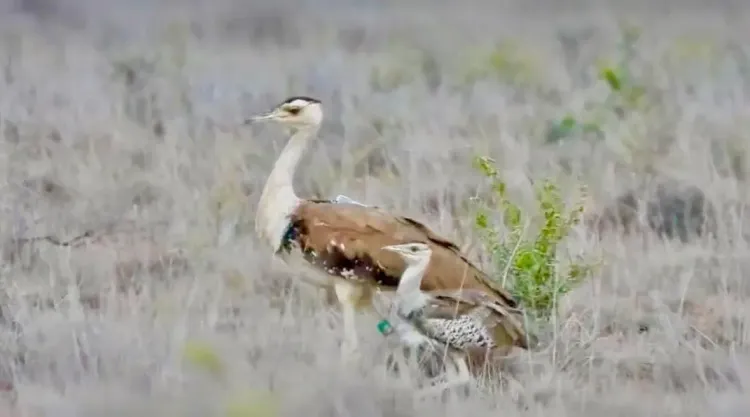
Gujarat's Great Indian Bustard chick crosses 40-day survival mark in Kutch
Synopsis
A Great Indian Bustard chick hatched on 21 May at Naliya in Kutch has crossed the 40-day survival threshold — the most dangerous window of its early life. With fewer than 150 GIBs estimated to remain globally, every chick that survives is a measurable gain for a species teetering on the edge of extinction.
Key Takeaways
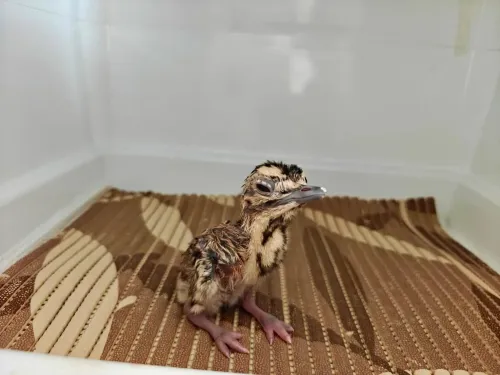
A Great Indian Bustard chick hatched on 21 May under Gujarat's 'Jump Start' project at Naliya, Kutch has completed its first 40 days of life.
Wildlife experts consider the first 40 days the most vulnerable period in a GIB chick's early life.
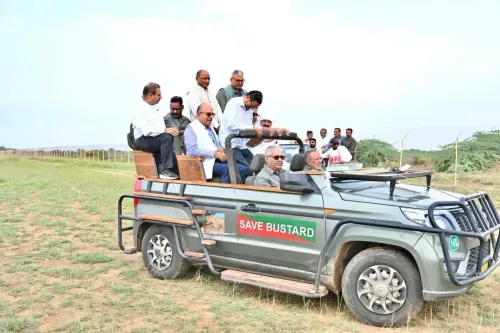
The chick is being monitored round the clock by Forest Department officials and wildlife scientists at the conservation facility.
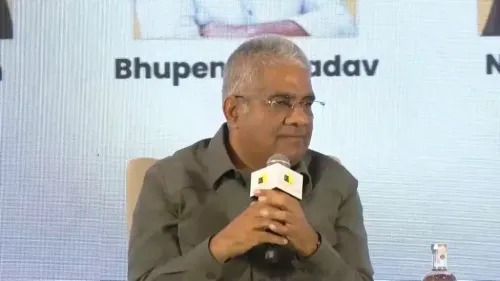
State minister Arjun Modhwadia and Union minister Bhupender Yadav both acknowledged the milestone publicly.
The global GIB population is estimated at fewer than 150 individuals , making every survival event significant for the species.
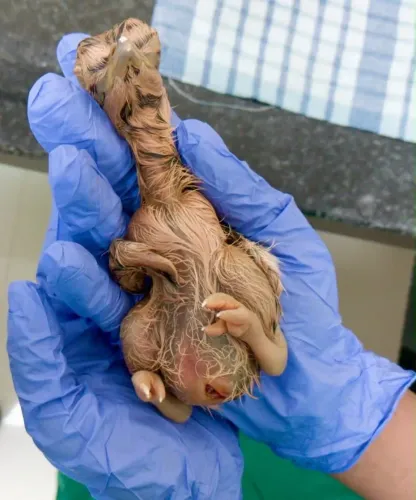
This is the second phase of the 'Jump Start' project, which involves egg protection in natural habitat followed by foster-mothering at a dedicated facility.
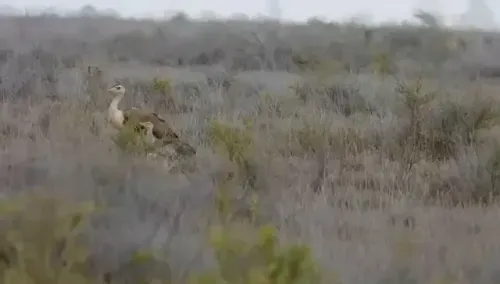
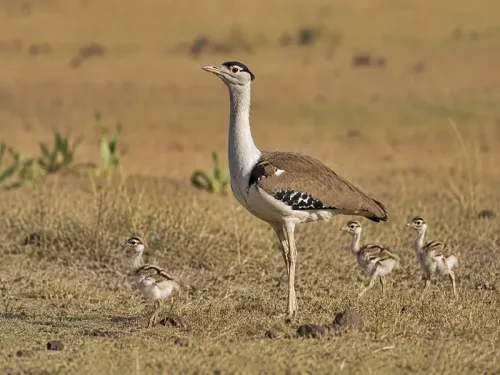
A Great Indian Bustard (GIB) chick born under Gujarat's 'Jump Start' conservation project at Naliya in Kutch district has completed its first 40 days of life — a threshold wildlife experts consider the most critical and vulnerable window in the bird's early survival. The chick hatched on 21 May under the second phase of the project, marking a significant milestone in efforts to pull back one of the world's most threatened bird species from the brink.
Why the First 40 Days Matter
Wildlife experts describe the initial 40 days of a GIB chick's life as extraordinarily fragile, with mortality risk highest in this window due to environmental stress, predation, and the complexity of early-stage biological development. Crossing this threshold is considered a meaningful indicator of longer-term survival prospects.
The Forest Department confirmed that the chick at Naliya is under round-the-clock monitoring by a dedicated team of officials and wildlife scientists, with care administered under continuous scientific oversight.
How the Jump Start Project Works
The 'Jump Start' project is a technically demanding conservation programme that involves protecting GIB eggs within their natural habitat before transferring the chicks to a dedicated facility, where they are reared through a foster-mothering programme. Officials described the process as requiring uninterrupted scientific intervention during the early stages of a chick's life.
This is the second phase of the initiative, signalling that the programme has moved beyond pilot status and is being scaled with institutional backing from the Gujarat Forest Department.
What the Government Said
State Forest and Environment Minister Arjun Modhwadia called the development a moment of pride for the state. 'This is a matter of immense joy and pride for Gujarat. The success of this special campaign undertaken for the conservation of the Great Indian Bustard is the result of the relentless hard work and dedication of our scientists, wildlife enthusiasts and Forest Department officials. The first 40 days of a chick's life are extremely delicate, and crossing this important milestone brings new hope for the bird's bright future,' he said.
Modhwadia credited the achievement to the guidance of Chief Minister Bhupendra Patel and framed it within a broader ecological argument. 'Protecting such endangered species is essential to maintaining the balance between humanity and nature. This achievement will mark a new milestone in India's journey towards biodiversity conservation,' he added.
Union Environment Minister Bhupender Yadav also acknowledged the milestone, sharing photographs and a video of the chick on social media platform X.
The Larger Conservation Crisis
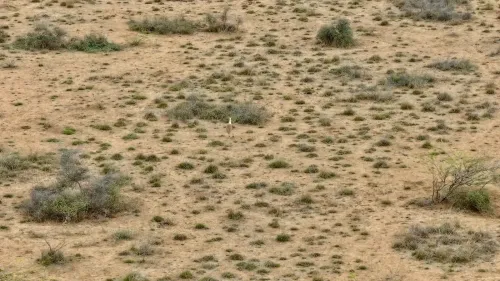
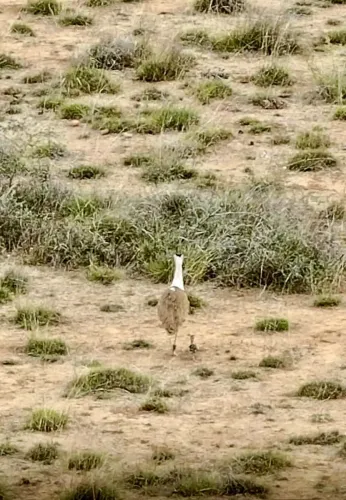
The Great Indian Bustard has seen a sharp population decline over recent decades, driven primarily by habitat loss, power line collisions, and agricultural encroachment on its grassland range. Once found across much of the Indian subcontinent, the species is now largely confined to Rajasthan and pockets of Gujarat, with the global population estimated at fewer than 150 individuals, according to conservation assessments.
Notably, the Supreme Court of India has previously intervened on GIB conservation, directing measures around power line undergrounding in critical habitats — underscoring the species' precarious status at the national level.
What Comes Next
The chick's continued progress will be closely tracked by the Forest Department and associated wildlife scientists. Conservationists say that if the bird successfully transitions beyond the juvenile stage, it could contribute meaningfully to captive-breeding and eventual wild-release efforts. The success of the 'Jump Start' second phase may also inform whether the programme is expanded to other GIB habitats in Rajasthan, where the bulk of the remaining population survives.
Point of View
But it is one data point in a conservation emergency that has been building for decades. The GIB's decline is not simply a wildlife management failure — it reflects unresolved conflicts between renewable energy infrastructure, agricultural expansion, and grassland preservation. The Supreme Court's intervention on power line undergrounding remains partially implemented, and captive-rearing programmes, however well-run, cannot substitute for protecting wild habitat at scale. The 'Jump Start' project deserves credit for technical rigour, but the species will not recover on the strength of a single chick crossing 40 days. The real test is whether Gujarat and Rajasthan can coordinate on habitat corridors and enforce existing protections — something political announcements around individual milestones tend to obscure.
NationPress
8 Oct 2026
Frequently Asked Questions
What is Gujarat's 'Jump Start' conservation project for the Great Indian Bustard?
The 'Jump Start' project is a conservation programme run by the Gujarat Forest Department that protects Great Indian Bustard eggs in their natural habitat before scientifically rearing the chicks through a foster-mothering programme at a dedicated facility in Naliya, Kutch . It is currently in its second phase and involves continuous scientific intervention during the chick's early life.
Why are the first 40 days critical for a Great Indian Bustard chick?
Wildlife experts consider the first 40 days the most vulnerable period in a GIB chick's life, when the risk of mortality from environmental stress, predation, and developmental challenges is highest. Surviving this window is regarded as a meaningful indicator of longer-term survival prospects.
How many Great Indian Bustards are left in the world?
The global Great Indian Bustard population is estimated at fewer than 150 individuals, according to conservation assessments, making it one of the world's most critically endangered bird species. The species is now largely confined to Rajasthan and pockets of Gujarat.
Who oversees the Great Indian Bustard chick at Naliya?
A dedicated team of Gujarat Forest Department officials and wildlife scientists monitors the chick around the clock at the conservation facility in Naliya, Kutch , under continuous scientific guidance.
What are the main threats to the Great Indian Bustard?
The Great Indian Bustard faces habitat loss from agricultural expansion, collisions with overhead power lines, and encroachment on its grassland range. The Supreme Court of India has previously directed measures including power line undergrounding in critical GIB habitats to address the threat.