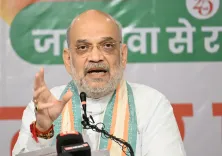
Giriraj Singh hails civilizational revival under PM Modi
Synopsis
Union Textiles Minister Giriraj Singh amplified a piece on June 14, 2026, framing PM Narendra Modi's decade in power as a renaissance of India's civilizational consciousness — echoing a core BJP cultural-nationalism theme backed by policies from Yoga Day to the National Education Policy.
Key Takeaways
Giriraj Singh posted on June 14, 2026 , celebrating the renaissance of India's civilizational consciousness under PM Modi .
The post was shared via the NaMo App and linked to a long-form article on India's 'civilizational turn' since 2014 .
Key policy markers of this narrative include the 2014 launch of International Yoga Day , the 2019 abrogation of Article 370 , and the 2020 National Education Policy .
The BJP has consistently integrated civilizational references into domestic policy, education reform, and cultural diplomacy at multilateral forums.
Parliamentary debates on heritage legislation and state-level cultural programmes are expected to intensify in the near term.
Union Textiles Minister Giriraj Singh on Sunday, June 14, 2026, shared a post on X celebrating what he described as the renaissance of India's civilizational consciousness under the leadership of Prime Minister Narendra Modi, amplifying a piece that frames the current government's cultural agenda as a historic turning point for the nation.
Context
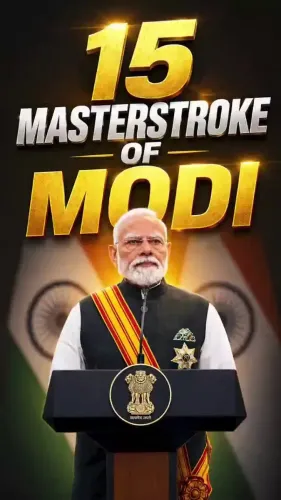
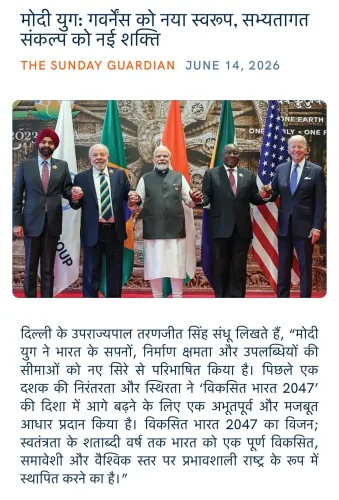
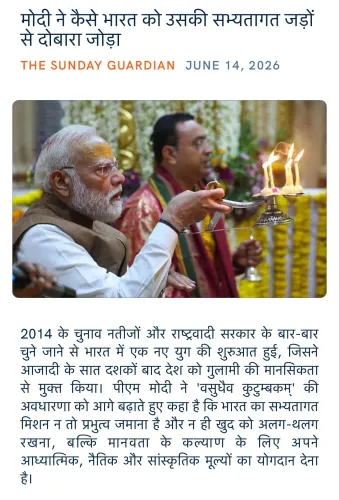
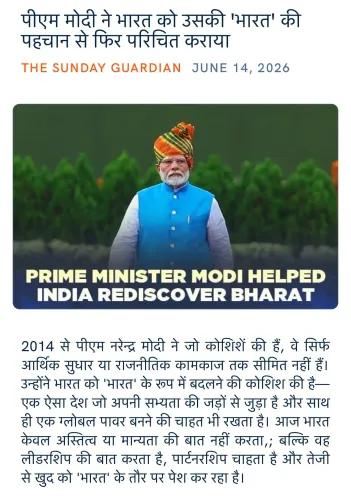
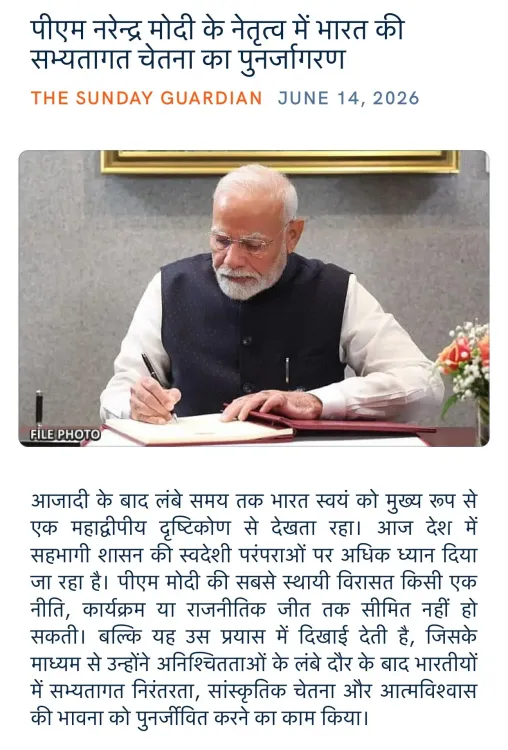
In his post, Singh wrote in Hindi: 'पीएम नरेन्द्र मोदी के नेतृत्व में भारत की सभ्यतागत चेतना का पुनर्जागरण' — translated as 'The renaissance of India's civilizational consciousness under PM Narendra Modi.' The post, shared via the NaMo App, was accompanied by an image and a link to a long-form article exploring what the author characterises as a 'civilizational turn' in Indian governance since 2014.
The framing reflects a recurring theme in BJP public messaging: that the Modi government has not merely administered the country but has catalysed a deeper cultural and civilizational awakening rooted in India's ancient heritage.
Policy Backdrop
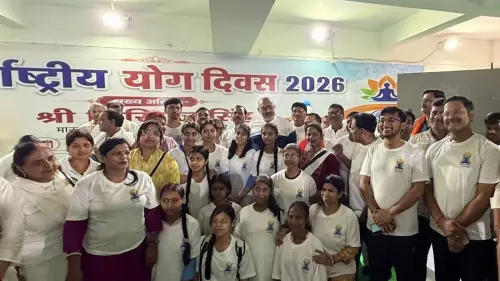
The civilizational narrative has been woven into several landmark policy decisions over the past decade. The 2014 launch of International Yoga Day positioned a traditional Indian practice as a vehicle of global soft power. The 2019 abrogation of Article 370 was presented by the government as restoring both territorial and civilizational unity in Jammu and Kashmir.
The 2020 National Education Policy introduced a formal emphasis on Indian knowledge systems and what its architects called the decolonisation of curricula — a direct policy expression of the civilizational-revival thesis. Successive Modi governments have integrated these references into domestic policy framing, external cultural diplomacy, and messaging at multilateral forums.
Stakeholders and Impact
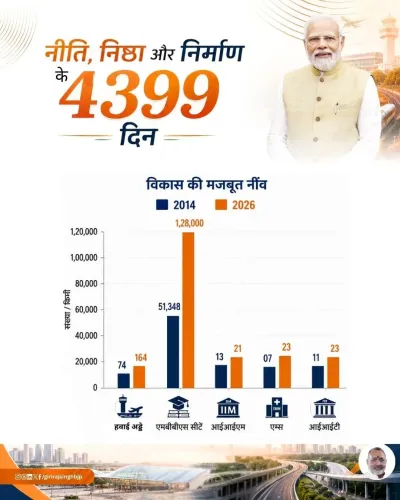
The civilizational discourse resonates with a broad constituency of cultural organisations, heritage bodies, and citizens who identify with the idea of India reclaiming its pre-colonial identity. For the BJP, the narrative serves as an ideological thread connecting infrastructure modernisation with cultural self-assertion — a combination the party has deployed consistently since 2014.
Critics and opposition parties, however, have questioned whether such framing can marginalise pluralist and secular interpretations of Indian history. The debate plays out in parliamentary sessions, academic circles, and increasingly in school curriculum committees across states.
What's Next
Observers will watch the next session of Parliament for any heritage-related legislation or further amendments to education curricula that could give institutional weight to the civilizational-revival agenda. State-level cultural programmes are also expected to gain momentum ahead of upcoming assembly elections, with ministers like Singh likely to amplify the theme through social media and public engagements.
As the BJP continues to blend economic governance with cultural messaging, the 'civilizational consciousness' framing is poised to remain a central pillar of the party's political communication in the months ahead.
Point of View
With several state elections on the horizon — suggests the narrative is being deliberately kept warm. What makes this moment distinct is the decade-long policy record the BJP can now point to, turning what was once rhetorical framing into a catalogue of institutional actions from curriculum reform to landmark constitutional changes. The civilizational discourse thus operates simultaneously as ideology, electoral strategy, and governance philosophy.
NationPress
14 Sept 2026
Frequently Asked Questions
What did Giriraj Singh post about PM Modi on June 14 2026?
Giriraj Singh shared a post on June 14, 2026 , describing the period under PM Narendra Modi as a renaissance of India's civilizational consciousness, linking to a long-form article on the subject via the NaMo App .
What is the BJP's civilizational revival narrative?
The BJP 's civilizational revival narrative holds that PM Modi 's governance has reconnected India with its ancient cultural and historical identity through policies such as International Yoga Day , the abrogation of Article 370 , and the 2020 National Education Policy .
What policies reflect India's civilizational turn under Modi?
Landmark examples include the 2014 launch of International Yoga Day as global soft power, the 2019 abrogation of Article 370 framed as restoring civilizational unity, and the 2020 National Education Policy emphasising Indian knowledge systems.
Who is Giriraj Singh?
Giriraj Singh is the Union Minister of Textiles and a senior BJP leader who serves as a Lok Sabha MP from Begusarai, Bihar . He is known for public statements supporting the party's cultural and nationalist positions.
What should we watch next on India's cultural policy?
Key developments to follow include Parliament 's next session for heritage-related legislation, further updates to education curricula, and state-level cultural programmes expected ahead of upcoming assembly elections.