Giriraj Singh Highlights India's Economic Resilience Amid Global Turmoil
Synopsis
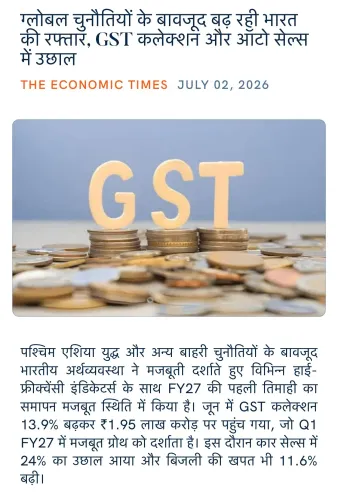
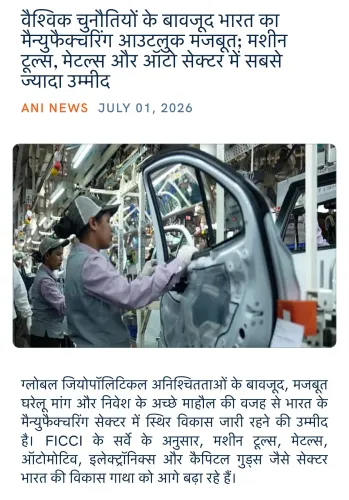
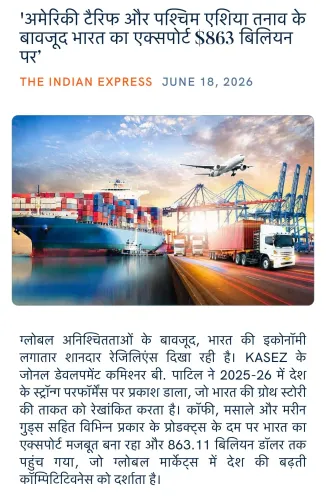
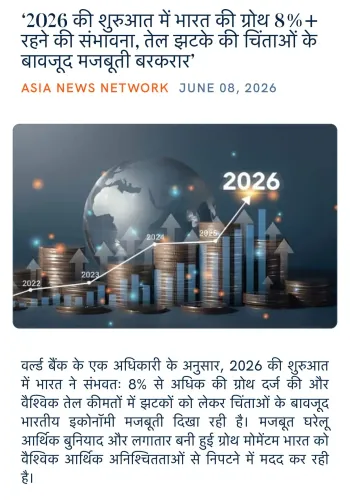
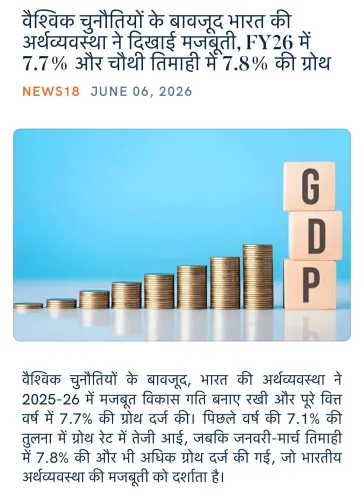
Union Textiles Minister Giriraj Singh on 4 July 2026 used the NaMo App to amplify a report asserting India's economic strength amid global volatility and energy shocks, reinforcing the BJP government's macroeconomic resilience narrative.
Key Takeaways
Giriraj Singh , Union Textiles Minister and BJP MP from Begusarai , shared the post on 4 July 2026 via the NaMo App .
The post asserts India's economy has remained strong despite global turmoil and energy shocks.
India is the world's fifth-largest economy and has maintained a relatively steady growth trajectory compared with many peer nations.
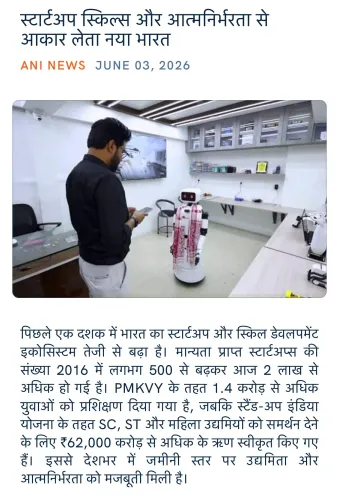
The Atmanirbhar Bharat initiative launched in 2020 aimed to reduce dependence on volatile global supply chains through domestic manufacturing incentives.
PLI schemes across sectors, including textiles, are a key pillar of India's strategy to sustain export competitiveness amid external pressures.
The next quarterly GDP release will be a critical data point for validating the government's resilience claims.
Union Textiles Minister Giriraj Singh on Saturday, 4 July 2026, shared an article via the NaMo App highlighting India's economic stability in the face of global disruptions and energy shocks, signalling the ruling BJP's confidence in the country's macroeconomic fundamentals.
Context
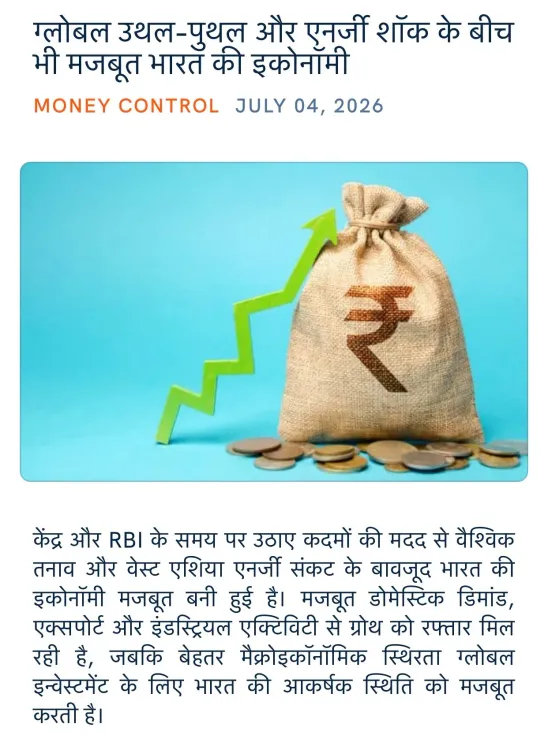
Singh's post, written in Hindi, reads: 'ग्लोबल उथल-पुथल और एनर्जी शॉक के बीच भी मजबूत भारत की इकोनॉमी' — ('India's economy remains strong even amid global turmoil and energy shocks'). The post links to a report circulated through the NaMo App, Prime Minister Narendra Modi's official digital platform, underscoring the government's intent to amplify the narrative of economic resilience directly to citizens.
The share comes against a backdrop of continued global volatility — including energy-price pressures and supply-chain disruptions — that has tested the fiscal health of several major economies worldwide.
Policy Backdrop
India has positioned itself as a standout performer among large economies since the twin shocks of the 2020–22 pandemic and the energy-price surge triggered by the Russia-Ukraine conflict. Successive Economic Surveys and Reserve Bank of India reports have documented a relatively steady growth trajectory, buoyed by domestic consumption, infrastructure spending, and a diversified export base.
The government's Atmanirbhar Bharat initiative, announced in 2020, sought to reduce dependence on volatile global supply chains by promoting domestic manufacturing and self-reliance. Production-Linked Incentive (PLI) schemes across sectors — including textiles, electronics, and pharmaceuticals — have been central to this push, aiming to attract investment and strengthen export competitiveness.
Stakeholders and Impact
Indian industries and exporters stand at the centre of the resilience story. For the textiles sector — which Singh directly oversees — global energy costs affect both production expenses and the competitiveness of Indian goods in international markets. A stable macroeconomic environment, including manageable inflation and a relatively steady rupee, is critical for exporters competing against peers from Bangladesh, Vietnam, and other low-cost manufacturing hubs.
Ordinary consumers and small businesses also have a stake: energy shocks feed into fuel and commodity prices, making the government's ability to cushion these pressures a key measure of economic management. Singh's post implicitly frames the current situation as evidence of effective stewardship.
What's Next
Analysts and policymakers will watch the next quarterly GDP release closely to see whether India's growth numbers continue to outpace global peers. Any revision to PLI scheme allocations or export incentives for the textiles sector could further signal how the government plans to sustain momentum. With global energy markets remaining unpredictable, India's ability to maintain fiscal discipline while supporting growth will be the defining test of the resilience narrative senior ministers like Singh are now publicly championing.
Point of View
The BJP ensures the framing reaches a partisan base primed to receive it favourably, while also putting the resilience argument on the public record. For a minister whose portfolio — textiles — is acutely sensitive to global energy and trade shocks, the endorsement also serves a sectoral signalling purpose: reassuring exporters and investors that the macroeconomic environment remains supportive. The broader pattern suggests the government is actively managing expectations ahead of what could be a turbulent second half of 2026 for global trade.
NationPress
4 Jul 2026
Frequently Asked Questions
What did Giriraj Singh say about India's economy?
Giriraj Singh shared an article on 4 July 2026 stating that India's economy has remained strong even amid global turmoil and energy shocks, circulating the report through the NaMo App.
Why is India's economy considered resilient amid global turmoil?
India's relatively steady GDP growth, domestic consumption base, and government initiatives like Atmanirbhar Bharat and PLI schemes have helped insulate it from the worst effects of global supply-chain disruptions and energy-price volatility.
What is the NaMo App and why is it used to share economic news?
The NaMo App is Prime Minister Narendra Modi's official digital platform, used by BJP leaders and ministers to directly communicate government messaging and amplify favourable policy narratives to supporters.
How does the global energy shock affect India's textiles sector?
Higher global energy costs raise production expenses for textile manufacturers and can erode India's price competitiveness against rival exporters; a stable macroeconomic environment is therefore critical for the sector's health.
What is Atmanirbhar Bharat and how does it relate to economic resilience?
Atmanirbhar Bharat, launched in 2020, is India's self-reliance initiative designed to reduce dependence on volatile global supply chains by boosting domestic manufacturing through incentives such as PLI schemes across multiple sectors.