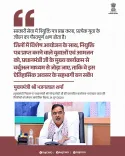
Giriraj Singh marks Emergency anniversary, vows to never forget 1975
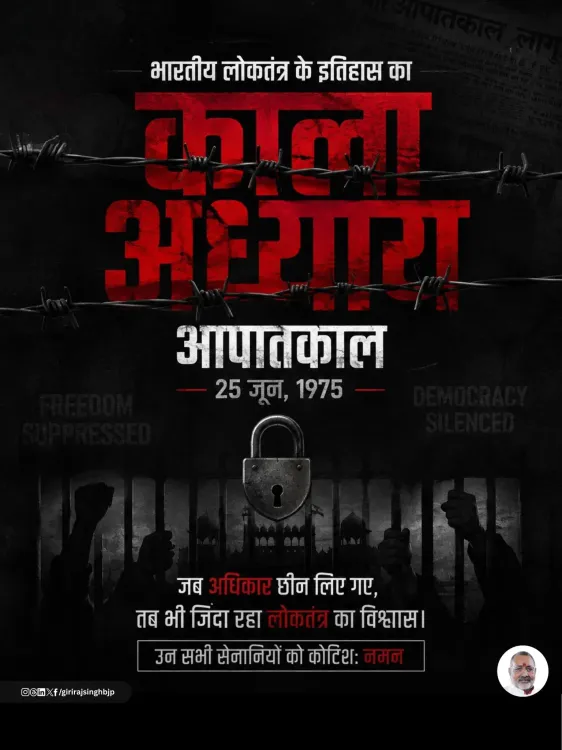
Synopsis
Union Textiles Minister Giriraj Singh marked the 50th anniversary of the 1975 Emergency on 25 June, vowing in a Hindi verse-laden post that India must never forget the dark chapter when constitutional democracy was suspended, and paying tribute to all who resisted it.
Key Takeaways
Giriraj Singh posted on 25 June 2026 to mark the anniversary of the 1975 Emergency , calling it a 'dark chapter of Indian democracy.' He quoted a Hindi verse pledging that anger against the 'Emergency mindset' that held the Constitution hostage would never be abandoned.
The post saluted loktantra senaniyon (democracy fighters) who struggled to protect constitutional rights during the 1975–77 Emergency.
The 1975 Emergency was proclaimed by Indira Gandhi under Article 352 and lasted until March 1977 , suspending civil liberties and detaining thousands.
Since 2014 , the BJP has institutionalised annual 25 June commemorations, framing the Emergency as the Congress party's foundational assault on democracy.
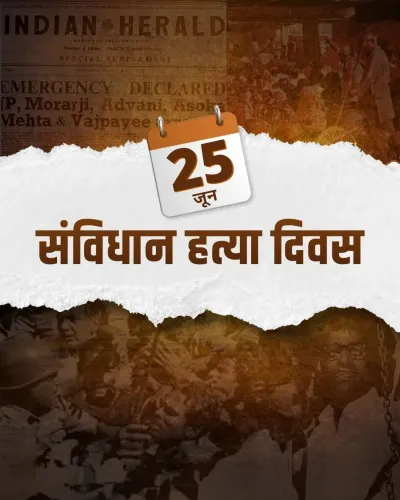
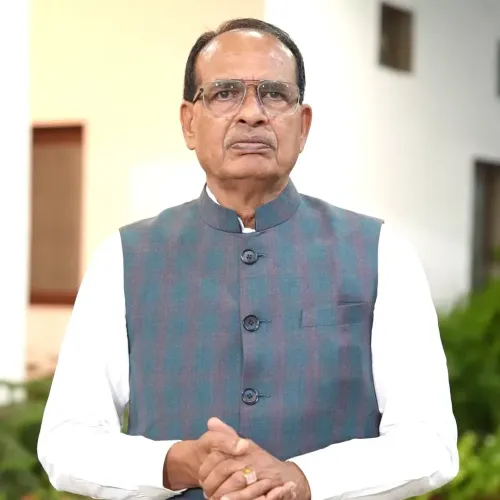
Union Textiles Minister Giriraj Singh on Thursday, 25 June invoked the 1975 Emergency in a sharp social-media post, declaring that the anger against the authoritarian mindset that 'held the Constitution and democracy hostage' would never be relinquished. The senior BJP leader used the occasion to salute all democracy fighters who resisted the suspension of civil liberties 50 years ago.
Context
In his post, Giriraj Singh quoted a Hindi verse — 'हम कुत्सित कलंक का बोध नहीं छोड़ेंगे' ('We will not abandon the awareness of this vile stain') — pledging that neither the memory of the injustice nor the resolve to resist such a mindset would ever fade. He described 25 June not merely as a date but as 'a dark chapter of Indian democracy that can never be forgotten.' The post concluded with a salute to those who 'struggled to protect democratic values and constitutional rights.'
Policy Backdrop
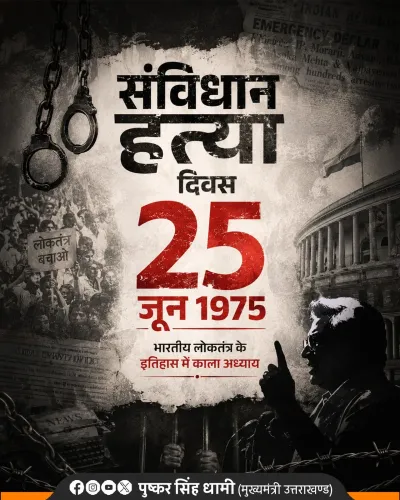
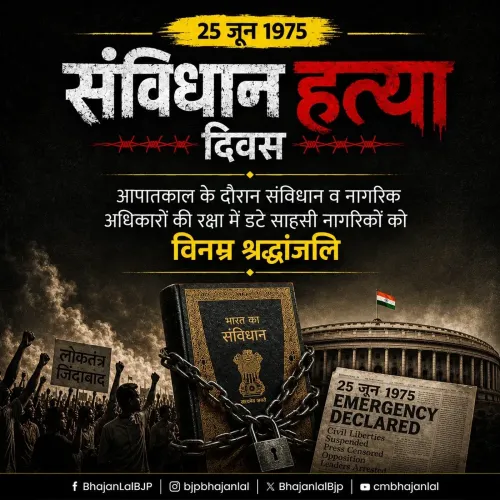
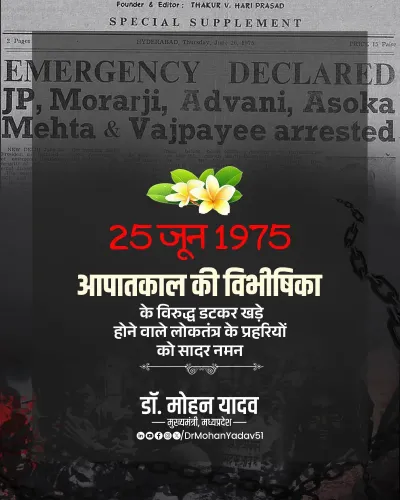
On 25 June 1975, then Prime Minister Indira Gandhi advised the President to proclaim a national Emergency under Article 352 of the Constitution, citing internal disturbance. The Emergency lasted until March 1977, during which civil liberties were suspended, the press was censored, and thousands of political opponents were detained without trial. It remains one of the most contested episodes in post-independence Indian political history.
Since 2014, the BJP has institutionalised public remembrance of the Emergency through ministerial statements, parliamentary references, and coordinated social-media campaigns. The party frames the episode as the Indian National Congress's foundational transgression against constitutional democracy, using the anniversary each year to draw a contrast with its own governance record.
Stakeholders and Impact
BJP leaders across the country have historically used 25 June to mobilise the party's base and reinforce a narrative of democratic vigilance. The messaging resonates particularly with older voters who lived through the Emergency and with younger audiences who encounter it through the party's annual commemoration campaigns. Opposition parties, chiefly the Congress, typically contest the BJP's framing, arguing that the ruling party itself has undermined democratic institutions.
Democracy activists and civil-society groups who participated in the resistance movement of 1975–77 — referred to in BJP discourse as loktantra senani (democracy fighters) — are the symbolic audience for such tributes. Many survivors of Emergency-era detentions have been honoured by successive NDA governments.
What's Next
Parliamentary tributes, public events, and social-media campaigns marking the Emergency anniversary are expected throughout 25 June, with senior BJP leaders likely to echo similar messaging. Opposition responses and counter-narratives from Congress leaders are also anticipated. As long as the Emergency remains a live political reference point, its annual commemoration will continue to shape the terms of debate over democratic accountability in India.
Point of View
' the messaging goes beyond ceremonial remembrance into active political mobilisation. The framing of the Emergency as an 'Emergency mindset' rather than a historical event allows the party to use the anniversary as an evergreen critique applicable to present-day opposition politics. This pattern, consistent since 2014, signals that the Emergency will remain a structural pillar of BJP's ideological communication for the foreseeable future.
NationPress
25 Jun 2026
Frequently Asked Questions
What is the 1975 Emergency that Giriraj Singh mentioned?
The 1975 Emergency was a national Emergency proclaimed by Prime Minister Indira Gandhi on 25 June 1975 under Article 352 of the Constitution, citing internal disturbance. It suspended civil liberties, censored the press, and allowed mass detention of political opponents until March 1977 .
Why does the BJP commemorate 25 June every year?
The BJP marks 25 June annually as the anniversary of the 1975 Emergency , framing it as the Congress party's gravest assault on constitutional democracy. Since 2014 , the party has used ministerial statements, parliamentary tributes, and social-media campaigns to keep the memory alive as a political contrast point.
What did Giriraj Singh say about the Emergency on 25 June?
Giriraj Singh posted a Hindi verse vowing never to forget the 'vile stain' of the Emergency and declaring that anger against the 'Emergency mindset' that held the Constitution and democracy hostage in 1975 would never be relinquished. He also paid tribute to democracy fighters who resisted the suspension of rights.
Who are the 'democracy fighters' Giriraj Singh referred to?
Loktantra senani (democracy fighters) refers to political activists, journalists, and ordinary citizens who resisted or were imprisoned during the 1975–77 Emergency. Successive NDA governments have honoured many survivors of Emergency-era detentions through formal tributes and recognition schemes.
What is Article 352 of the Indian Constitution?
Article 352 empowers the President of India to proclaim a national Emergency if the security of India or any part of its territory is threatened by war, external aggression, or armed rebellion. It was invoked by Indira Gandhi 's government on 25 June 1975 , originally citing 'internal disturbance.'